Introduction
Investing in a new paper production line is a monumental financial decision. It demands meticulous planning and rigorous vetting. Are you risking millions on unverified machinery? Choosing the wrong equipment supplier inevitably leads to crippling production downtime and inflated operational costs. In this comprehensive guide, we will walk you through an ultimate audit checklist. Whether you are upgrading an aging facility or constructing a greenfield plant, this blueprint covers everything. You will learn how to inspect physical facilities and enforce strict testing rules. This ensures you secure a reliable and profitable partnership.
Key Takeaways
A Physical Inspection is Non-Negotiable: Validating a manufacturer’s facilities ensures they possess the heavy-duty machining, certified welding, and precise assembly capabilities required for industrial-scale paper machinery.
Objective Verification is Mandatory: Relying solely on marketing materials introduces severe capital risks. A structured audit verifies actual engineering prowess, financial stability, and manufacturing scale.
Demand Live Component Testing: Never authorize final payment or shipment without witnessing a comprehensive trial of the equipment's core components. This verifies speed parameters and structural stability.
Scrutinize After-Sales Infrastructure: A clear warranty and guaranteed replacement part support are critical operational safeguards. They minimize costly unplanned downtime.
Assess Compliance and Safety: Ensure the manufacturer adheres to global safety standards such as ASME or CE. Lean workplace organization principles guarantee defect-free production.
Industry Insights: The Evolving Landscape of Paper Machinery Procurement
Recent procurement data reveals a significant shift in how mills evaluate machinery suppliers. Buyers no longer fixate solely on the lowest upfront capital expenditure. Instead, sustainability and digitalization dominate the conversation. Modern audits heavily scrutinize a supplier's ability to integrate Quality Control Systems and Distributed Control Systems. Procurement teams demand transparent documentation on carbon footprints. They actively look for energy-efficient drying sections and IoT-enabled predictive maintenance sensors. Consequently, evaluating a manufacturer's software integration capabilities is now just as critical as inspecting their welding seams.
Why a Factory Audit is Crucial Before Choosing a Manufacturer
Before finalizing any procurement contracts, executing a thorough Factory Audit of your potential equipment supplier is absolutely essential. Glossy digital brochures often hide manufacturing flaws. This on-site evaluation serves as a tangible inspection of the supplier's real-world fabrication floor. It provides critical operational safeguards that mitigate risk before substantial capital is committed.
Specifically, it allows your engineering team to physically verify raw material quality. Are they actually using high-grade 304L or 316L stainless steel for the wet end? Do not just take a salesperson's word for it. Furthermore, confirm the presence of specialized engineering personnel. These experts are necessary to tailor the machinery to your specific Grams per Square Meter, paper grade, and daily tonnage targets. Utilizing a structured comparison matrix during the visit easily identifies discrepancies between claimed metrics and actual production capabilities.
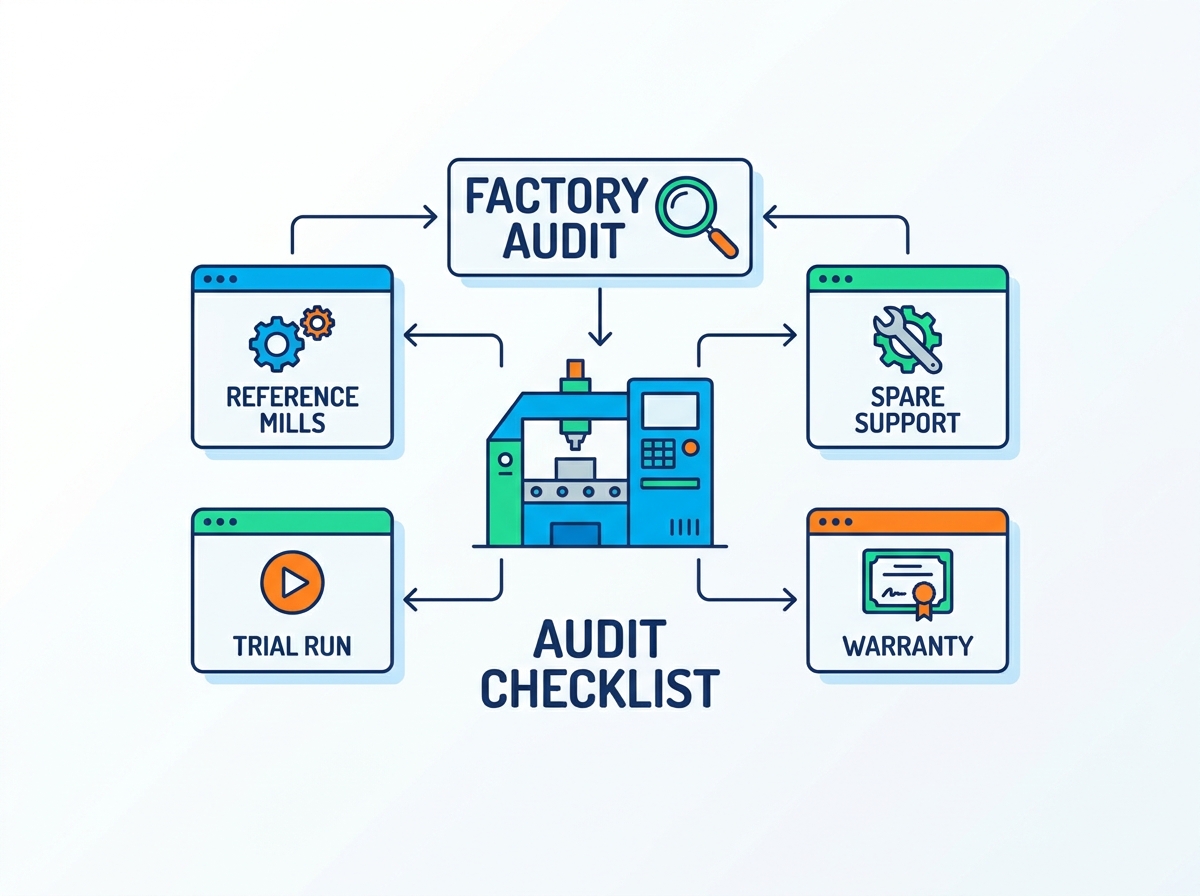
Evaluating Company Credentials and Industry Experience
The preliminary vetting phase happens long before your team sets foot in the facility. This stage involves a rigorous documentary review to confirm legal standing and historical industry footprint. Financial instability within a supplier's organization triggers catastrophic project delays. It leads to compromised material quality or incomplete deliveries.
Examine their registered capital and request audited financial statements. This ensures robust cash flow. A manufacturer must sustain a multi-month fabrication cycle without relying entirely on your initial deposit. Additionally, verify official business licenses and export permits through national corporate registries.
Standard certifications act as non-negotiable baselines for global quality compliance. Cross-reference their ISO 9001 and ISO 14001 certificate numbers with issuing bodies. If importing machinery to heavily regulated markets, verify ASME Boiler and Pressure Vessel Code compliance. Evaluate the educational background of their in-house engineering team. A robust portfolio of patented technologies related to headbox fluid dynamics strongly indicates a commitment to continuous technological improvement.
Quality Control and Manufacturing Process Audit
Once on-site, the focus shifts sharply to the fabrication floor. The way a manufacturer handles raw steel directly dictates the structural integrity of your future production line. The foundation of durable paper machinery lies in stringent incoming quality control and material traceability.
Heavy-duty paper machines demand industrial-scale fabrication tools. Walk the floor and look for massive CNC boring machines and gantry milling setups. They need heavy-duty lathes capable of machining multi-ton drying cylinders with micron-level precision. Moreover, structural reliability leans heavily on flawless welding. Demand to see non-destructive testing records, such as ultrasonic or radiographic scans, on critical load-bearing welds. Paper machines operate at continuous high speeds. Verify the facility possesses specialized equipment to perform dynamic balancing on all rotating cylinders.
Workplace organization is a telling indicator of manufacturing discipline. Observe the factory floor for standard lean manufacturing compliance. A clean, highly organized workspace typically exhibits precision manufacturing, fewer assembly defects, and a stronger internal safety culture.
| Audit Criteria | Substandard Supplier | Premium Manufacturer |
| Cylinder Machining | Outsourced to third-party workshops with undocumented tolerances. | In-house heavy-duty CNC lathes with micron-level dynamic balancing. |
| Welding Standards | Visual inspection only, inconsistent weld penetration. | Certified ultrasonic and radiographic non-destructive testing on all load-bearing seams. |
| Assembly Environment | Cluttered floors, mixed materials, lacking clear safety zones. | Strict lean manufacturing organization, segregated stainless steel processing areas. |
Equipment Testing and the Importance of a Trial Run
Theoretical designs hold zero value if they buckle under intense physical stress. Consequently, your evaluation must enforce strict pre-shipment testing protocols. Individual components must pass rigorous safety benchmarks before final assembly.
Explicitly mandate a comprehensive Trial Run within your procurement contract. Tie final payment milestones to its successful completion. During this operational simulation, engineers push drive systems and hydraulic units to their limits. Assembling a massive wet-to-dry line entirely inside the factory is rarely feasible. However, sectional tests monitoring vibration velocity and thermal stability are indispensable. These tests catch software glitches or bearing overheating before crates are sealed for shipping.
Verifying Reference Mills and Client Success Stories
A reputable manufacturer maintains a transparent portfolio of past operational successes. Do not passively accept a curated list of generic testimonials. Instead, demand specific data regarding Reference Mills. Look for installations operating machines with similar capacities and paper grades, such as Kraft, tissue, or corrugated fluting, to your proposed project. Evaluating a machine running for five years provides vastly superior durability data.
Bypass sales representatives to speak directly with end-users. Contact mill managers to ask pointed questions. What was the actual commissioning timeline? How frequently do web breaks occur? Whenever logistically feasible, schedule a physical site visit. Observing the machinery enduring the harsh realities of a continuous industrial environment reveals invaluable details about operator ergonomics and ambient noise levels.
Assessing Warranty Terms and Spare Support Systems
Paper mills operate continuously. Every minute of unplanned mechanical breakdown equates to severe financial hemorrhage. Scrutinizing the supplier's after-sales ecosystem is paramount. A vague Warranty introduces unacceptable operational risk. A robust agreement must cover all mechanical and electrical defects for at least 12 to 18 months post-commissioning. It should clearly outline what specific actions void the coverage.
Beyond immediate repairs, replacement part availability dictates your Mean Time to Repair. Audit their inventory management. Ensure they maintain a deep, internally managed stock of consumable parts. Secure a contractual Service Level Agreement guaranteeing a maximum lead time for dispatching emergency Spare Support. Verify they provide a comprehensive, localized spare parts manual featuring exploded-view diagrams.
How to Choose the Right Manufacturer for Your Mill
Synthesizing qualitative and quantitative data is the final hurdle. Selecting the right supplier transcends a simple comparison of initial purchase prices. It requires a holistic evaluation of technical prowess. To eliminate emotional bias, utilize a weighted scoring matrix.
Translate abstract requirements into concrete technical specifications. For instance, a premium kraft or corrugated paper machine should meet rigorous industrial parameters. Look for suppliers capable of delivering a trim width between 1092mm and 6600mm. The machinery must sustain an operating speed of up to 1200 meters per minute. Furthermore, verify if their engineering design can reliably achieve a production capacity of up to 1500 tons per day. If a manufacturer’s technical proposal falls short of these baseline performance metrics, they likely lack the heavy engineering capability required for modern mill operations.
Be highly vigilant for red flags. If a supplier outsources the fabrication of critical core components, disqualify them immediately. Calculate the Total Cost of Ownership. A discounted machine consuming excessive steam will rapidly erode upfront savings. Translate all promises into legally binding contractual safeguards.
Conclusion
Selecting a dependable machinery supplier demands patience and rigorous verification. Insist on physical facility inspections. Demand live component tests. Secure airtight maintenance agreements. By doing so, you actively shield your mill from catastrophic production delays. Refusing to compromise on strict audit standards forges a resilient partnership.
Ready to upgrade your production capabilities with verified, high-performance equipment? Explore industry-leading, custom-engineered solutions tailored for your mill. Evaluate the robust technical specifications of Leizhan Paper Tech's premium paper production lines to ensure your next project achieves optimal efficiency and maximum return on investment.
Frequently Asked Questions
What is the most important aspect of a factory audit for paper machinery?
Physically verifying the supplier's heavy machining capabilities and quality control documentation remains the absolute most critical aspect. Paper machines consist of massive rotating cylinders operating under high pressure. You must confirm that the facility possesses large-scale CNC lathes, dynamic balancing machines, and certified non-destructive welding protocols. Without these in-house capabilities, structural integrity cannot be guaranteed.
Why do I need to visit past client installations?
Evaluating theoretical designs only provides half of the picture. Visiting past client installations allows you to observe the machinery operating under actual continuous production conditions. It provides objective insights into the machine's true running speed, energy consumption, and web break frequency. Speaking privately with mill managers allows you to assess the manufacturer's real-world responsiveness.
What should be included in a standard paper machine warranty?
A comprehensive industrial warranty should cover all mechanical, structural, and electrical defects for a minimum of 12 to 18 months following the official date of commissioning. It must explicitly detail the replacement process for faulty components, including who bears the cost of expedited shipping and on-site engineering labor. It should also include specific performance guarantees.
How does a trial run work for equipment this large?
Because a complete paper production line spans hundreds of meters, assembling the entire system in the manufacturing facility is rarely feasible. Instead, the manufacturer conducts Sectional Factory Acceptance Tests. Engineers test individual modules by running the wire section drive motors and conducting hydrostatic pressure tests on drying cylinders. This identifies vibration anomalies before shipping.
How can I ensure fast replacement part support after purchase?
To guarantee rapid response times, you must evaluate the supplier's inventory management system during your initial facility inspection. Secure a legally binding clause in your procurement contract that dictates specific Service Level Agreements for emergency support. Require the supplier to provide a highly detailed, localized OEM parts catalog upon delivery.
How long does a proper paper machine manufacturer factory audit take?
A thorough audit typically requires two to three full days. This allows sufficient time to inspect the machining floor, review non-destructive testing welding documentation, evaluate the engineering department's computer-aided design capabilities, and discuss after-sales service terms in detail.
What specific CNC machines should a paper machine manufacturer possess?
You should look for heavy-duty gantry CNC milling machines, large-diameter horizontal lathes capable of handling massive dryer cylinders, and precision dynamic balancing machines. The absence of these large-scale tools indicates the supplier likely outsources critical heavy manufacturing, which compromises quality control.


