Introduction
The reeling section serves as a critical operational juncture in modern paper manufacturing facilities. Producing a flawless web at the wet end and drying it perfectly means very little if the sheet fails to wind efficiently into a high-quality mother roll. Mill operators frequently battle sudden web breaks, uneven roll edges, or crushed cores. These issues instantly halt the entire line. Experience on the mill floor proves that these frustrating production bottlenecks often stem from utilizing a reel configuration fundamentally mismatched to the specific parameters of the production line.
The purpose of this comprehensive guide is to assist buyers, engineers, and mill managers in selecting the exact reeling equipment that fits their production floor. By understanding the mechanical variables at play, facilities can ensure smooth, continuous operations from the wet end right through to the final product. The following sections will systematically outline reel types, tension control mechanisms, and critical sizing metrics required for optimal paper manufacturing.
Key Takeaways
Surface-driven winding remains the established industry standard for most modern facilities due to its highly efficient continuous operation capabilities.
Maintaining precise tension control is the single most critical mechanical factor in preventing structural defects and ensuring a uniform roll.
Selecting the correct core dimensions and maximum diameter directly dictates a mill's daily tonnage capacity and downstream converting efficiency.
Upgrading the reeling section drastically reduces material waste, minimizes unexpected downtime, and significantly improves operator safety on the factory floor.
Understanding the Reeling Section in a Mother Roll Paper Making Machine
A mother roll represents the massive, continuous cylinder of paper produced at the very end of the paper machine. It acts as the final output of the primary manufacturing process before the material transfers to the finishing department to be cut, coated, or converted into consumer products.
Functioning as the vital mechanical bridge between the continuous, high-speed paper machine and the batch-based finishing departments, the reel must capture the rapidly moving sheet and wind it into a stable cylindrical package. This must happen without interrupting the upstream process. Because the entire value of raw pulp, chemical additives, and thermal energy has already been invested into the web by this stage, any failure here results in maximum financial loss.
Consequently, operating with a mismatched reel introduces severe operational risks. If the equipment cannot accommodate the machine's output speed, it creates immediate production bottlenecks. This artificially caps mill profitability. Furthermore, inadequate reeling mechanisms pose significant safety hazards to operators who might be forced to manually intervene during spool changes. Ultimately, compromised paper quality translates to exponential material waste during downstream processing.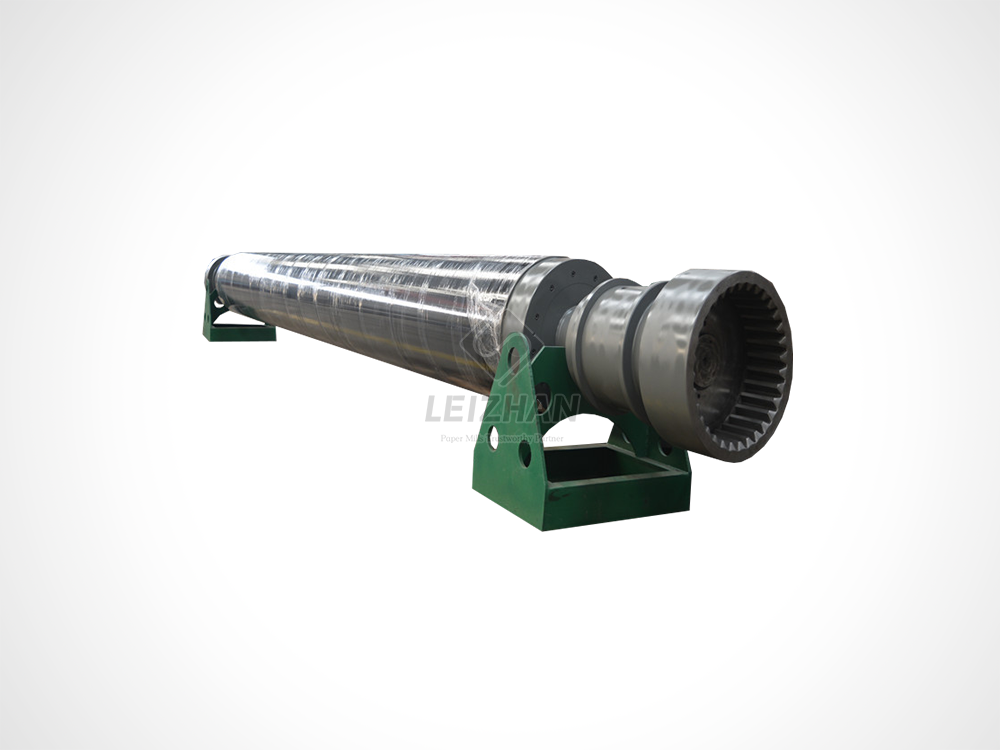
The Pope Reel: The Ultimate Choice for Heavy-Duty Production
When evaluating winding mechanisms for large-scale operations, the Pope Reel stands out as the optimal engineering solution. Instead of driving the center shaft directly, the paper web winds onto a spool driven by frictional contact with a large, rotating reeling cylinder. This is often called the reeling drum. This surface-driven approach ensures the winding velocity perfectly matches the speed of the paper web, preventing stretching or snapping.
The operational sequence on a high-speed line involves a highly synchronized mechanical process. Primary arms hold an empty spool and accelerate it to the exact operating speed of the drum. Once synchronized, these arms lower the empty spool onto the reeling drum to initiate the transfer of the paper web. As the roll begins to build, it seamlessly transfers to the secondary arms. These robust components apply controlled, precise pressure against the drum as the roll grows.
Modern systems utilize automated air jets, water jets, or specialized tape turn-up systems to sever the paper web and instantly attach it to the new spool. This continuous changeover capability allows facilities to maximize daily tonnage without ever slowing down the paper machine. In addition, the horizontal rail support system safely manages extreme Jumbo Roll weights. These weights easily exceed several dozen tons in heavy packaging grades. Engineered for versatility, modern reeling systems seamlessly handle trim widths ranging from 1092mm up to 5800mm, while sustaining working speeds from 100 to over 800 meters per minute.
Key Specifications: Sizing the Reel for Your Machine
Selecting the correct dimensions for your reeling equipment requires a careful, site-specific analysis of both machine output and facility logistics. It is never a simple plug-and-play endeavor.
The maximum Reel Diameter dictates the continuous runtime of the machine before a roll change is required. A larger diameter yields a longer continuous sheet. This improves efficiency by reducing the frequency of spool changes on the dry end and roll changes at the rewinder. However, this dimension is strictly constrained by the physical footprint of the mill and the maximum lifting capacity of the facility's overhead bridge cranes. An oversized roll exceeding safe working loads poses a catastrophic safety risk.
Equally critical is choosing the appropriate Core Size. This refers to the outer diameter of the iron or steel spool shaft. This dimension establishes the structural foundation of the roll. A larger core provides a stronger base, preventing the shaft from deflecting or bowing under immense weight. If the shaft bows, it causes uneven nip pressure against the drum, leading to soft centers and hard edges. Furthermore, this sizing must be universally compatible with the chucks on the downstream unwind stands of the slitter-rewinders.
Specifically, the reel's structural integrity and drive system must be engineered to exceed the maximum operating speed of the paper machine. High-speed operation induces severe centrifugal forces. Therefore, the width of the reel drum and the spacing of the arms must perfectly match the trim width of the paper web.
Mastering Winding Tension for Perfect Mother Rolls
The structural integrity of a finished roll relies primarily on the principles of TNT: Tension, Nip, and Torque. Among these variables, Winding Tension stands out as the most critical parameter. Proper control is the empirical difference between a perfectly cylindrical roll that processes flawlessly and a defective batch destined for the pulper.
If configured too tightly, internal stresses compound as the diameter grows. This intense pressure can literally fracture the paper under its own weight or crush the spool core. This makes it impossible for rewinder chucks to engage the shaft later. Conversely, if the web winds too loosely, the roll lacks structural stability. It will inevitably telescope or sag during transport, causing severe wrinkling. Telescoping occurs when layers slide laterally against each other like a collapsible spyglass.
It is vital to distinguish between nip pressure and web tension. Web tension is the longitudinal pulling force exerted on the sheet as it travels from the calender stack to the reeling drum. Nip pressure is the linear compressive force applied by the secondary arms pressing the growing roll against the drum.
Today’s advanced reeling sections rely heavily on highly automated control systems. Precision load cells installed on guide rolls continuously measure web tension in real-time. They feed this data into Programmable Logic Controllers. The controllers automatically modulate variable frequency drives and adjust pneumatic or hydraulic cylinders to taper the forces precisely as the roll mass increases. This automation ensures a flawless, consistent profile from the first wrap to the final layer.
Industry Trends: The Shift Toward Smart Reeling and Automation
Looking at broader manufacturing developments, the global paper industry is rapidly adopting smart automation and sustainable production practices. Mill managers no longer view the reeling section as just a mechanical winding station. Instead, it serves as a primary data collection point for quality control.
Recent industry shifts highlight a massive demand for automated turn-up systems and IoT-enabled predictive maintenance. By integrating smart sensors into the primary and secondary arms, operators can monitor vibration, bearing temperatures, and nip load distribution in real-time. This data-driven approach dramatically reduces web breaks at the dry end. In addition, modern automated splicing mechanisms minimize the amount of un-pulped paper waste generated during spool changeovers. This aligns perfectly with the industry's aggressive push toward zero-waste manufacturing and maximum energy efficiency.
Matching the Reel to Your Specific Paper Grade
The physical characteristics of the manufactured paper dictate the specific configuration and operational parameters of the reel. Equipment optimized for heavy packaging board will easily destroy a delicate tissue web.
To simplify the selection process, engineers rely on specific baseline parameters based on the paper grade being produced.
| Paper Grade | Typical Operating Speed | Nip Pressure Requirement | Core Deflection Risk |
| Tissue & Toilet Paper | High | Extremely Low | Low |
| Fine Printing & Writing | Medium to High | Moderate & Highly Uniform | Medium |
| Kraft & Corrugated Fluting | Medium | Very High | Extremely High |
Tissue manufacturing requires the utmost preservation of bulk, softness, and crepe. Because the web is exceptionally lightweight and fragile, tension must remain at an absolute minimum. Reels designed for these grades feature highly sensitive, low-friction pneumatic cylinders. These apply the lightest possible nip pressure, protecting the delicate surface structure from being crushed.
In contrast, kraft paper and corrugated fluting are heavy, dense grades designed for structural strength. These applications demand heavy-duty reels capable of sustaining high tension and massive nip loads. This winds the roll as tightly as possible. The primary and secondary arms must be heavily reinforced to handle the extreme kinetic energy and static weight of a fully wound kraft roll.
Upgrading Your Production Line: When to Replace the Reel
Operating an obsolete reeling section acts as a hidden drain on a paper mill's profitability. Mill managers must remain vigilant in identifying the mechanical symptoms that indicate a reel has reached the end of its useful lifecycle.
The most obvious sign of impending failure is a sudden increase in the frequency of paper breaks specifically at the dry end during spool changeovers. If the primary arms can no longer reliably synchronize speeds, the resulting tension spike will immediately snap the web. Another clear indicator is consistently uneven roll hardness. When operators observe rolls with soft edges and hard centers, it strongly suggests the reeling drum has become distorted or the secondary arms are applying asymmetrical pressure. Excessive vibration at high speeds serves as a critical warning sign of bearing wear or structural fatigue.
By retrofitting a state-of-the-art reel, mills can eliminate capacity bottlenecks. This instantly increases overall output tonnage while removing operators from hazardous nip points.
How the Right Reel Impacts Downstream Converting
The manufacturing process does not end when the jumbo roll ejects from the paper machine. The roll's quality dictates the efficiency of the entire finishing operation. The journey from the mother roll to the finished consumer product relies entirely on the structural integrity established at the reel.
Once transferred to the converting department, the roll loads onto a rewinder or slitter. Here, the true cost of bad reeling becomes painfully apparent. If a roll was wound with incorrect core parameters, it may wobble violently on the unwind stand. This forces operators to run the rewinder at a fraction of its designed speed. If poor tension control caused dished edges, significant portions of the paper edge must be trimmed away just to achieve a straight cut. This results in massive material waste and reduced yield.
Seamless integration between the paper machine and the converting department requires strict adherence to standardized reeling metrics. The winding profile must align perfectly with the braking capabilities of the rewinder's system. By ensuring the paper machine produces perfectly cylindrical rolls, mill managers guarantee downstream equipment operates at maximum design speed.
Conclusion
Choosing the right reel requires a careful, holistic evaluation of your entire production line. Mill operators must balance diameter constraints and core dimensions while ensuring tension control systems are perfectly calibrated to specific paper grades.
By leveraging reliable, industry-standard technology, facilities achieve continuous, high-efficiency winding that minimizes waste and maximizes safety. This component is far more than just a dry-end accessory. It is a vital mechanism dictating final paper quality and overall mill profitability.
Evaluate your current reeling section today to identify potential bottlenecks or safety risks. For customized engineering solutions, robust equipment designs, and professional technical support, explore the full range of options at https://www.leizhanpapertech.com to find the perfect fit for your mill's specific production goals.
FAQ
What is a mother roll in paper making?
A mother roll is the massive, continuous sheet of paper produced at the dry end of a paper making machine. It represents the final, uncut output of the primary manufacturing process before the paper transfers to the converting department for slitting into smaller, consumer-sized rolls.
Why is surface-driven winding preferred for high-speed machines?
Surface-driven winding facilitates highly efficient, continuous operation. By employing a rotating reeling drum and a synchronized dual-arm system, it allows operators to transfer the paper web to a new spool without stopping or slowing down the high-speed paper machine, maximizing production uptime.
What is the difference between surface winding and center winding?
In surface winding, the paper roll is driven by frictional contact with a rotating drum, ensuring the winding speed perfectly matches the web speed. In center winding, the drive motor directly turns the core shaft. Center winding requires complex torque adjustments as the roll diameter grows, making surface winding much more reliable for massive, high-speed paper machine outputs.
How does winding tension affect the final product?
Proper winding tension dictates the internal structural integrity of the roll. If the tension is too high, it can crush the core or snap the paper web under compounding pressure. Conversely, if it is too loose, the roll lacks stability and cannot be processed efficiently.
How do you prevent paper roll telescoping?
Telescoping is prevented by maintaining a precise, tapered tension profile throughout the winding process. Using automated load cells and programmable logic controllers ensures the web is wound tightly at the core and slightly looser toward the outer layers, locking the paper layers firmly in place during transit.
How do I choose the right reel diameter?
Selecting the ideal diameter requires analyzing your machine's production speed alongside facility logistics. Key determining factors include the physical floor space available at the dry end, the maximum safe lifting capacity of your overhead facility cranes, and the specific unwind stand requirements of your downstream converting equipment.
Can I upgrade the reel on an older paper making machine?
Yes, retrofitting an older machine with a modern, automated reel system is a highly effective modernization strategy. Upgrading improves winding precision, reduces paper waste during spool changes, and significantly enhances operator safety by automating hazardous web transfer processes.


