The paper manufacturing sector is currently navigating a period of unprecedented transformation. As global demand for high-quality paper products fluctuates, modern mills are increasingly reliant on sophisticated automation to bolster competitiveness and ensure sustained profitability. Operating an automatic paper making machine blindly is a recipe for operational instability. Even the most advanced machinery can succumb to inconsistent batch quality, frequent web breaks, or excessive raw material waste without the benefit of precise, real-time monitoring. Adopting advanced scanning technology acts as a catalyst for this evolution, effectively turning a standard production line into a self-correcting, high-precision facility. This guide serves to assist mill managers, engineers, and procurement specialists in selecting the optimal scanning architecture. By understanding the integration of essential systems, facilities can significantly maximize return on investment while guaranteeing superior product output.
Key Takeaways
Precision is Profit: Integrating a robust QCS Scanner into your production line drastically reduces material waste and ensures uniform paper quality across every batch.
Critical Metrics: The most essential scanners focus on Basis Weight Control and utilizing a highly sensitive Moisture Sensor to prevent web breaks and structural defects.
Seamless Automation: Modern scanners rely on advanced Auto Control systems and microcontroller logic to make real-time adjustments without requiring manual human intervention.
End-to-End Visibility: Implementing Reel Tracking scanners ensures that any defects are mapped and isolated before the final product reaches the customer.
Smart Integration: Choosing scanners that align with your machine's CAD design and hardware architecture is vital for long-term reliability and streamlined maintenance.
The Role of Scanners in an Automatic Paper Making Machine
The industry’s steady pivot toward Industry 4.0 standards has redefined the expectations of paper production. Automation has transcended basic mechanical timing, evolving into a landscape defined by data-centric decision-making. Within this context, industrial scanners serve as the eyes of your production line. These devices traverse the moving paper web, collecting thousands of discrete data points every second. This continuous information stream is transmitted directly to the central control unit. Without this feedback loop, a mill is vulnerable to high rejection rates, ballooning energy costs, and the frustration of unplanned downtime. By installing high-performance scanners, you effectively move away from "trial-and-error" production, enabling a proactive management style where potential issues are identified and mitigated before they manifest as critical failures.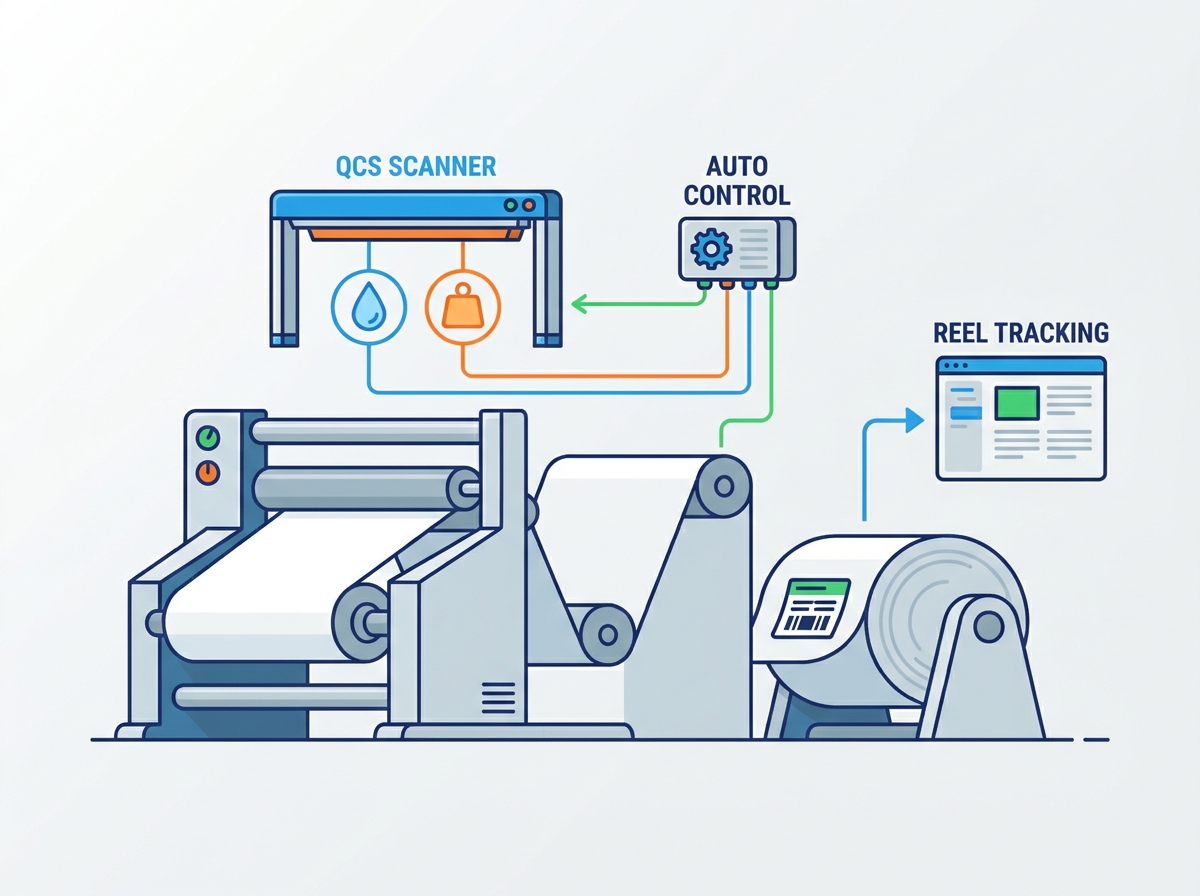
Why Your Automatic Paper Making Machine Needs a QCS Scanner
A Quality Control System represents the operational brain of a modern mill, aggregating multiple sensor inputs into a single, unified dashboard. By choosing a high-performance system, operators gain the ability to visualize the paper’s profile in real-time. Whenever the scanner identifies a deviation from the set parameters, it triggers immediate commands to the machine's actuators. This synchronization is the secret to minimizing off-spec production. For the mill manager, the benefits are clear: reduced raw material expenditure and a consistent, higher grade of finished product. Industry experts note that as print demands shift toward lighter, more specialty grades, the ability to control minute variations in profile becomes a significant competitive advantage. This level of precision often offsets the initial capital expenditure within a very short operational window.
Top Scanner Types for an Automatic Paper Making Machine
The selection of sensor technology is a pivotal decision that dictates the machine's overall efficacy. Understanding the function of each scanner type is essential for matching the technology to your specific paper grades and mill environment. Basis weight represents the mass per unit area of the sheet. Maintaining consistency here is fundamental for meeting customer specifications and ensuring cost-effective fiber usage. These scanners typically utilize advanced radiation or optical technologies to track mass across the width of the web. Precise control in this area prevents "fiber giveaway," where paper is inadvertently produced thicker than required, which can silently drain a mill's profitability over time. Water content remains perhaps the most volatile variable in the manufacturing process. A professional-grade sensor employs infrared or microwave technologies to verify the hydration levels within the sheet. If the web is overly dry, it becomes prone to brittle fractures; if it is too moist, it can lead to energy wastage during the drying process or even foster mold growth. Managing this balance is a core task for maintaining consistent machine speeds. Beyond weight and moisture, caliper—the physical thickness of the sheet—and ash content—the amount of filler material—must be precisely managed. Laser-based thickness sensors and X-ray-based ash sensors provide the granular data necessary for high-end paper manufacturing. These tools are non-negotiable for manufacturers focused on premium grades where opacity and tactile quality are the primary market differentiators.
Enhancing Production with Auto Control and Microcontroller Logic
Scanners perform optimally only when they function within an integrated, automated loop. By communicating directly with the Programmable Logic Controllers, the system facilitates seamless loop management. Consider the scenario where a sensor detects a localized thin spot. The system instantly signals the headbox to adjust the slice lip, compensating for the flow variance without requiring a human operator to leave the control room. Similarly, moisture-based variations trigger the modulation of steam box pressures. This "self-thinking" capability allows the machine to maintain production within incredibly tight tolerances, reducing the variability that typically plagues older, manual-intervention setups.
The Importance of Reel Tracking in Automatic Paper Making Machines
The final stage of production is just as critical as the initial forming process. Tracking systems serve as the final gatekeeper, monitoring the paper web as it winds onto the jumbo reel. By creating a "digital fingerprint" for every reel, the system maps the exact location of defects—such as small holes or streaks—in real-time. This functionality enables the team at the winder to isolate and remove only the affected sections, rather than discarding entire rolls. This precision not only bolsters your reputation for quality but also serves as a vital safeguard against costly returns, protecting the bottom line while ensuring high customer satisfaction.
Overcoming Common Pain Points: Choosing the Right Scanner
While the technical advantages are compelling, many mills hesitate due to concerns over reliability and maintenance. It is common for sensors to experience drift over time, but selecting systems with built-in auto-calibration ensures accuracy is maintained without constant manual resets. Furthermore, the paper mill environment is notoriously harsh. High humidity, airborne fibers, and elevated temperatures can degrade sensitive electronics quickly. Operators should demand industrial-grade housing with integrated air-purge systems to ensure hardware longevity. Additionally, prioritize systems with an intuitive user interface, because if your personnel cannot interpret the data quickly, the potential for efficiency gains is wasted.
How to Integrate Scanners into Your Existing Automatic Paper Making Machine
Retrofitting a modern scanning frame into an existing facility requires a methodical approach, particularly when aligning O-frame or C-frame dimensions with your machine's physical layout. It is essential to work with engineering partners who possess deep experience in legacy machine retrofitting. These partners can ensure that new hardware integrates smoothly with your current PLC architecture and provides long-term value. By carefully considering the CAD design of your current machinery during the planning phase, you can ensure that the upgrade provides a seamless, high-performance solution that propels your mill into the next generation of productivity.
Can I add a new QCS Scanner to an older automatic paper making machine?
Yes, most modern scanner frameworks are modular, allowing them to be retrofitted onto existing production lines. The success of the project typically depends on verifying the available physical clearance and ensuring that your existing PLC architecture is robust enough to handle the integration of high-speed data inputs.
How often does a Moisture Sensor on a paper machine need calibration?
While older iterations required frequent, intensive manual resets, contemporary infrared moisture sensors feature advanced auto-calibration logic. Industry best practices now suggest a manual accuracy verification once every three to six months, depending on the specific dust and temperature conditions of your mill floor.
What is the difference between basis weight control and caliper measurement?
Basis weight focuses on the mass of the paper fibers, which directly dictates your raw material expenditure. Caliper, conversely, measures the actual thickness of the sheet, which is critical for defining printability and bulk. Both measurements are indispensable for maintaining high-quality standards in modern manufacturing.
How does reel tracking improve my bottom line?
Reel tracking allows for intelligent defect management by mapping issues in the jumbo roll. This ensures that you aren't shipping flawed product to clients, thereby reducing the likelihood of expensive rejections and returns, all while maximizing the yield from each roll of paper.


