The efficiency and quality of paper production are dictated by the precision of the wet-end process. At the absolute core of this transformation lies the continuous mesh belt system. A critical, yet often overlooked, design parameter in these systems is the total span of the forming table. As the dilute pulp travels from the approach flow system onto the moving mesh, the physical dimension of this section governs water removal capacity, structural sheet formation, and overall factory productivity. This guide explores how table dimensions influence performance and why optimizing this specific component is essential for modern manufacturing facilities.
Key Takeaways
Drainage Control: Extended table spans provide the necessary time for gravitational and vacuum-assisted water removal, which acts as a critical operational parameter for heavy-weight paper grades and high-speed production lines.
Formation Quality: The physical length allows for a highly controlled, gradual transition from a dilute liquid slurry to a solid wet sheet, directly impacting fiber orientation, retention, and structural uniformity.
Operational Balance: Increasing the loop perimeter presents an engineering trade-off. While it offers higher production potential, it simultaneously introduces increased mechanical complexity, higher power consumption, and elevated maintenance costs.
System Integration: Dimensions must be meticulously balanced with slice settings and specific stock density levels to prevent structural defects such as pinholes, streaks, or uneven basis weight profiles.
Understanding the Role of the Wire Section in a Fourdrinier Paper Making Machine
The fundamental principle of modern paper manufacturing relies heavily on the wet-end process, where the transformation from a liquid suspension to a continuous solid web begins. The wire section, frequently referred to as the forming table, functions as the primary dewatering zone and the foundational building area for the paper sheet.
When the dilute fiber slurry—typically consisting of over 99% water and less than 1% solid fibers—exits the approach flow system, it is deposited onto the moving continuous mesh belt known as the Fourdrinier wire. This highly engineered fabric serves a dual purpose. First, it acts as a high-speed mechanical conveyor transporting the fragile web toward the press section. Second, it functions as a highly precise filtration medium.
The physical length of this section is never arbitrary. It is a calculated engineering dimension that dictates the residence time of the pulp on the table. A longer residence time allows for a more controlled extraction of water. If designed correctly, it facilitates the retention of microscopic fine fibers and chemical additives while allowing excess water to pass seamlessly through the mesh. Understanding this continuous filtering and conveying mechanism is the vital first step in diagnosing formation issues and optimizing the overall productivity of the mill.
The Relationship Between Wire Length and Drainage Capacity
Water removal on the forming table does not occur at a linear rate. Instead, it follows a specific, carefully plotted curve, transitioning through distinct phases: initial free dewatering, foil-assisted pulsation, and high-vacuum extraction. The physical length of the loop dictates exactly how much time the stock has to pass through these critical phases.
For high-speed machines or operations producing high-basis-weight paper like linerboard or corrugated medium, an extended span is structurally necessary. Heavy paper grades contain a massive volume of water per square meter of forming fabric. If the table is too short, operators are forced to apply aggressive vacuum forces far too early in the process just to remove the required volume of fluid. Specifically, this aggressive early drainage often pulls fine fibers and expensive filler materials straight through the mesh. This results in a frustrating defect known as "two-sidedness," where the top and bottom of the paper sheet exhibit distinctly different textures and printability characteristics.
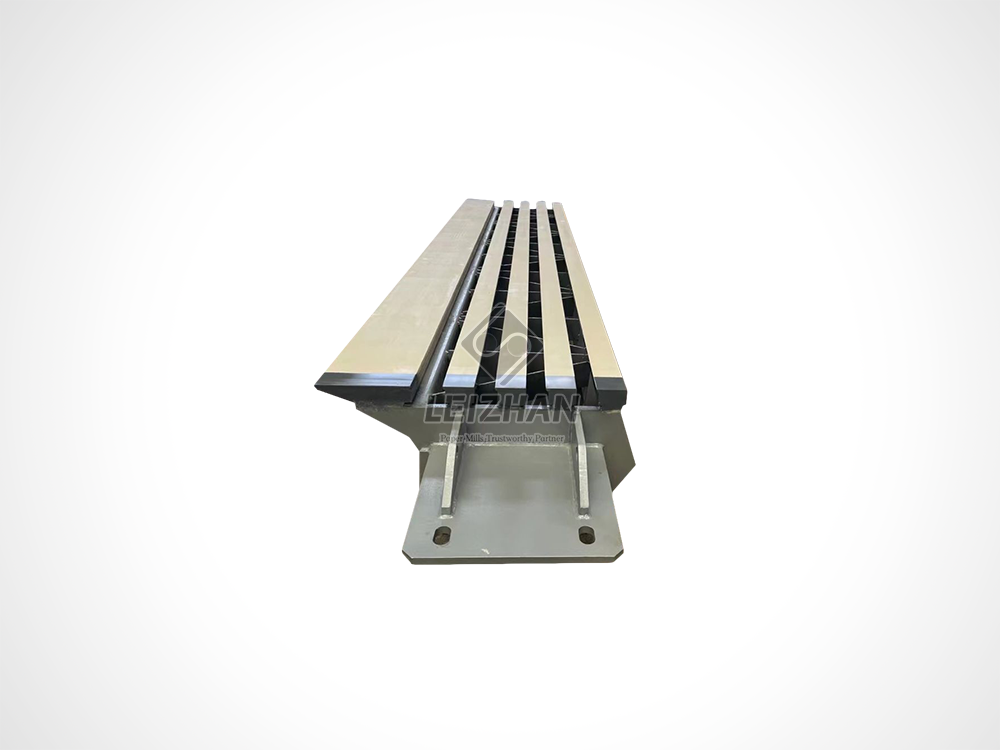
By extending the available space, engineers can space out the dewatering elements—such as hydrofoils, low-vacuum boxes, and high-vacuum suction boxes—much more effectively. This spatial distribution allows for a gentler, more progressive water removal process.
| Drainage Zone | Primary Mechanism | Impact of Table Extension |
| Forming Zone | Gravity and initial foil pulsation | Allows longer time for fiber leveling; drastically reduces early fine loss. |
| Mid-Table | Low-vacuum foils and drainage boxes | Enables gradual density increase without compacting the mat prematurely. |
| Dry-End Table | High-vacuum suction boxes | Provides adequate space for multiple boxes, ensuring the web reaches optimal dryness. |
Impact of Wire Length on Sheet Formation and Consistency
The ultimate quality of the final paper product—its tensile strength, opacity, and surface smoothness—is heavily dependent on "formation." This term refers to the uniform distribution of fibers within the sheet. The dimensions of the forming table play a pivotal role in managing the consistency of the pulp as it travels down the line.
When the stock lands on the mesh, its solid mass percentage is extremely low. The primary goal is to raise this solid content to approximately 15% to 20% before the delicate web is transferred to the press section. If the travel distance is inadequate, operators must remove water rapidly. Unfortunately, rapid water removal "freezes" the fiber mat too quickly. When fibers are locked into place before they have time to disperse uniformly, they tend to clump together into localized bundles. This defect, known as flocculation, leads to a cloudy, uneven sheet plagued with weak spots.
In contrast, an optimized table span allows the top layer of the slurry to remain fluid for a slightly longer duration. This sustained fluidity, combined with the micro-turbulence generated by the hydrofoils beneath the mesh, keeps the fibers in a continuous state of suspension. By preventing them from grouping together prematurely, the extended time ensures that when the fiber network finally locks, the distribution is highly uniform.
The Synergy Between Headbox Slice and Wire Geometry
The performance of the wet-end cannot be evaluated in isolation; it works in strict mechanical synergy with the approach flow. The headbox slice is the adjustable opening that determines the thickness, velocity, and angle of the pulp jet as it strikes the moving fabric.
The relationship between the jet velocity and the mesh speed is known as the efflux ratio. For optimal formation, the stock must land with minimal hydraulic disruption. If the jet hits at the wrong angle or speed, it causes turbulent hydraulic jumps, leading to visible streaks in the finished reel. A longer table provides much more flexibility in adjusting the impingement point, which is the exact location where the fluid jet meets the fabric.
Furthermore, the physical dimensions must perfectly accommodate the specific flow dynamics initiated by the slice opening. If a short table is used for a heavy board grade, it would be immediately overwhelmed by the high volume of stock, leading to edge spills or incomplete dewatering. By aligning the slice geometry with an appropriate table length, operators ensure a smooth, stable flow that maintains its structural integrity until it reaches the dry line.
Optimizing the Forming Board and Initial Drainage Zone
Immediately following the jet impingement zone is the forming board, which acts as the first solid stationary element beneath the mesh. Interestingly, the primary function of this component is not actually to remove water. Rather, it serves to support the fabric at the point of impact and to deliberately delay initial dewatering.
If water drains too rapidly the exact moment the jet hits the mesh, the bottom layer of fibers will instantly lock onto the synthetic threads, pinning the remaining fibers above in a chaotic, unoriented state. This rapid sealing prevents proper water extraction further down the line. To combat this, the board creates a solid surface that temporarily halts downward fluid flow, allowing the stock to level out and the fibers to disperse evenly across the cross-machine direction.
The design and positioning of this initial impact zone are deeply connected to the overall loop perimeter. On a machine equipped with a long wet-end, engineers have the luxury of using a wider board to maximize initial sheet leveling without the anxiety of running out of extraction space later on. Balancing this initial delay with the total available space is a fundamental best practice, ensuring the critical transition from free-flowing slurry to a structured fiber mat happens under tightly controlled hydraulic conditions.
Challenges of Excessive or Insufficient Wire Length
In the engineering of wet-end systems, determining the precise dimensions of the forming section is a critical exercise in balancing fluid dynamics with mechanical constraints. Deviating from the optimal dimensional parameters can introduce significant operational nightmares, impacting both product quality and manufacturing economics.
While a longer section theoretically provides ample time for gradual water removal, exceeding the necessary length introduces cascading mechanical and financial inefficiencies. The primary drawback of an excessively long loop is the exponential increase in friction. As the fabric travels over stationary elements, it encounters continuous drag. A longer loop equates to a larger surface area subjected to this friction, which necessitates significantly higher drive power from the motors just to maintain operational speeds. Additionally, drawing vacuum on a sheet that has already passed its optimal dry line wastes electrical energy and accelerates abrasive wear on both the synthetic fabric and the ceramic covers.
Conversely, a section that lacks sufficient length presents immediate, severe limitations. The most pressing issue is inadequate moisture removal. If the slurry does not have enough time to release its free water before reaching the couch roll, the wet web will enter the press section with excessive moisture. This drastically reduces the wet web strength, making the sheet highly susceptible to breaks during the open draw transfer. Operators are then forced to employ aggressive tactics, applying high vacuum pressure too early, which disrupts the delicate fiber matrix.
| Paper Grade Category | Drainage Characteristic | Optimal Dimensional Requirement |
| Tissue & Towel | Very Fast | Short (Focus on rapid formation) |
| Fine Printing Paper | Moderate | Medium (Focus on uniform fiber distribution) |
| Corrugated Medium | Slow | Long (Focus on sustained water removal) |
| Kraft Linerboard | Very Slow | Maximum Length (Focus on heavy dewatering) |
Operational Efficiency, Maintenance, and Industry Trends
The dimensional properties of the forming section do not merely affect paper quality; they dictate the maintenance schedule and energy profile of the entire facility. Recent industry trends highlight a massive shift towards digitalization and sustainability in wet-end operations. As energy costs rise and environmental regulations tighten, modern mills are integrating advanced sensors to monitor real-time moisture profiles and fabric wear.
This data-driven approach allows operators to dynamically adjust vacuum levels, minimizing drag and extending fabric life without physically altering the machine's footprint. In addition, tracking wear and tear on extended loops is a major variable in operating budgets. Longer loops also require more sophisticated guiding and tensioning systems to prevent edge curling and catastrophic fabric failure.
Energy efficiency remains a paramount concern. To mitigate the power demands of long tables, many facilities are upgrading to variable frequency drives on the turning rolls to allow for precise torque matching. Furthermore, the growing demand for lightweight packaging grades has pushed engineers to innovate multi-layer synthetic fabrics and advanced structural ceramics. These components offer a lower coefficient of friction, which reduces drive power requirements even on exceptionally long tables.
Conclusion
The physical span of the forming section is far more than a simple structural dimension—it is a fundamental performance variable that dictates the rhythm of the production line. By calibrating these dimensions in relation to specific density targets and fluid extraction requirements, paper mills can significantly enhance their sheet formation and output. Proper system design prevents costly operational failures, while a balanced approach to machine speed and friction ensures a uniform final product. Understanding these dynamic relationships is the key to maintaining a competitive edge and extending equipment lifespan in today’s demanding industry.
Q1: Why does a longer wire length improve paper quality?
Extended dimensions provide the critical element of time, which is essential for controlled fluid dynamics. When the slurry travels down a longer table, the water can be drained gradually through gravitational forces and low-intensity vacuum. This gentle process prevents the rapid locking of the fiber matrix. By allowing the fibers more time to remain in a fluidized state, they orient themselves more uniformly, reducing the likelihood of fiber clumps and leading to a sheet with superior opacity and strength.
Q2: How does headbox slice adjustment affect the wire section?
The mechanical opening at the headbox controls the speed, thickness, and impingement angle of the pulp jet. If the jet speed is not perfectly synchronized with the mesh speed, it causes severe hydraulic turbulence. This disruption ruins the initial fiber mat and causes streak defects. Additionally, if the volume of fluid deposited exceeds the extraction capacity of the table, excess moisture will carry over into the press section, resulting in severe runnability issues.
Q3: Can I extend the wire length of an existing machine?
Modifying the physical length of an existing setup is a complex engineering task. It goes far beyond simply ordering a longer fabric loop. Extending the table requires a comprehensive structural analysis of the machine frame, upgrading the drive motors to handle increased frictional drag, and expanding the vacuum system infrastructure to accommodate additional suction boxes. Such modifications should only be executed following a rigorous professional audit.
Q4: What is the most critical factor when selecting wire length?
The most critical factor is the specific grade of paper intended for production, defined primarily by its basis weight and the freeness of the pulp. Heavy-weight products carry a massive volume of water that requires an extended duration to drain properly without crushing the sheet. Conversely, lightweight grades like tissue require rapid, immediate formation, making shorter spans more effective and economically viable.
Q5: How does consistency relate to wire length?
Consistency refers to the percentage of solid fiber mass relative to the total volume of water. At the initial impact zone, this percentage is typically very low. The primary function of the table span is to increase this solid mass to approximately 15% to 20% by the time it reaches the couch roll. Running a highly dilute slurry inherently requires a longer section to provide the necessary physical space and time for the massive volume of water to drain effectively.


