Achieving specific paper metrics goes far beyond sourcing high-quality raw pulp. Consistent GSM, exact caliper, and optimal surface finishes rely entirely on the mechanical configuration of your production line. When paper jams occur or ink bleeds during a print run, operators often blame the paper stock itself. Yet, the true origin of these defects begins on the factory floor. The physical machinery dictates the final product limitations.
For manufacturers and procurement leaders evaluating capital equipment, understanding this machinery proves vital. You must recognize how specific machine sections manipulate fiber, moisture, and compression. This deep mechanical knowledge helps you forecast product capabilities effectively. It also empowers you to make intelligent, evidence-based upgrade decisions.
We will explore how distinct operational zones directly engineer final paper specifications. A single machine segment can alter structural integrity dramatically. From the initial headbox distribution to the final calender stack, each section plays a targeted role. You will learn how these sequential zones produce the exact tolerances required for commercial printing and packaging.
Key Takeaways
Basis Weight & Grain: The forming section dictates fiber distribution, establishing the foundational GSM (grams per square meter) and structural grain direction.
Moisture & Density: The press section removes up to 50% of water weight; the pressure applied here establishes the baseline trade-off between paper density and thickness.
Surface Integrity: Inline size presses (e.g., film presses) apply starch/coatings that determine ink holdout, stiffness, and suitability for commercial laser or inkjet printers.
Final Caliper: Calendering mechanically compresses the sheet, finalizing the exact thickness (mils/pts) and achieving target Sheffield smoothness ratings.
Automation at Scale: Upgrading to a high-speed paper making machine requires advanced Quality Control Systems (QCS) to prevent quality degradation at higher production velocities.
The Forming Section: Establishing Basis Weight (GSM) and Fiber Orientation
The manufacturing journey begins at the headbox. It distributes a highly diluted pulp slurry onto a continuously moving forming wire. Operators must control the initial fiber-to-water ratio strictly. The mixture typically contains just 1% fiber and 99% water. This extreme dilution prevents fibers from clumping together. Smooth distribution ensures a uniform sheet formation. A modern Paper Making Machine relies on advanced dilution control valves to manage this slurry.
The volume and flow rate exiting the headbox determine the foundational basis weight. We commonly measure this as GSM (grams per square meter). If the flow rate fluctuates, the paper thickness varies across the web. Modern headboxes utilize localized slice lip adjustments. They correct cross-direction (CD) weight variations continuously. This ensures you maintain a perfectly uniform GSM from one edge to the other.
Fiber orientation represents another critical quality metric dictated here. The relationship between the jet speed and the wire speed controls this alignment. The jet is the slurry exiting the headbox. The wire is the mesh belt receiving it. If the jet travels faster than the wire, fibers align strictly in the machine direction. This creates a "grain long" paper property. If you match the speeds closely, fibers scatter more randomly. Print shops care deeply about this grain direction. It dictates downstream folding stability and prevents cracking on book spines.
Best Practices for the Forming Section
Monitor the jet-to-wire speed ratio constantly to maintain desired tensile strength parameters.
Utilize localized dilution control to minimize cross-direction weight profile variances.
Clean the slice lip regularly to prevent streaks and uneven basis weight distribution.
Pressing and Drying: Balancing Caliper, Density, and Structural Strength
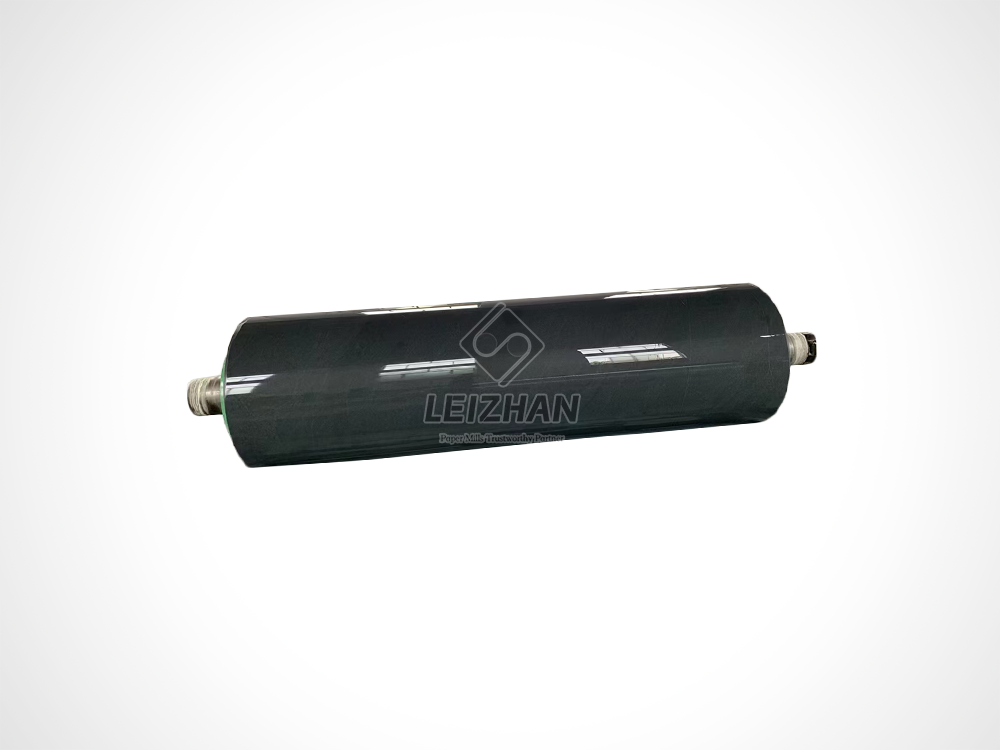
As the wet sheet leaves the forming wire, it enters the press section. Heavy rollers physically squeeze water out of the fibrous web. They press the sheet against highly absorbent felt belts. This mechanical pressing removes up to 50% of the water weight. It occurs before the paper ever reaches the heated drying cylinders. Thermal drying costs significantly more than mechanical pressing. Therefore, optimizing this section improves overall energy efficiency.
The pressure applied here directly impacts the final paper thickness. You face an unavoidable trade-off between caliper and density. High pressing pressure compacts the internal fibers tightly. This increases sheet density and boosts tensile strength. However, it simultaneously reduces bulk. A heavily pressed 80 lb text paper will feel notably thinner than lightly pressed paper of the identical weight.
Uneven drying introduces massive implementation risks. After pressing, the sheet snakes through steam-heated dryer cylinders. If your machine lacks strict temperature controls, it creates severe internal stress. Moisture profiles must remain consistent across the web. When paper contains uneven moisture, it reacts poorly in print shops. It absorbs ambient humidity unevenly. This creates warped sheets or wavy edges. Such defects cause catastrophic paper jams in high-speed commercial printers.
Caliper vs. Density Trade-off Comparison
| Pressing Force Level | Paper Density | Final Caliper (Bulk) | Tensile Strength | Best Application |
| Low Pressure | Low | High (Thick) | Lower | High-bulk book pages |
| Medium Pressure | Moderate | Moderate | Standard | Standard office copy paper |
| High Pressure | High | Low (Thin) | Maximum | Glossy catalogs, heavy cover stock |
Transitioning between product grades requires extreme mechanical flexibility. Moving from lightweight 20 lb bond to heavyweight 100 lb cover stresses the machinery. You need equipment capable of adjusting nip pressure dynamically. If you apply too much pressure to a thick sheet, you crush the internal structure. This destroys the structural integrity entirely.
Surface Sizing and Coating: Engineering Printability and Ink Holdout
Paper strength and printability require more than just pressed fibers. The size press addresses these needs directly. Facilities typically locate this unit between two drying sections. The size press applies polymer coatings to the paper surface. We usually use modified liquid starch for this application. This coating fundamentally alters how the paper interacts with liquids later on.
Configuration impacts production stability immensely. Traditional flooded nips create a continuous puddle of starch. The paper web drags directly through this puddle. This drag creates substantial tension. It often causes web breaks when processing weaker or thinner paper grades. Modern facilities prefer pre-metered film presses. A film press applies a precise layer of starch onto a transfer roll first. The roll then presses the starch onto the paper. This eliminates the puddle. It offers much higher operational stability. You also gain precise control over the exact coating weight.
Proper surface sizing delivers incredible print quality outcomes. It increases structural stiffness. More importantly, it seals the microscopic pores of the paper. This sealing process dictates ink holdout. When a commercial inkjet printer applies liquid ink, unsized paper absorbs it rapidly. The ink spreads along the fibers. This causes feathering and fuzzy text. Properly sized paper keeps the ink sitting on the surface. Colors appear vivid and crisp. It also protects the sheet from blistering under the extreme heat of laser printer fusers.
Decision Framework for Upgrading Sizing Equipment
Assess Web Tension Sensitivity: Determine if your current product mix suffers frequent breaks due to flooded nip drag.
Evaluate Coating Precision: Decide if you need the micro-level coating control offered by pre-metered film press technology.
Analyze End-User Print Methods: Verify if your target market relies heavily on high-heat laser fusers or high-moisture commercial inkjet systems.
Calculate Dryer Load: Ensure your post-size dryers can handle the added moisture introduced during the sizing application.
Calendering: The Final Polish for Thickness and Smoothness
The calender stack serves as the final mechanical intervention. It consists of highly polished, heavy rolls stacked vertically. They iron the dried paper web under extreme pressure and heat. This section acts as the ultimate control point for precise paper caliper. Operators measure this final thickness in points (pts) or mils. Every adjustment here directly impacts how the final sheet feels to the consumer.
Calendering drastically alters the Sheffield smoothness rating. A lower Sheffield number indicates a much smoother surface. Manufacturers utilize two primary methods here. Hard-nip calendering uses stacked steel rolls. This creates highly compressed, glossy paper. It provides an exceptionally smooth surface for high-resolution photo printing. However, it sacrifices substantial thickness. The heavy steel crushes the remaining bulk out of the sheet.
Alternatively, soft-nip calendering utilizes a combination of steel and polymer-coated rolls. The polymer surface yields slightly under pressure. It conforms to the microscopic contours of the paper web. This method preserves much more bulk. It maintains the desired thickness while still achieving a remarkably smooth finish.
Buyers must consider modularity when evaluating calender stacks. The ability to adjust nip pressure and temperature zones is crucial. This flexibility dictates your overall production range. A highly modular calender allows a single line to output varied products. You can produce textured, high-bulk cover stock in the morning. Then, you can switch to ultra-smooth text paper in the afternoon.
Scaling Production: Evaluating a High-Speed Paper Making Machine
Scaling up production introduces severe operational challenges. As machine velocity increases, the margin for error shrinks exponentially. At lower speeds, operators have time to manually correct minor basis weight fluctuations. At speeds exceeding 1,500 meters per minute, manual intervention becomes impossible. Minor moisture variations or tension spikes quickly compound. They result in catastrophic web breaks or miles of rejected product.
A modern High‑speed paper making machine relies completely on advanced automation. Closed-loop Quality Control Systems (QCS) become mandatory. You cannot scale profitability without them. These automated scanners traverse the width of the moving web continuously. They utilize beta rays to read GSM. They use infrared sensors to measure moisture levels. They use magnetic reluctance sensors to gauge exact caliper. They gather this data in real-time.
The system feeds this data back to the primary control units instantly. If the scanner detects a thin spot, it signals the headbox. The dilution valves adjust automatically to add more fiber to that exact zone. If moisture runs high, it increases steam pressure in the dryer cylinders.
When shortlisting OEM vendors, evaluate their sensor technology integration rigorously. High mechanical speed only generates profit if the QCS adjusts fast enough. Grade changes present the highest risk. Transitioning from a 60 lb text to an 80 lb text requires stabilizing new parameters. If the QCS responds slowly, the machine produces tons of off-spec paper before settling. Fast response times prevent massive waste during these critical transitions.
Conclusion
Final paper quality represents a direct reflection of your machine configuration. You cannot separate the physical product from the mechanical process. Basis weight and grain direction start at the forming headbox. Structural integrity and baseline density take shape in the press section. Crucial printability and ink holdout properties are coated at the size press. Finally, precise caliper and smoothness are ironed out in the calender stack.
By understanding these mechanical zones, you eliminate guesswork. You stop blaming raw materials for issues caused by inadequate pressing or poor moisture profiling. Upgrading individual components or integrating advanced sensor loops transforms your output capabilities entirely.
We encourage you to audit your current product catalogs aggressively. Compare your desired paper specifications against your existing machine tolerances. Identify where your mechanical limits restrict your product quality. Request a thorough technical consultation when exploring new capital equipment. Mapping your specific quality needs to exact machinery capabilities ensures long-term production success.
FAQ
Q: How is exact paper thickness controlled on a paper making machine?
A: It is controlled primarily through a combination of the headbox and the calender stack. The headbox flow rate determines the initial mass of fibers distributed onto the wire. Later down the line, the calender stack dictates how tightly those dried fibers are mechanically compressed. Adjusting nip pressure on the calender rolls finalizes the exact caliper measurement.
Q: Can a single machine produce both thin office paper and heavy cardstock?
A: Yes, but it requires significant operational flexibility. The machine needs adjustable headbox slice lips to handle different slurry volumes. It also requires variable press nip pressures to avoid crushing thicker sheets. Most importantly, it needs robust, modular drying capacity. Thicker cardstock requires substantially more thermal energy to dry completely compared to thin office paper.
Q: Why does machine speed affect paper strength?
A: Higher speeds can cause fibers to align too strictly in the machine direction (MD). The jet-to-wire speed ratio dictates this alignment. If this ratio isn't optimized for high-speed runs, the paper develops high MD tensile strength but weak cross-direction (CD) strength. This imbalance leads to frequent web tearing and poor downstream foldability.


