Introduction
Product damage during transit is a hidden tax. It silently drains millions of dollars from global supply chains every single year. For facility managers and packaging engineers, finding reliable ways to secure pallets is an absolute top priority. The Skid Wrapping Machine has emerged as the ultimate solution for standardizing containment and eliminating back-breaking manual labor. Nevertheless, a lingering hesitation persists among floor operators. Do the top platens and mechanical arms used in these machines actually crush or damage fragile inventory?
This is a completely valid concern. Applying excessive downward force to delicate items will inevitably lead to product deformation. Fortunately, modern automated wrappers are specifically engineered to protect goods, not destroy them. Advancements in sensor technology have transformed these machines from blunt instruments into precision tools.
This comprehensive guide explores how downward force affects a unitized pallet. We will break down the critical importance of overall structural integrity and outline the best practices for material transport. By mastering these underlying mechanics, you can fine-tune your equipment to guarantee consistent, damage-free packaging on every shift.
Key Takeaways
- Proper Calibration is Key: Automated equipment will not inherently damage your inventory as long as the downward force and film tension are correctly calibrated to your specific product type.
- Structural Integrity Prevents Damage: The primary goal of stretch wrapping is to achieve maximum containment. Interestingly, loose containment is often far more dangerous than over-wrapping.
- Material Transport Matters: Even perfectly wrapped pallets can be severely compromised if proper transport protocols are ignored before or after the wrapping cycle.
- Modern Technology Protects Goods: Upgrading to automated wrapping equipment minimizes human error. This provides consistent, damage-free containment for every single pallet leaving your dock.
Industry Trend: The Clash Between Lightweight Packaging and Legacy Equipment
According to recent supply chain analyses, the global push for sustainability has led to a significant reduction in corrugated box thickness over the past five years. Brands are aggressively lightweighting their packaging to save on freight costs and reduce carbon emissions. Consequently, pallets are becoming inherently more fragile.
This trend directly collides with legacy end-of-line packaging equipment. Older pneumatic arms apply blunt, unregulated force, which easily crushes these modern, thinner boxes. In response, the industry is rapidly pivoting toward smart, sensor-driven platens. These modern systems dynamically adjust downward force based on real-time resistance, ensuring that even the most delicate, eco-friendly packaging remains perfectly intact during the stabilization process.
Understanding How a Wrapping Machine Secures Loads
To accurately determine whether packaging equipment causes damage, we must first dismantle the mechanical principles behind industrial wrapping.
The Anatomy of the Equipment
While various models dominate the market, most standard automated wrappers share a similar engineering DNA. The turntable serves as the heavy-duty base that rotates the pallet. Concurrently, the vertical mast houses the film carriage. This carriage glides up and down to dispense the stretch film evenly. For unstable, tall, or lightweight pallets, the machine utilizes top platens. These overhead mechanisms descend from a mechanical arm to apply a stabilizing downward force on the top tier of the pallet. Every single component must work in perfect harmony to ensure the product remains intact.
How Clamps and Top Platens Work
The primary function of overhead platens is temporary stabilization. Imagine a pallet stacked high with empty plastic containers. The initial rotation of the turntable generates centrifugal force. This force can easily cause lightweight items to shift, slide, or tumble. The top platen descends and holds these unstable items firmly in place just long enough for the film carriage to apply the first few securing layers of stretch wrap. Once the film establishes baseline stability, the platen maintains gentle contact until the cycle finishes.
The Goal of Unitization
Ultimately, the machine's overarching purpose is unitization. This is the transformative process of turning dozens of individual, loose boxes into one solid, immovable block. When items are properly unitized, they act as a single rigid structure. This collective strength is exactly what protects individual boxes from the harsh vibrations, sudden stops, and impacts typical of long-haul transportation.
The Truth About Clamp Pressure: Do Clamps Cause Damage?
Warehouse supervisors often hesitate to deploy top platens on fragile goods. They fear the downward force will crush the uppermost layers. However, looking closely at the physics of the machine reveals a much more nuanced reality.
The Short Answer
Do these mechanisms inherently cause damage? No. Equipment-induced damage only manifests when there is a fundamental mismatch between the applied Clamp Pressure and the structural crush-resistance of the packaged goods themselves. A properly calibrated machine distributes weight evenly across the surface area. It utilizes wide, padded surfaces to prevent localized puncturing.
High Pressure vs. Fragile Goods
Disasters typically occur when excessive downward force is mistakenly applied to easily crushable items. Tissue paper rolls, delicate electronic components, and empty PET bottles possess very low vertical compression strength. If the pneumatic cylinders controlling the overhead arm are cranked up to industrial heavy-duty levels, the resulting force will immediately buckle the top-tier boxes. This deformation compromises the structural integrity of the entire pallet. It leads to a cascading failure once the pallet is stacked inside a bumpy trailer.
The Goldilocks Zone
Preventing this type of destruction requires finding the perfect balance. The downward force must be just enough to hold the items steady during the first few rotations, but gentle enough to prevent any cardboard flexing. Modern equipment allows logistics engineers to fine-tune this metric down to the exact pound per square inch. This ensures fragile goods are cradled securely.
Core Comparison: Legacy vs. Modern Top Platens
| Feature |
Legacy Pneumatic Clamps |
Modern Sensor-Driven Platens |
| Force Application |
Blunt, unregulated air pressure |
Dynamic, variable motor control |
| Damage Risk |
High for lightweight/fragile goods |
Near zero when properly calibrated |
| Adaptability |
Requires manual valve adjustments |
Auto-detects load height and resistance |
| Best Suited For |
Heavy, rigid items like bricks or metal |
Eco-friendly packaging, PET bottles, electronics |
Common Causes of Damage During the Wrapping Process
When a pallet comes off the turntable with crushed corners or dented sides, operators are quick to point fingers at the overhead clamps. In reality, empirical observation often points to entirely different culprits hidden within the packaging line.
Incorrect Tension and Pre-Stretch Settings
You must distinguish between vertical crushing damage and lateral film tension damage. If the corners of your boxes are caved inward, the issue is rarely the top platen. Instead, this indicates that the stretch film is being applied with excessive tension. If the pre-stretch gears in the film carriage are jammed or incorrectly calibrated, the film attempts to shrink back to its original size too aggressively. It acts like a giant rubber band, slowly and relentlessly crushing the inventory from the sides.
Uneven Stacking and Poor Palletizing
A wrapping machine can only secure what is presented to it. An improperly built Skid Load is highly vulnerable to any external pressure. Pyramid stacking creates severe structural weak points. When a top platen applies even minimal pressure to an uneven, jagged surface, the force concentrates on a few isolated points rather than distributing evenly. This inevitably leads to immediate, localized crushing.
Outdated or Poorly Maintained Equipment
Older wrappers rely on aging pneumatic systems. They lack precise regulatory controls. Air pressure spikes without warning. When a heavy top platen drops abruptly rather than descending smoothly, the kinetic shock can shatter delicate goods. Regular maintenance of air cylinders is non-negotiable to prevent these mechanical anomalies.
How to Optimize Equipment for Maximum Stability
Achieving a zero-damage packaging line requires a highly systematic approach to equipment calibration. Floor operators must match the machine's specific parameters to the physical characteristics of the inventory.
Assessing Your Product Type
Before touching any dials or screens, categorize your inventory to establish baseline settings. Using a standardized assessment matrix helps operators apply the correct parameters consistently across different shifts.
- Heavy and Rigid: Products like bricks, engine parts, or canned goods possess high crush resistance. They can handle firm downward force and rarely require specialized padded platens.
- Medium and Semi-Rigid: Corrugated boxes packed densely with liquid containers require a moderate, balanced force. Padded platens are recommended to prevent surface scuffing.
- Light and Fragile: Empty plastic bottles, snack foods, or tissue paper have incredibly low crush resistance. These require minimal contact force and highly benefit from soft-start motorized platens.
Equipment Selection: Matching Wrapper and Baler Specifications
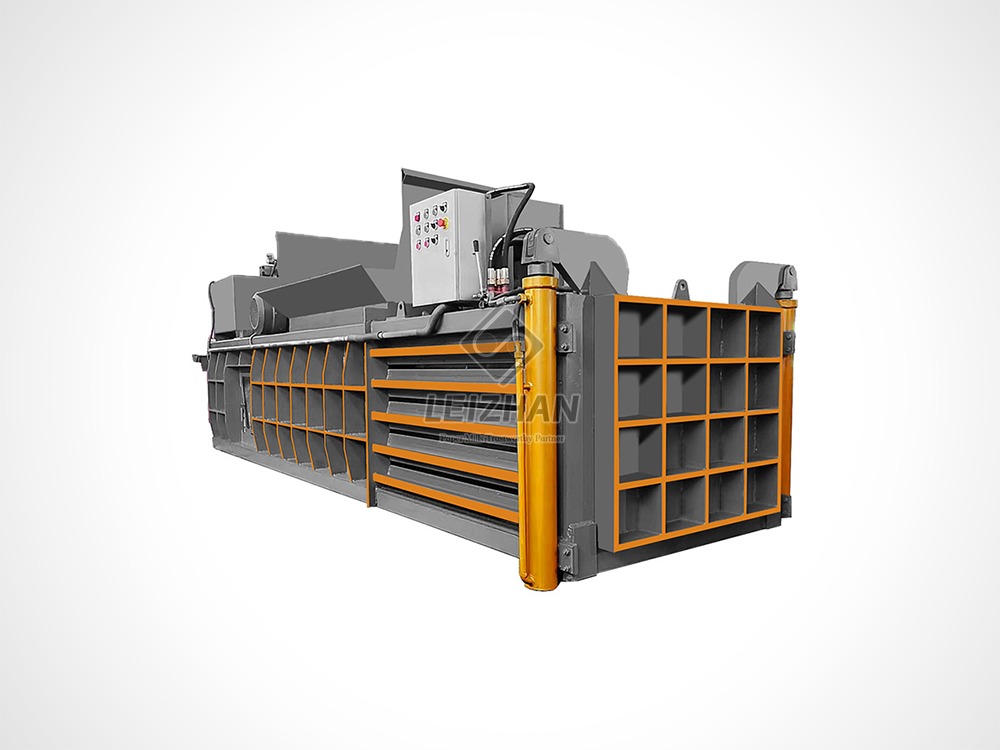
When upgrading your facility, end-of-line packaging does not operate in isolation. Managing corrugated waste is just as critical as wrapping the final product. For example, selecting a robust horizontal waste paper baler with a nominal thrust of 1200kN to 2000kN ensures high-density bales weighing up to 1000kg. This heavy-duty compaction keeps the wrapping zone free of loose cardboard. A clean floor prevents forklift tires from slipping, ensuring the pallet is perfectly centered on the turntable. Perfect centering means the top platen descends squarely, applying uniform force without crushing the corners. This synergy guarantees optimal Load Stability from the first rotation to the last.
The Crucial Role of Transport in Preventing Damage
The end-of-line wrapping process does not exist in a vacuum. The methods used to transport the pallet to and from the turntable heavily dictate the final integrity of the product.
Pre-Wrap Handling
Picture a busy warehouse floor during peak fulfillment hours. A driver takes a corner too sharply, and the top tier of un-wrapped corrugated boxes shifts just a few inches. By the time that misaligned pallet reaches the turntable, it is already compromised. If a load arrives leaning, the top clamps will come down unevenly. This asymmetrical contact forces the platen to crush the higher side of the skewed load while completely failing to secure the lower side.
Post-Wrap Handling
Furthermore, a tightly wrapped pallet can still suffer catastrophic damage if post-wrap protocols are ignored. Forklift operators who drive too fast over uneven dock plates can cause the load to bounce and break the film's grip. Worse, if the steel forks puncture the lower layers of the stretch film during retrieval, the entire containment force is instantly compromised. A single tear can unravel during transit, rendering the entire wrapping cycle useless.
Integrating Workflows
To maintain ultimate integrity, warehouses must seamlessly integrate their handling and wrapping workflows. Implement strict speed limits for vehicles operating near the packaging zone. Ensure that operators are rigorously trained in proper Forklift Handling. Smooth, deliberate transitions minimize the risk of pre-wrap shifting and post-wrap damage.
Pro Tips to Use Your Machine More Effectively
Optimizing your end-of-line packaging requires a blend of operator education and strategic equipment management. Implement these actionable industry best practices to maximize efficiency and eliminate waste.
Standardize Wrap Profiles
Do not rely on floor staff to guess the correct settings for different pallets based on memory. Modern automated wrappers feature programmable logic controllers that allow you to save specific wrap profiles. Lock in distinct settings for film tension, turntable speed, and downward force for different product lines. This standardization effectively eliminates human error.
Train Operators on Containment Force
Educate your warehouse staff on the critical difference between film tightness and true containment force. Tightness is merely how much the plastic is stretched. Containment force is the actual inward squeezing pressure holding the unitized block together. Operators must understand that simply cranking up the tension dial does not equal better stability. It usually just leads to crushed box corners and snapped film.
Regularly Audit Clamp Pads
The physical condition of your machinery matters immensely. Regularly inspect the rubber, foam, or neoprene pads located on the underside of the top clamps. Over months of heavy use, these materials degrade, harden, or wear unevenly. A worn-out pad can cause the platen to slip during high-speed rotation, or create hardened localized pressure points that puncture the top layer of goods.
Why Upgrading Your Equipment Protects Your Bottom Line
If your current legacy machinery consistently damages goods despite your best calibration efforts, the most financially sound decision is upgrading to modern technology. The initial capital expenditure is rapidly offset by long-term operational savings.
ROI of Damage Reduction
Product damage directly bleeds your bottom line through unsellable goods, expensive reverse logistics, and dissatisfied clients. By meticulously calculating the annual cost of transit damage caused by poor containment or improper pneumatic force, businesses frequently discover that new automated equipment pays for itself within 12 to 18 months. Dropping your damage rate to near zero is one of the fastest, most effective ways to widen profit margins.
Material Savings
Beyond simply reducing damage, modern machines drastically optimize consumable usage. Advanced film carriages feature powered pre-stretch ratios of 200 percent to 300 percent. This technology stretches the plastic exponentially before it even touches the pallet. You use significantly less film per cycle while achieving superior inward squeezing force. These compounded material savings will drastically reduce your annual packaging budget.
Conclusion
Industrial wrapping equipment is fundamentally designed to eliminate product damage, not cause it. The secret to success lies in proper mechanical calibration, understanding the nuances of downward pressure, and building a structurally sound pallet from the ground up.
By combining optimized, sensor-driven machine settings with safe, deliberate material transport protocols, facilities can create a foolproof and highly secure logistics chain. Do not let outdated equipment or poor operator habits eat into your profit margins.
If your facility is struggling with end-of-line bottlenecks or inconsistent load containment, it is time to evaluate your current setup. Explore high-performance industrial solutions and find the exact equipment specifications that match your operational needs by visiting Leizhan Paper Tech today. Protect your inventory, streamline your waste management, and secure your bottom line.
FAQ
How much downward pressure is too much for a pallet?
It depends entirely on the product's crush resistance. For rigid items like bricks or metal parts, high pressure is perfectly fine. For empty plastic bottles or tissue, even a few extra pounds per square inch can cause catastrophic crushing. Always start with the lowest possible pressure that achieves stability and adjust upward incrementally.
Can automated wrappers secure fragile or lightweight items?
Yes, absolutely. Modern machines feature variable tension control and soft-touch motorized top platens that secure lightweight, delicate items without applying the concussive force that causes damage.
What is the difference between clamp pressure and containment force?
Clamp pressure is the vertical, downward force applied by the machine's overhead platen to hold the load steady on the turntable. Containment force is the horizontal, inward squeezing pressure applied by the stretch film to keep the unitized block unified during turbulent transit.
How do I calculate the correct containment force for my pallet?
Containment force is measured using a specialized pull-plate tool inserted under the film. You must measure the force at the top, middle, and bottom of the pallet. The ideal force depends on the load weight. Light loads generally require 2 to 4 pounds of force, while heavy or unstable loads may require 10 to 15 pounds of squeezing force to remain secure during transit.
Why are my boxes crushing only at the bottom layers?
Bottom-layer crushing is rarely caused by the top platen. This specific damage usually occurs because the film tension is set too high at the base of the wrap cycle, or the structural weight of the pallet itself exceeds the compression strength of the bottom boxes. Adjust your wrap profile to apply slightly less tension on the bottom wraps while maintaining a strong rope lock to the wooden base.


