The paper drying process consumes the most thermal energy in any mill. Upstream forming and pressing stages remove about 98% of the water from the sheet mechanically. The wire typically handles 92%, while the press extracts another 6%. The final fraction of water requires evaporation, demanding massive steam input. When steam quality drops or condensate misbehaves, thermal barriers form inside the cylinder. These barriers ruin moisture profiles, cause sheet curl, and destroy runnability. You end up wasting steam while producing off-spec paper.
Optimizing a steam heated dryer means mastering steam pressure dynamics and high-speed condensate behavior. You need mechanical systems that evacuate water without blowing through excess steam. This guide breaks down the engineering realities of upgrading these systems to stabilize your machine, improve cross-direction moisture profiles, and cut energy waste.
Condensate is a Thermal Insulator: Even a millimeter of residual condensate creates a barrier that drastically reduces the heat transfer coefficient of the cylinder shell.
Wet Steam Degrades Equipment: Operating with wet steam not only reduces available latent heat but also accelerates internal pipe erosion and scaling.
Upstream Optimization is Critical: Because the dryer removes less than 1% of total water, a 1% reduction in sheet moisture entering the dryer section yields exponential reductions in required dryer steam.
System Synergy: Upgrading a condensate removal system must be matched with precise steam pressure control, operating range flexibility, and hood air balance to realize actual ROI.
The Mechanics of Heat Transfer in a Paper Machine Dryer Cylinder
Heat transfer inside a drying cylinder relies entirely on phase change. Saturated steam enters the cylinder through a rotary joint and contacts the cooler inner surface of the shell. As the steam condenses into liquid water, it releases latent heat. This thermal energy conducts through the metal shell and transfers to the wet paper web wrapped around the outside. The relationship between saturated steam pressure and surface temperature is direct and predictable. Higher steam pressure yields a higher internal temperature. The efficiency of this transfer depends heavily on keeping the inner shell free of insulating water layers.
Latent Heat and Condensation Dynamics
The phase change process drives the entire drying operation. Steam carries both sensible heat and latent heat. Latent heat provides the massive energy release required for evaporation. When steam hits the inner wall of a Paper Machine Dryer Cylinder, it collapses into liquid condensate. This rapid volume reduction creates a localized pressure drop, pulling more steam into the cylinder from the header.
If the resulting condensate is not immediately evacuated, it forms a physical barrier. Water has terrible thermal conductivity compared to cast iron. A thick layer of water forces the steam to heat the condensate pool before that energy can reach the shell. This lowers the overall heat transfer coefficient, forcing operators to increase steam pressure just to maintain the same drying rate.
Cylinder Material and Thermal Conductivity
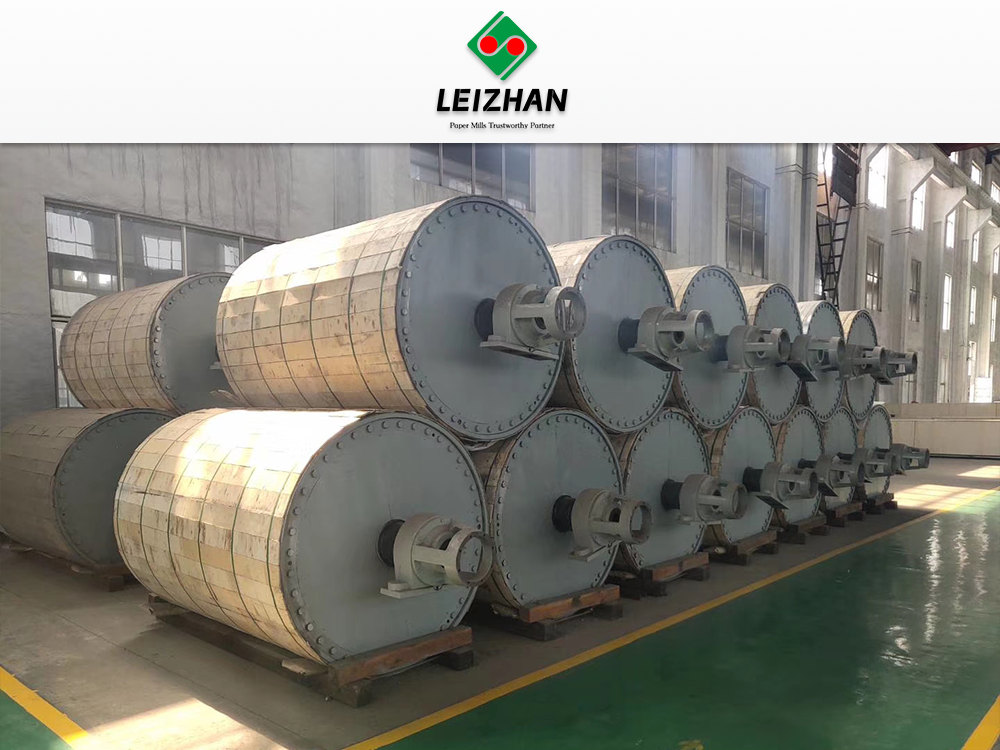
Standard cylinders rely on specific metallurgical properties to balance heat transfer with structural integrity. A standard cast iron dryer cylinder offers excellent thermal conductivity and vibration dampening. Cast iron provides a stable baseline for standard packaging, printing, and writing grades. The thickness of the shell dictates the maximum allowable working pressure. Thicker walls withstand higher steam pressures but increase thermal resistance. Over decades of operation, material fatigue and internal corrosion can force mills to derate the maximum pressure, limiting production speeds.
Tissue production requires a completely different approach. A Yankee dryer cylinder handles extreme high-pressure and high-evaporation demands. These cylinders are massive, often operating at much higher internal pressures than standard cast iron units. Yankee cylinders feature internal grooving to increase the internal surface area and reduce the effective shell thickness. This design maximizes heat transfer rates for lightweight tissue grades that dry in fractions of a second.
| Feature | Standard Cast Iron Cylinder | Yankee Cylinder |
| Primary Application | Packaging, fine paper, newsprint | Tissue, towel, machine-glazed papers |
| Internal Surface | Smooth, machined cast iron | Deeply grooved to increase surface area |
| Operating Pressure | Typically 3 to 10 bar | Often exceeds 10 bar, up to 15 bar |
| Evaporation Rate | Moderate, spread across 40+ cylinders | Extreme, concentrated on a single massive cylinder |
| Hood Integration | Standard closed or open canopy hood | High-velocity, high-temperature impingement hood |
How Steam Pressure Dictates Drying Performance
Steam pressure serves as the primary control lever for drying rates. Operators adjust pressure to meet the specific evaporation demands of different basis weights and machine speeds. Modern machines utilize cascading steam systems to maximize thermal efficiency across multiple dryer groups, ensuring no steam goes to waste.
Balancing Pressure Ranges for Optimal Surface Temperature
A cascading steam system divides the drying section into distinct pressure groups. High-pressure steam feeds the main drying groups where evaporation demand is highest. The blow-through steam and flashed vapor from these high-pressure cylinders route back to feed lower-pressure groups near the wet end. This setup prevents thermal shock to the wet sheet while extracting maximum work from the steam.
Pushing higher pressure increases surface temperature and accelerates drying. This allows for higher production speeds. Applying excessive heat to a very wet sheet causes the water inside the fibers to flash into steam too quickly. This rapid expansion leads to sheet delamination, surface picking, and linting on the cylinder surface. Operators must balance pressure curves to heat the sheet gradually across the first few cylinders.
Operating range flexibility determines how well a machine handles grade changes. A rigid steam system forces operators to slow the machine down during transitions. Advanced pressure control systems provide a wide operating envelope. They utilize thermocompressors to boost low-pressure steam, allowing the machine to maintain stable differential pressures across a wide range of basis weights without destabilizing the cascade.
The Hidden Costs of Wet Steam
Steam quality directly impacts equipment lifespan and thermal efficiency. Wet steam contains unevaporated water droplets. This moisture enters the paper drying section due to poor boiler control, inadequate steam trapping in the main headers, or missing moisture separators.
The mechanical consequences of wet steam are severe. High-velocity water droplets act like abrasives. They erode internal piping, rotary steam joints, and siphon shoes. This erosion leads to premature mechanical failure and unexpected downtime. The thermal consequences are equally damaging. Wet steam carries less latent heat per kilogram. Boiler carryover often includes chemical impurities. When wet steam evaporates inside the cylinder, these impurities bake onto the internal cylinder wall. This scaling permanently degrades heat transfer efficiency.
To eliminate wet steam issues, mills must implement strict mechanical checks:
Install high-efficiency centrifugal moisture separators ahead of the main steam control valves.
Audit and replace failed steam traps on the main distribution headers to prevent condensate from being dragged into the cylinders.
Monitor boiler feedwater chemistry to prevent foaming and carryover during high-demand periods.
Insulate all exterior steam lines to prevent premature condensation before the steam reaches the machine.
The Critical Role of the Condensate Removal System
Evacuating water from a rotating cylinder is a complex fluid dynamics challenge. The condensate removal system must overcome centrifugal force, gravity, and internal pressure differentials to keep the shell clean. Failure to do so destroys machine efficiency and ruins the paper.
Understanding the Condensate Barrier Effect
Condensate behavior changes drastically as machine speed increases. At slow speeds, water forms a puddle at the bottom of the cylinder. As speed increases, the puddle begins to climb the wall, cascading back down in a chaotic tumbling motion. This cascading phase consumes massive amounts of drive power and causes severe mechanical vibration. At high speeds, centrifugal force overcomes gravity. The water forms a continuous, uniform layer around the entire inner circumference. This is known as rimming.
A rimming condensate layer acts as a perfect thermal insulator. Even a 2mm layer of water can reduce the heat transfer rate by over 30%. The steam must conduct heat through this stagnant water layer before reaching the cast iron. If the evacuation system fails to keep this layer extremely thin, thermal efficiency plummets.
Inadequate condensate removal directly destroys product quality. If water pools unevenly or siphons fail to clear the edges, the cylinder develops non-uniform surface temperatures. Cold bands on the cylinder transfer directly to the paper web. This creates wet streaks, inconsistent cross-direction moisture profiles, and severe sheet curl. Operators often over-dry the entire sheet just to eliminate a single wet streak, wasting massive amounts of energy and degrading fiber strength.
Evaluating Evacuation Technologies
Selecting the right internal hardware depends entirely on machine speed and operating pressure. The goal is to position the evacuation point as close to the inner shell as mechanically possible without causing physical contact.
| Technology | Mechanism | Best Application | Maintenance Considerations |
| Rotary Siphons | Rotates with the cylinder, scooping condensate from the shell. | Low to medium speed machines operating in puddling or cascading phases. | Prone to mechanical wear at the rotary joint; requires regular clearance checks to prevent shell strikes. |
| Stationary Siphons | Fixed in place while the cylinder rotates around it, utilizing a highly engineered shoe. | High-speed machines operating strictly in the rimming phase. | Requires precise installation to maintain a 1.5mm clearance; highly sensitive to differential pressure drops. |
| Spoiler Bars | Metal bars clamped to the inner shell to disrupt the rimming water layer. | High-speed machines requiring maximum heat transfer uniformity and capacity. | Labor-intensive installation requiring confined space entry; zero moving parts once installed. |
Stationary siphons offer superior performance at high speeds. Because they do not rotate, they can be set with extremely tight clearances to the shell. This minimizes the thickness of the rimming condensate layer. Spoiler bars take this a step further. By introducing physical turbulence into the rimming layer, turbulator bars break the stagnant water barrier. This turbulence mixes the condensate, drastically improving heat transfer uniformity and overall drying capacity.
Blow-Through Steam and Differential Pressure
Siphons do not pump water out of the cylinder. They rely entirely on differential pressure. The pressure inside the cylinder must be higher than the pressure in the condensate return header. This pressure difference forces the water up the siphon pipe and out through the rotary joint.
To lift the water effectively, some steam must exit the siphon along with the condensate. This is called blow-through steam. It reduces the density of the fluid column inside the siphon pipe, making it easier to lift. If differential pressure drops too low, the siphon cannot overcome centrifugal force. The cylinder will flood. If differential pressure is set too high, the system wastes massive amounts of blow-through steam, overwhelming the downstream separators and thermocompressors. Maintaining optimal differential pressure is the most critical operational parameter in the drying section.
Evaluating Upgrades for the Paper Drying Section
Upgrading a drying section requires a systematic approach. Throwing money at new siphons will not solve underlying control issues. You must define clear success criteria and evaluate the entire thermodynamic loop from the boiler to the hood exhaust.
Problem Framing & Success Criteria
Before specifying hardware, define measurable outcomes. A successful upgrade should yield a measurable reduction in specific steam consumption. It must improve the cross-direction moisture profile and enable increased machine speeds. You need hard data to justify the capital expenditure.
You must also factor in upstream efficiency. The press section dictates the baseline workload for the dryer. If the press design concept is outdated or nip pressures are poorly optimized, the sheet enters the dryer too wet. A 1% reduction in sheet moisture leaving the press yields an exponential reduction in required dryer steam. Evaluate press section performance before sizing new dryer components. Sizing a new steam system for an inefficient press guarantees oversized, inefficient equipment.
Solution Categories & Approaches
Upgrades fall into three distinct tiers based on capital investment and expected return on investment. Mill management must align the technical solution with the long-term production strategy.
Tier 1: Component Retrofits. This involves replacing worn steam joints, upgrading from rotary to stationary siphons, or installing spoiler bars in existing cylinders. This approach targets specific bottleneck cylinders rather than the whole machine.
Tier 2: Control System Upgrades. This focuses on the steam delivery and extraction loop. Implementing advanced thermocompressors and automated differential pressure controls widens the operating range. This allows the machine to handle diverse grades without manual valve adjustments.
Tier 3: Complete Overhauls. This requires replacing the entire steam and condensate system. In tissue applications, this might mean installing a completely new Yankee cylinder and high-velocity air hood. This tier is reserved for machines undergoing massive speed increases or grade conversions.
Evaluation Dimensions
When evaluating proposed solutions, look beyond the spec sheet. Scalability is critical. Can the proposed system handle future machine speed increases? A system designed strictly for today's production rate will become a bottleneck in two years. Evaluate the turndown ratio. The system must provide the flexibility needed for diverse paper grades, running efficiently at both high and low evaporation loads.
Maintenance accessibility dictates long-term success. Rotary joints require frequent seal replacements. Siphons require periodic clearance checks. Internal inspections demand confined space entry. Select systems that minimize internal moving parts and feature external wear indicators on rotary joints. If maintenance is difficult, mill personnel will defer it, leading to flooded cylinders and broken siphons.
Implementation Realities and Risk Mitigation
Executing a dryer section upgrade involves significant logistical challenges. The physical environment is hostile, and downtime is expensive. Proper planning mitigates the risks associated with heavy mechanical modifications inside the machine frame.
Downtime and Installation Constraints
Internal cylinder modifications require confined space entry. Installing spoiler bars or replacing internal siphon piping is slow, grueling work. The ambient heat and cramped conditions limit how long technicians can work inside the shell. This reality extends the required downtime for installation.
The standard mitigation strategy involves phased installations. Do not attempt to upgrade the entire drying section during a single outage. Schedule the work across multiple annual outages. Start with the most critical dryer groups—typically the main evaporation section where the highest pressure steam is applied. This phased approach limits downtime while delivering immediate, measurable improvements to drying capacity.
System Tuning and Hood Air Balance
A new condensate removal setup will fail to deliver results if the surrounding systems are ignored. Upgrading siphons increases the heat transfer rate. This means more water evaporates from the sheet in less time. The hood exhaust and makeup air systems must be capable of handling this increased moisture load.
If the hood air balance is not simultaneously tuned, the air inside the hood reaches saturation. The evaporated water has nowhere to go, and drying stops regardless of how hot the cylinders are. You must evaluate exhaust fan capacity, makeup air heating, and heat recovery systems to ensure they match the new evaporation rate. Sub-optimizing the air system negates the mechanical upgrades inside the cylinders.
Monitoring and Verification
Post-installation verification ensures the equipment operates as designed. Implement continuous steam dryness monitoring at the main headers to prevent wet steam from damaging the new hardware. You cannot manage what you do not measure.
Use thermographic scanning of cylinder surfaces while the machine is running. Thermal cameras instantly reveal cold bands, indicating siphon failure or improper clearances. Establish a baseline thermal map immediately after installation. Compare future scans against this baseline to detect internal mechanical issues before they cause sheet breaks or quality defects. Continuous monitoring of differential pressure trends and blow-through steam rates provides early warning of system flooding.
Conclusion
Initiate a baseline thermal audit of the current drying section, focusing on differential pressure trends, blow-through steam rates, and surface temperature variations across all cylinders.
Inspect all rotary joints and measure internal siphon clearances during the next scheduled outage to identify immediate mechanical bottlenecks.
Recalibrate the hood exhaust and makeup air systems to ensure they can handle increased evaporation rates before installing new internal cylinder hardware.
Upgrade manual differential pressure valves to automated control loops to prevent cylinder flooding during rapid grade changes.
FAQ
Q: What causes a paper machine dryer cylinder to flood?
A: Flooding occurs when the differential pressure is too low to overcome the centrifugal force and lift the condensate through the siphon. It can also happen due to mechanical failure of the siphon itself, such as a broken pipe or a worn shoe that loses suction.
Q: How does a condensate removal system impact paper quality?
A: Efficient removal prevents uneven surface temperatures on the cylinder. Consistent temperatures directly eliminate wet streaks, sheet curl, and inconsistent cross-direction moisture profiles in the final sheet, ensuring uniform strength and printability.
Q: Why is a Yankee dryer cylinder operated differently than a standard cast iron dryer cylinder?
A: Yankee cylinders are significantly larger, operate at higher internal pressures, and utilize high-velocity air hoods to achieve massive evaporation rates for lightweight tissue. They require specialized internal grooving and header systems to handle the extreme thermal loads.
Q: How does wet steam affect a steam heated dryer?
A: Wet steam introduces excess water that must be evacuated, reducing the available latent heat for drying. It also causes physical erosion inside the steam joints and leads to scaling on the cylinder shell, permanently degrading heat transfer efficiency.
Q: What is the "rimming" stage in a paper drying section?
A: Rimming occurs at higher machine speeds when centrifugal force causes the condensate to form a uniform, continuous layer around the inner circumference of the cylinder. This state requires specific stationary siphon designs and precise differential pressures to evacuate the water.
Q: Can upgrading siphons reduce overall energy consumption?
A: Yes. Upgrading to modern stationary siphons with tighter clearances reduces the thickness of the condensate barrier. This improves heat transfer, allowing the machine to achieve the same drying rate at a lower steam pressure, thereby saving energy.


