Paper and board mills face continuous margin compression. The energy-intensive nature of stock preparation directly conflicts with the demand for higher sheet strength, optimal bulk, and efficient dewatering on the paper machine. Achieving target tensile and burst indices requires mechanical treatment of fibers. However, aggressive or poorly optimized refining leads to excessive Specific Energy Consumption (SEC) and detrimental fiber cutting rather than beneficial surface development. Resolving this trade-off requires a highly technical evaluation of your current stock preparation line. By optimizing plate metallurgy, geometric design, and operational parameters within a Double Disc Refiner, mills can maximize strength development per kilowatt-hour without sacrificing throughput or machine runnability. We will examine the exact mechanical levers operators can pull to stabilize this process, reduce wasted motor load, and consistently hit freeness targets.
Key Takeaways
Specific Edge Load (SEL) Dictates Outcomes: Lower refining intensity generally yields superior fiber fibrillation and higher sheet strength, whereas high intensity leads to fiber cutting and wasted energy.
Plate Geometry is the Primary Lever: Bar angle, width, and groove depth on the refiner plate determine whether mechanical energy is transferred efficiently to the fiber or lost as heat.
A Narrow Window for Maximum Efficiency: Low-consistency (LC) refiners operate within a very narrow range of specific energy to achieve the perfect balance between tensile index increase and fiber length retention.
The Mechanics of the Trade-Off: Fiber Fibrillation vs. Energy Consumption
Problem Framing: Defining Success Criteria
Refining success hinges on balancing the Tensile Index increase against the Specific Energy Consumption (SEC) measured in kWh/t. Operators must strictly maintain target sheet bulk and drainage rates. Drainage is typically measured via Canadian Standard Freeness (CSF) or Schopper-Riegler (SR) on the mill floor. Pushing the SEC too high causes freeness to drop precipitously. This slows down the wire section of the paper machine and forces the dryer section to consume more steam to remove the excess water. The goal is maximizing strength gains while utilizing the absolute minimum net power. Every kilowatt applied must contribute directly to modifying the fiber wall rather than heating the water or shearing the fiber.
To establish a baseline, mills must calculate the no-load power of their equipment. This is the power required to rotate the shaft and pump the stock through the housing with the plates backed off so no mechanical work is done on the fibers. Subtracting the no-load power from the total motor load gives the net power. Efficiency is defined by how effectively this net power translates into measurable strength gains.
Understanding Fiber Fibrillation
Effective mechanical action peels the primary wall and the S1 layer of the fiber. This exposes the cellulose-rich S2 layer. Exposing this layer increases the surface area available for hydrogen bonding during sheet formation. This process is known as fiber fibrillation. Internal fibrillation loosens the fiber structure, making it flexible and conformable. External fibrillation creates microscopic hairs on the fiber surface. Both actions increase the Water Retention Value (WRV) of the pulp, a key indicator of refining success.
Contrast this with fiber cutting. Cutting shortens the average fiber length. It degrades tear strength and reduces sheet bulk. Cutting also wastes the applied mechanical energy. Energy spent severing fibers provides zero tensile strength improvement. When operators apply too much power too quickly, the fiber pad collapses, and the metal bars shear the fibers instead of rolling and fibrillating them.
The Role of the Double Disc Refiner
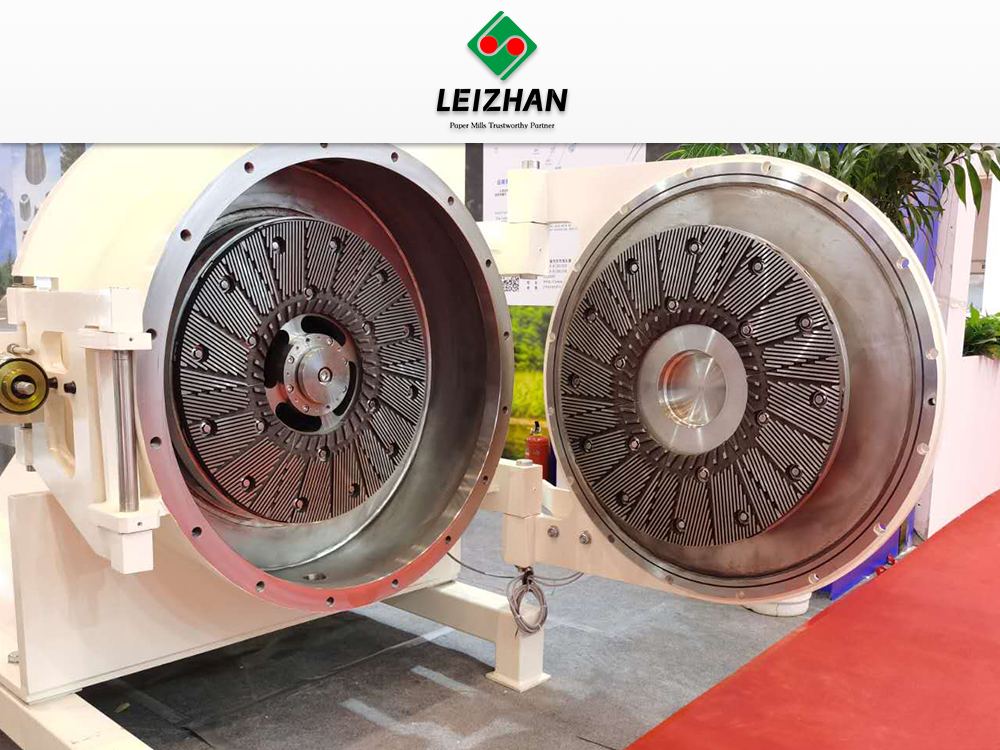
The dual-refining zone architecture of a double disc refiner provides higher capacity and more uniform treatment compared to single disc or conical alternatives. Stock enters the machine and splits into two parallel streams. These streams pass between a central rotating disc and two stationary stators. This design doubles the available refining area. It allows the machine to operate at a lower specific edge load while handling massive volumetric flow.
Lower intensity across a larger surface area makes this equipment the primary control point for energy management in the mill. Proper gap control between the rotor and stators dictates the exact nature of the mechanical treatment. Modern units utilize hydraulic loading systems to maintain gap clearances down to hundredths of a millimeter, automatically compensating for minor pressure fluctuations in the stock approach piping.
Evaluating Refiner Plate Design and Geometry
Solution Categories and Plate Configurations
The structural components of a refiner plate dictate how mechanical energy interacts with different pulp furnishes. Hardwood fibers are short and require low-intensity treatment to prevent severe cutting. Softwood fibers are long and robust, requiring higher energy input to initiate fibrillation. High-performance replaceable plate designs utilize segmented discs. Segmented plates allow maintenance teams to swap worn sections quickly.
Proper installation of these segments is critical for energy efficiency. Uneven torque on the mounting bolts causes plate runout, leading to uneven wear and localized fiber cutting. Maintenance teams must follow strict protocols when changing plates to ensure the rotor remains perfectly parallel to the stators.
Bar Angles and Widths
Isometric straight bar plates present different refining characteristics compared to heavily angled designs. The intersecting angle between the rotor bars and stator bars dictates the severity of the mechanical action. A smaller intersecting angle produces a scissor-like cutting action. A larger intersecting angle promotes a gentler, rolling friction that favors fibrillation.
Narrow bars increase the total cutting edge length (CEL), which lowers the specific edge load for a given motor load.
Narrow bars and fine patterns promote fibrillation for final strength development in bleached grades.
Wider bars handle higher throughput and resist mechanical damage from tramp metal or heavy contaminants.
Wider bars reduce the CEL, risking higher specific edge loads and potential fiber damage if power is not carefully managed.
Sub-surface dams can be engineered into the grooves to force stock up over the bars, preventing untreated fibers from bypassing the refining zone.
Pattern Selection: Medium vs. Fine
Selecting the correct plate pattern requires analyzing the incoming freeness and the target strength parameters. Medium patterns provide balanced refining and facilitate the initial freeness drop. Fine patterns maximize surface area and tensile strength development in the final stages of stock preparation. Using a fine pattern on raw, unrefined softwood will quickly plug the grooves and cause the motor to trip offline. Conversely, using a coarse pattern on short-fiber hardwood will destroy the fiber length.
| Pattern Type |
Bar Width (mm) |
Groove Depth (mm) |
Target Furnish |
Primary Effect |
SEC Impact |
| Coarse / Wide |
5.0 - 8.0 |
8.0 - 12.0 |
Unbleached Kraft, OCC |
Deflaking, minor cutting |
High energy waste if misused |
| Medium |
3.0 - 5.0 |
5.0 - 8.0 |
Softwood, Mixed Waste |
Balanced fibrillation and freeness drop |
Moderate, highly efficient for initial stages |
| Fine |
1.5 - 3.0 |
3.0 - 5.0 |
Hardwood, Bleached Kraft |
Maximum surface area development |
Low SEC per unit of tensile strength gained |
| Ultra-Fine |
1.0 - 1.5 |
2.0 - 3.0 |
Specialty Grades, Microfibrillated Cellulose |
Extreme external fibrillation |
Very low SEL, requires highly stable flow |
Metallurgy and Heat Treatment
Advanced alloys and specialized heat treatment processes prevent premature edge rounding. Common materials include martensitic stainless steel, Ni-Hard, and high-chrome cast iron. Sharp bar edges are non-negotiable for maintaining energy efficiency. When edges round off, the refiner begins to compress the fiber pad rather than shearing it. Dull edges require significantly more power to achieve the same freeness drop.
This lost energy converts directly into heat, raising the stock temperature without improving sheet strength. Operators can monitor the delta T (temperature rise) across the refiner. A sudden increase in delta T without a corresponding drop in freeness is a primary indicator of severely worn plates. Continuous operation with worn plates severely degrades the energy-to-strength ratio and increases the thermal load on the mill's water system.
Operational Variables Influencing Refining Efficiency
Process Parameters and Evaluation Dimensions
Operators must control dynamic variables to maintain the strength-to-energy balance. The refining process operates within a narrow optimal SEC range. Deviating from this range either fails to develop strength or destroys the fiber network. Key parameters include gap clearance, applied power, stock flow rate, and inlet pressure. Modern control systems utilize constant specific energy control loops. These loops automatically adjust the plate gap to maintain a target energy application regardless of minor flow fluctuations.
When flow rates drop unexpectedly, the control loop must back the plates off immediately. If the plates remain loaded during a low-flow event, the fiber pad collapses, resulting in severe metal-to-metal clashing. This destroys the plate pattern and introduces metal shavings into the stock approach system.
Pulp Consistency and Average Fiber Length
Low consistency (LC) refining typically operates between 3% and 5% consistency. This range ensures optimal pad formation between the refiner bars. Consistency control is the foundation of refining stability. A swinging consistency will cause the motor load to hunt erratically, making it impossible to maintain a steady specific edge load.
If consistency drops below 3%, the fiber pad becomes too thin. Metal-to-metal contact occurs, damaging the plates and cutting the fibers.
If consistency rises above 5%, the stock becomes too thick to flow evenly through the plate grooves. This causes plugging, channeling, and unstable power consumption.
Dilution water valves must be tuned to respond rapidly to consistency transmitter signals before the stock reaches the refiner feed pump.
Variations in incoming average fiber length dictate the required gap clearance and applied power. Longer fibers form a thicker pad, requiring a slightly wider gap. Shorter fibers require a tighter gap to ensure adequate mechanical treatment. Operators must adjust the baseline power settings whenever the furnish blend changes.
Refining Intensity: Low vs. High
Low-intensity refining maximizes energy efficiency and fiber length retention. It applies a small amount of energy across millions of individual fiber impacts. This gentle treatment builds tensile strength without destroying tear strength. High-intensity refining applies massive energy to fewer fibers, shearing them instantly.
There is a strict threshold where increasing power no longer yields strength gains. Beyond this point, energy costs increase exponentially. Dewatering on the paper machine wire becomes severely compromised. The sheet becomes dense, losing valuable bulk. Identifying and operating just below this threshold is the hallmark of an optimized stock preparation line. Operators should conduct regular step-response tests, increasing power in small increments and measuring the resulting freeness drop to map this threshold accurately.
Deflaking vs. Refining
The distinction between deflaking and refining is critical for energy management. Deflaking breaks up fiber bundles and flakes without altering the individual fiber morphology. It prevents costly sheet breaks and improves paper machine runnability. Refining mechanically modifies the fiber walls to develop strength.
Deflakers should be utilized early in the preparation line, particularly when processing broke or recycled furnish. Ensure the disc refiner is dedicated strictly to fibrillation. Forcing a refiner to break up unprepared stock wastes massive amounts of energy and accelerates plate wear. The gap in a deflaker is fixed or manually set wide, whereas a refiner actively manages a tight, dynamic gap under heavy load.
Framework for Upgrading or Retrofitting Pulp Beating Equipment
Overall Value Influencing Factors
Building a business case for upgrading an existing pulp refining machine requires analyzing empirical performance data. Transitioning to advanced, replaceable plate designs offers immediate operational benefits. The primary value drivers are projected SEC reductions and increased plate lifespan. Better mechanical fibrillation increases natural fiber-to-fiber bonding. This allows mills to reduce their reliance on expensive chemical strength additives, such as cationic starch or wet-strength resins, at the wet end. Upgrading legacy equipment removes mechanical bottlenecks and stabilizes the entire stock approach system.
Assessing Long-Term Efficiency
Calculate the operational return based on strict energy metrics. Compare the baseline no-load power of the existing equipment against modern alternatives. Modern pulp beating equipment often features optimized rotor dynamics and improved bearing assemblies that reduce parasitic energy losses. Factor in the reduced downtime achieved through segmented plate designs. Longer plate lifespans mean fewer maintenance shutdowns. The cumulative savings from reduced kilowatt-hour consumption and lower chemical usage typically justify the retrofit within a short operational window. Upgraded seal water systems also reduce fresh water consumption and effluent discharge volumes.
Implementation Risks
Integrating new refiner technologies with legacy Distributed Control Systems (DCS) presents distinct challenges. Older control loops may lack the processing speed required to manage modern hydraulic gap control mechanisms. This lag can cause the plates to clash during flow disruptions. There is also a high potential for process instability during the transition period. Operators must adjust to new plate geometries and heightened gap control sensitivities. Muscle memory from operating older, less efficient equipment can lead to accidental over-refining.
Mitigation Strategies
Execute a phased implementation to minimize operational risks. Conduct a comprehensive baseline SEC audit prior to removing the old equipment. Document the exact freeness drop, tensile gains, and power consumption across all furnish types. Utilize OEM application engineers during the commissioning phase. These specialists handle the initial gap calibration and stock flow balancing. They can tune the DCS PID loops to ensure the hydraulic loading responds instantly to pressure changes. Extensive operator training on the new specific edge load parameters is mandatory. Implement vibration monitoring systems to detect early signs of plate clashing or bearing failure during the startup phase.
Conclusion
Balancing fiber strength and energy consumption is a highly controllable process dictated by specific edge load, plate geometry, and consistency management. Optimizing these variables transforms the stock preparation line from an energy sink into a precision strength-building operation. Technical buyers must prioritize equipment and plate suppliers who provide transparent, empirical data on SEC reductions. Select partners who offer customizable, replaceable plate patterns tailored to specific furnish types.
To capture these efficiencies, take the following actions:
Conduct a baseline energy audit of your current equipment to identify wasted no-load power and calculate your true specific energy consumption.
Analyze your existing plate wear patterns to determine if edge rounding is driving up your motor load without improving freeness.
Consult with a refining specialist to model potential energy savings using modern isometric or fine-bar plate geometries tailored to your furnish.
Establish strict consistency control loops prior to the refiner feed pump to ensure stable fiber pad formation and eliminate motor load swings.
Implement a standardized step-response testing protocol for operators to map the exact threshold where power increases stop yielding tensile strength gains.
FAQ
Q: What is the optimal specific energy consumption for a double disc refiner?
A: Optimal SEC varies heavily by furnish and target freeness. Softwood typically requires 100-150 kWh/t, while hardwood needs 50-80 kWh/t. Mills must establish a customized baseline. Operating within a narrow, optimized SEC range ensures maximum energy efficiency and prevents fiber degradation.
Q: How does low consistency (LC) refining impact fiber strength?
A: LC refining at 3-5% consistency promotes a stable, uniform fiber pad between the plates. This allows for low-intensity mechanical treatment. It maximizes external fibrillation and tensile strength development while minimizing detrimental fiber cutting and preserving tear strength.
Q: How does refining impact sheet bulk and dewatering?
A: There is an inverse relationship. As fibrillation increases to build tensile strength, the stock freeness drops. Over-refining slows dewatering on the wire section and creates a denser sheet, significantly reducing the final sheet bulk and increasing drying costs.
Q: What is the difference between a disc refiner and a deflaker?
A: Deflakers separate fiber bundles and flakes to prevent sheet breaks without altering fiber morphology. Disc refiners apply mechanical shear to modify the fiber walls, peeling layers to develop hydrogen bonding and build structural strength in the paper.
Q: How often should refiner plates be replaced to maintain energy efficiency?
A: Replacement depends on metallurgy, furnish abrasiveness, and continuous power monitoring rather than strict time intervals. Once edge rounding occurs, energy demand spikes. Replaceable segmented designs allow for quick swaps when SEC data indicates a loss of cutting edge efficiency.
Q: Can upgrading my pulp refining machine reduce the need for chemical strength additives?
A: Yes. Optimized mechanical fibrillation increases the natural surface area for fiber-to-fiber hydrogen bonding. This enhanced structural integrity can safely offset a significant portion of expensive wet-end chemical strength additives, lowering overall production costs.
Q: How does bar angle on a refiner plate affect the refining process?
A: The intersecting angle of rotor and stator bars determines the mechanical action. Smaller angles create aggressive, scissor-like cutting. Larger intersecting angles favor gentle rolling friction that promotes fibrillation and preserves fiber length.


