Inefficient water management creates compounding operational costs in the pulp and paper industry. High energy consumption during dewatering stages drains profitability. Processing low-consistency pulp presents a significant bottleneck for mill operations. Stock typically enters the system at 0.5% to 1% consistency. If facilities fail to adequately dewater and wash this stock, downstream processing equipment struggles to function. High water volumes overwhelm secondary presses and disrupt chemical recovery loops. A Gravity Cylinder Thickener serves as a specific, low-energy mechanical intervention designed to optimize hydrostatic pressure for reliable pulp dehydration. This equipment prepares the stock for subsequent high-consistency processing stages while enabling complete water recovery. We will examine how hydrostatic pressure drives continuous filtration, evaluate equipment comparisons, and detail operational variables. You will learn specific risk mitigation strategies to improve your mill water management and maintain stable production rates.
Targeted Consistency Gains: Standard gravity cylinder thickeners reliably increase inlet pulp consistency from baseline levels (0.5%–1.0%) to operational thresholds (4%–6%) without requiring vacuum systems.
Energy and Cost Efficiency: By relying on a natural hydrostatic pressure difference (∆h) rather than motorized vacuum pumps, facilities reduce electrical load and eliminate the need for complex vacuum accessories.
Dual-Purpose Operation: Functions effectively for both primary thickening and low-consistency washing, aiding in the removal of dissolved solids and ash.
Water Recovery: Efficient filtration areas allow for continuous white water recycling, directly impacting overall mill water management and environmental compliance.
Implementation Trade-offs: While highly efficient for low-consistency applications, gravity cylinders require adequate physical footprint and strict maintenance of wire mesh to prevent blinding.
The Mechanics of a Gravity Cylinder Thickener in Pulp Processing
Success Criteria Framing
Successful dehydration at the primary stage requires strict adherence to several operational metrics. Operators must achieve a stable outlet consistency to prevent downstream equipment failures. High filtrate clarity remains essential for effective white water recycling. If the filtrate contains too many suspended solids, it will plug shower nozzles and disrupt upstream dilution stages. Continuous operation without frequent manual intervention defines mechanical reliability on the mill floor.
Effective washing must occur simultaneously to remove dissolved solids. Mills measure success by the volume of water removed per hour and the retention of usable fibers within the thickened mat. The equipment must separate micro-fines and ash without losing valuable long fibers. Achieving these criteria ensures the stock is perfectly prepped for secondary pressing. Operators monitor the couch roll pressure and the discharge doctor blade to confirm the mat releases cleanly from the wire.
Hydrostatic Pressure Difference (∆h)
The physics of a gravity-fed process rely entirely on fluid dynamics. A variance in liquid levels exists between the external vat and the cylinder interior. This variance creates a natural hydrostatic pressure difference, known as ∆h. The vat holds the incoming low-consistency pulp mixture. The interior of the rotating cylinder collects the filtered white water. Gravity forces the water through the wire mesh covering the cylinder. The fibers cannot pass through the mesh and form a mat on the exterior surface.
Maintaining a high pulp level in the vat directly increases water pressure against the cylinder. Higher water pressure accelerates the dehydration rate. Operators must balance the inflow of stock with the rotational speed of the cylinder. If the vat level drops, the hydrostatic pressure decreases. This reduction leads to a thinner fiber mat and lower outlet consistency. A consistent, high vat level maximizes the overall machine capacity. It ensures a continuous, uniform extraction of filtrate. The system requires no external suction, relying purely on gravity and fluid displacement.
Filtration Area and Cylinder Design
The surface area of the wire mesh dictates the maximum throughput of the machine. A larger surface area allows more water to pass through simultaneously. Standard smooth cylinders offer a fixed filtration area based on their diameter and length. Engineers must match the cylinder dimensions to the daily production targets of the mill. The wire mesh itself features specific micron ratings to target different fiber lengths. Selecting the correct mesh prevents premature blinding while maximizing water extraction.
Folded thickener variations introduce a significant structural advantage. These designs utilize a corrugated or pleated cylinder surface. This geometry provides a considerably larger filtration area compared to standard smooth cylinders. The folded design boosts throughput without expanding the physical footprint of the equipment. Mills facing space constraints benefit greatly from this innovation. The increased surface area also reduces the velocity of water passing through any single point. Lower velocity improves fiber retention and prevents the mesh from blinding too quickly. The structural integrity of the folded cylinder withstands the constant hydrostatic pressure without deformation.
Cylinder Mesh Specifications by Pulp Type
| Pulp Category | Typical Mesh Size (Mesh/Inch) | Open Area Percentage | Primary Contaminant Concern |
| Virgin Kraft (Long Fiber) | 40 - 60 | 35% - 40% | Resin and Pitch |
| Old Corrugated Containers (OCC) | 60 - 80 | 30% - 35% | Stickies and Plastics |
| Thermo-Mechanical Pulp (TMP) | 80 - 100 | 25% - 30% | Fines and Shives |
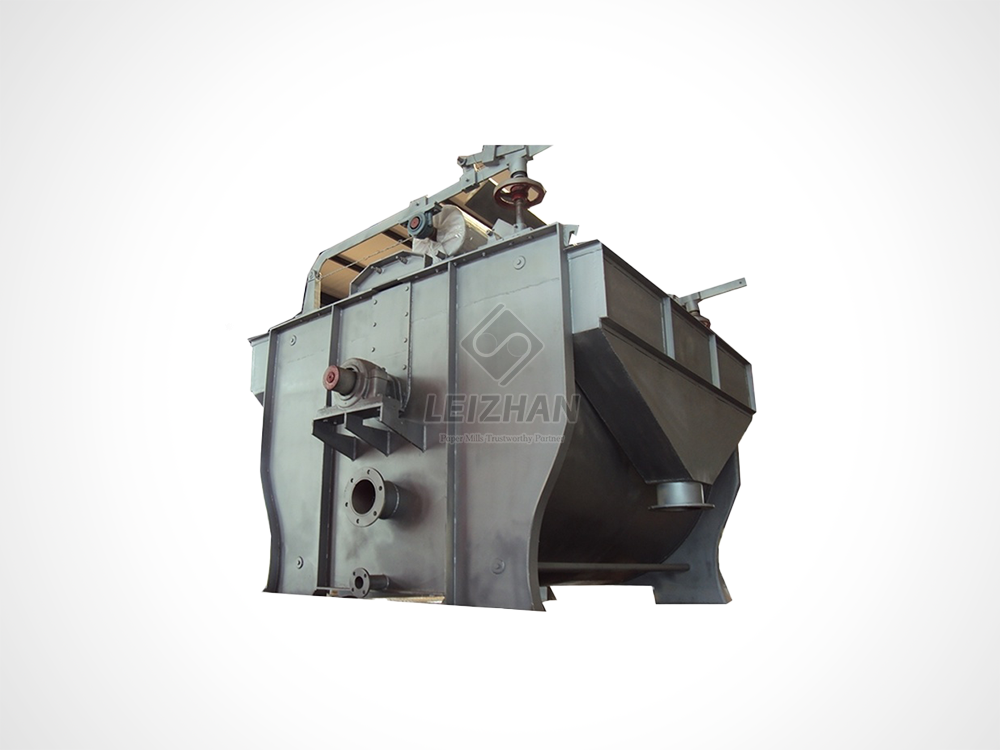
Evaluating Pulp Thickening Equipment: Gravity Cylinders vs. Alternatives
Primary vs. Secondary Dewatering
Mill operators must categorize Pulp Thickening Equipment based on its position in the process flow. Gravity cylinders function strictly as primary dewatering units. They accept stock at 0.5% to 1.0% consistency. They discharge the thickened mat at 4% to 6% consistency. They do not compete with secondary high-consistency equipment. Screw presses and twin wire presses handle secondary dewatering. These secondary machines take the 4% to 6% stock and press it to 5% to 30% consistency.
Using a gravity cylinder first removes the bulk of the free water. This preparation prevents the secondary presses from flooding. It ensures the mechanical energy of the screw press focuses on squeezing bound water rather than moving free water. Attempting to feed 1% stock directly into a screw press results in massive fiber loss and equipment failure. The gravity cylinder acts as the necessary bridge between the screening room and the high-density storage towers.
Gravity Cylinders vs. Vacuum Disc Filters
Evaluating these two systems requires a focus on energy consumption and mechanical complexity. Vacuum disc filters utilize motorized vacuum pumps to create artificial suction. This suction pulls water through the filter media. The vacuum system requires extensive piping, sealing water, and continuous electrical power. Maintenance teams must service the vacuum pumps, monitor liquid ring levels, and replace complex mechanical seals frequently. The infrastructure required to support a vacuum system takes up significant space and demands constant attention.
Gravity cylinders operate on passive hydrostatic pressure. They eliminate the need for vacuum pumps entirely. This passive operation drastically reduces the electrical load of the thickening stage. The mechanical simplicity of the cylinder design lowers maintenance requirements. Facilities avoid the downtime associated with vacuum seal failures. While vacuum filters might achieve slightly higher outlet consistencies, the energy penalty rarely justifies the cost for primary dewatering. Gravity cylinders provide a more robust, energy-efficient solution for handling large volumes of low-consistency stock.
Gravity Cylinders vs. Gravity Disc Thickeners
Both systems utilize gravity, but their structural configurations suit different applications. Gravity disc thickeners feature multiple vertical discs mounted on a central shaft. This configuration offers a highly compact footprint. Mills often select disc thickeners for specific low-consistency washing applications where space is severely limited. However, disc thickeners can struggle with variable pulp types. The narrow spacing between the discs can plug easily if the stock contains large shives or unpulped flakes.
Gravity cylinders provide superior handling of diverse raw materials. The open vat design accommodates fluctuations in stock flow more effectively. The continuous cylindrical surface allows for easier discharge of the thickened mat via a couch roll and doctor blade. Cylinders handle higher overall capacities and resist blinding better when processing recycled furnish. The robust nature of the cylinder configuration makes it the preferred choice for primary thickening in large-scale operations.
Primary Dewatering Systems Comparison
| Equipment Type | Driving Force | Typical Inlet Consistency | Typical Outlet Consistency | Maintenance Complexity |
| Gravity Cylinder | Hydrostatic Pressure (∆h) | 0.5% - 1.0% | 4.0% - 6.0% | Low (Drive motor and showers) |
| Vacuum Disc Filter | Artificial Vacuum Suction | 0.5% - 1.0% | 8.0% - 12.0% | High (Vacuum pumps and seals) |
| Gravity Disc | Hydrostatic Pressure (∆h) | 0.5% - 1.0% | 3.0% - 5.0% | Medium (Disc sector replacement) |
Operational Variables Influencing Dehydration Efficiency
Inlet Consistency, Pulp Type, and Washing
Different raw materials behave uniquely on the cylinder wire. Chemical pulp features long, strong fibers that form a porous mat quickly. This porosity allows water to drain rapidly, maximizing machine capacity. Mechanical pulp contains shorter fibers and more fines. These fines can restrict water flow through the mat, lowering the drainage rate. Recycled fiber presents the most significant challenge. It contains a mixture of fiber lengths, ash, and sticky contaminants. Operators must adjust their approach based on the furnish entering the vat.
Gravity cylinders excel at low-consistency washing and thickening. The low inlet consistency ensures fibers remain fully dispersed in the vat. As the water passes through the mesh, it carries away micro-fines and dissolved ash. The fiber mat retains the valuable long fibers. Operators must adjust the cylinder speed based on the pulp type. Slower speeds allow more time for water to drain from slow-draining mechanical pulps. Faster speeds prevent the mat from becoming too thick when processing fast-draining chemical pulps. Understanding these operational limits ensures optimal performance and prevents equipment overloading.
Flocculant Integration and Yield Optimization
Introducing flocculants into the pulp alters the chemical behavior of the fibers. Flocculants cause short fibers and fines to clump together into larger flocs. These flocs drain water much faster than individual microscopic particles. The technical reality of flocculant integration requires precise dosing and timing. Adding too much chemical wastes money and can cause downstream processing issues. Adding too little fails to improve the drainage rate. Mills typically use cationic or anionic polymers depending on the charge of their specific pulp.
Injection point optimization remains critical for success. Operators must incorporate flocculants into the pulp exactly as it enters the thickening feedbox. This timing allows the flocs to form just before the stock hits the cylinder wire.
Prepare the polymer solution at the correct concentration in the make-down unit.
Inject the polymer into the stock line immediately before the vat inlet.
Monitor the shear forces in the piping to ensure flocs do not break apart before reaching the wire.
Observe the filtrate clarity to confirm the fines are binding to the fiber mat.
Adjust the dosing pump speed based on real-time drainage rates and vat levels.
Proper integration considerably improves operational yield. It increases overall drainage rates and ensures a highly clear filtrate. Clear filtrate indicates that the valuable fines remain in the pulp mat rather than escaping into the white water system.
Implementation Realities and Adoption Risks
Risk: Wire Blinding and Scaling
Efficiency loss in gravity cylinders stems primarily from wire blinding. Blinding occurs when pitch, stickies, or fines accumulate on the cylinder mesh. This accumulation blocks the open area of the wire, preventing water from passing through. The hydrostatic pressure cannot overcome a severely blinded mesh. The vat level will rise, potentially causing overflows. Outlet consistency will drop as the machine fails to extract enough water. Unchecked blinding forces operators to slow down the entire production line.
Mitigation requires strict adherence to cleaning protocols. Facilities must install continuous, high-pressure cleaning showers inside the cylinder. These showers spray outward, dislodging contaminants from the mesh. The shower nozzles must oscillate to ensure complete coverage of the cylinder surface. Operators must verify water pressure specifications daily. Low shower pressure fails to clean the wire effectively. Routine inspection schedules must include visual checks of the mesh for scale buildup. Depending on the pulp chemistry, operators may need to perform periodic chemical boils to dissolve stubborn pitch deposits.
Risk: Footprint and Retrofitting Constraints
Cylinder vats require a specific physical footprint on the mill floor. They occupy more horizontal space compared to vertical or disc-based alternatives. Retrofitting a gravity cylinder into an existing, cramped mill line presents logistical challenges. Engineers must account for the space needed to remove the cylinder for maintenance. They must also route large-diameter piping to and from the vat. Poor layout planning leads to maintenance nightmares and restricted access for operators.
Mitigation begins with a comprehensive framework for assessing existing mill layouts. Engineering teams must measure the available floor space and overhead clearance prior to procurement. They must map the existing piping infrastructure to determine tie-in points. If space is limited, teams should specify folded cylinder designs. The folded design maximizes the filtration area within a tighter physical footprint. This specification allows mills to achieve higher capacities without requiring major structural modifications to the building.
Risk: Variable Flow Rates
Upstream flow fluctuations disrupt the hydrostatic head in the vat. If the stock flow surges, the vat level rises rapidly. This surge can overwhelm the cylinder, causing the mat to wash off the wire. If the stock flow drops, the vat level falls. The hydrostatic pressure decreases, resulting in poor dehydration and low outlet consistency. Stable ∆h requires a consistent inflow of stock. Manual adjustments by operators rarely keep pace with sudden flow changes.
Mitigation relies on automated control systems. Mills must install vat level control loops. These loops use sensors to monitor the liquid level in the vat continuously. The sensors communicate with variable frequency drives on the upstream feed pumps. If the level drops, the pumps speed up. If the level rises, the pumps slow down. Facilities should also implement overflow management systems. Overflow weirs direct excess stock back to the feed chest during sudden surges. These systems maintain stable water pressure and ensure consistent machine performance regardless of upstream variations.
Troubleshooting Common Dehydration Faults
| Symptom | Potential Cause | Corrective Action |
| Low Outlet Consistency | Low vat level reducing ∆h | Increase feed pump speed or adjust overflow weir. |
| Vat Overflowing | Severe wire blinding | Check shower pressure and oscillation mechanism. |
| Cloudy Filtrate | Poor fines retention | Optimize flocculant dosage and injection point. |
| Uneven Mat Formation | Damaged wire mesh | Inspect cylinder surface and patch or replace wire. |
Conclusion
Execute the following steps to implement this equipment and optimize your mill water management:
Conduct a pulp drainage analysis to determine the specific behavior of your mill furnish.
Evaluate your current floor footprint to decide between a standard smooth cylinder and a high-capacity folded design.
Install automated vat level control loops to manage upstream flow fluctuations and maintain stable hydrostatic pressure.
Specify high-pressure, oscillating cleaning showers to prevent wire blinding and ensure continuous operation.
Request strict performance guarantees from manufacturers based on your exact inlet consistency and pulp type.
FAQ
Q: What is the typical inlet and outlet consistency for a gravity cylinder thickener?
A: Typically handles 0.5% to 1.0% inlet consistency and discharges at 4% to 6% consistency, preparing the stock for secondary high-consistency stages.
Q: How does a gravity cylinder thickener differ from a vacuum filter?
A: It relies entirely on the natural hydrostatic pressure difference between the vat and the cylinder interior, eliminating the need for energy-intensive vacuum pumps and complex piping.
Q: Can a gravity cylinder thickener handle recycled paper pulp?
A: Yes, but it requires appropriately sized wire mesh and optimized cleaning showers to manage the higher volume of fines and potential stickies found in recycled furnish.
Q: What is the role of the hydrostatic pressure difference (∆h)?
A: ∆h is the driving force for filtration; a higher pulp level and water pressure in the vat relative to the filtrate level inside the cylinder forces water through the mesh while retaining the fiber mat.
Q: What is the advantage of a folded thickener design?
A: A folded cylinder design provides a considerably larger filtration area within the same physical footprint, significantly increasing the dehydration capacity of the pulp thickening equipment.
Q: How do you prevent wire blinding on pulp thickening equipment?
A: Continuous, high-pressure oscillating cleaning showers are required, along with periodic chemical boils depending on the pitch and scale buildup rates of the specific pulp.
Q: Is flocculant necessary for a gravity cylinder thickener to work?
A: Not strictly necessary for all pulps, but highly recommended to be incorporated as the pulp enters the thickening zone for short-fiber or highly refined pulps to improve retention, increase operational yield, and ensure clear filtrate.


