Escalating quality standards in the paper industry demand absolute pulp purity. Even microscopic contaminants like shives, stickies, and plastics compromise final product integrity. These impurities cause costly paper machine downtime and negatively impact end-user printing operations. Inadequate screening creates severe operational bottlenecks on the mill floor. It accelerates wear on downstream refiners, increases chemical usage, and ruins furnish uniformity. Web breaks become frequent on the paper machine, destroying production schedules and yield metrics. The modern Fine Pressure Screen serves as the critical intervention point. It maximizes fiber fractionation and ensures pulp purity. This equipment stabilizes overall mill runnability before the pulp reaches the approach flow system, stripping out the micro-debris that earlier coarse stages leave behind. Implementing the right screening technology directly dictates the mechanical strength and visual quality of the final sheet.
Precision Contaminant Removal: Fine pressure screens utilize advanced slotted or holed baskets to separate high-quality papermaking fibers from residual impurities missed during coarse screening.
Advanced Fiber Fractionation: Beyond cleaning, these screens separate fibers by length and flexibility, allowing mills to optimize downstream refining and improve final sheet strength.
Equipment Protection & ROI: High-efficiency screening directly reduces mechanical wear on refiners, lowers power consumption, and decreases the need for expensive chemical pulp reinforcement.
Configuration Matters: Choosing between inflow and outflow structural designs dictates energy consumption, throughput capacity, and maintenance requirements.
Risk Mitigation: Proper rotor selection and consistency control are required to prevent screen blinding and minimize acceptable fiber loss in the reject stream.
The Role of the Fine Pressure Screen in the Pulping Process
Transitioning from Coarse to Fine Screening
The fine screening stage targets specific micro-contaminants that survive initial pulping and coarse cleaning. Success depends on removing residual shives, small stickies, and fine plastics. These particles easily pass through primary coarse screens, which typically utilize 1.2mm to 2.0mm holes designed only to catch large debris like staples, glass, and unpulped flakes. The sequential dependency between these stages is absolute. Coarse screen efficiency dictates the baseline load for downstream equipment. If a coarse screen fails to remove large debris, the fine screen suffers immediate consequences. Heavy contaminant loads overwhelm narrow slots, disrupting operational parameters and reducing furnish uniformity. A well-optimized coarse stage ensures the fine screen operates within its designed capacity limits, maintaining a steady feed pressure and preventing premature basket wear.
Core Mechanics of a Pulp Fine Screening Machine
A Pulp Fine Screening Machine operates on precise pressure differentials and centrifugal force. The system pushes acceptable papermaking fiber through a specialized screen basket. Contaminants remain on the feed side and exit through the reject line. The internal rotor plays a critical role in this process. As the rotor spins at tip speeds often reaching 15 to 25 meters per second, its foils generate continuous hydrodynamic pulsations. These pressure pulses sweep across the basket surface. The positive pressure phase pushes water and flexible fibers through the slots. The negative pressure phase pulls accumulated fiber mats away from the apertures. This continuous clearing action prevents screen blinding and maintains steady throughput, even when processing challenging furnishes like Old Corrugated Containers (OCC).
Fiber Fractionation Capabilities
Modern screens do more than remove debris. They act as highly efficient fiber fractionators. The screening mechanism naturally separates long, stiff fibers from short, flexible fibers. Long fibers struggle to pass through narrow slots and move to the reject or long-fiber stream. Short fibers easily flow through the basket into the accepts stream. This fractionation provides a major strategic advantage on the mill floor. Mills can route only the long-fiber fraction to downstream disc refiners. This targeted refining saves significant electrical energy because the short fibers bypass the refiner entirely. It also preserves the structural integrity of short fibers, which mechanical action would otherwise cut and damage, leading to poor drainage on the paper machine wire.
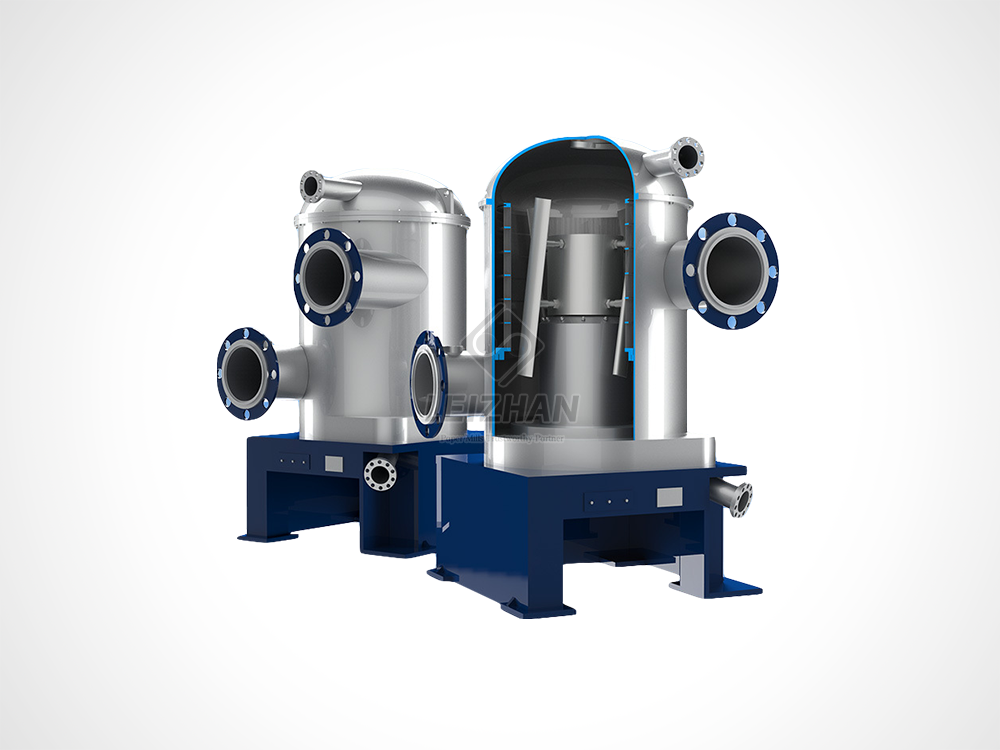
Structural Types: Inflow vs. Outflow Pressure Screens
Inflow Pressure Screens: Mechanics and Best Use Cases
Inflow pressure screens feature a specific flow path where pulp enters the housing outside the screen basket. The pressure differential forces the accepts inward through the apertures. The accepted pulp then flows up and out of the center of the machine. This design offers lower specific energy consumption and operates with a notably gentler screening action. Inflow designs excel in processing high-quality, low-consistency pulp grades, typically running between 0.5% and 1.2% consistency. They minimize the extrusion of deformable contaminants like stickies through the slots because the centrifugal force pushes heavy debris away from the basket surface. This makes them highly effective for fine paper, specialty grades, and virgin hardwood kraft lines.
Outflow Pressure Screens: Mechanics and Best Use Cases
Outflow pressure screens reverse the flow dynamics. Pulp enters the inside of the screen basket. The system forces accepted fibers outward through the screen cylinder. This configuration delivers higher throughput capacity per square meter of screen area. Outflow screens handle higher consistency pulps effectively, often operating efficiently at 2.5% to 4.0% consistency. They provide robust performance in demanding environments. Recycled fiber lines rely heavily on outflow designs. The strong centrifugal force assists in pushing heavy production volumes through the system while managing variable contaminant loads typical of post-consumer waste streams.
Comparative Trade-offs for Decision Makers
Selecting the right structure requires evaluating raw material, target volume, and energy budgets. Virgin wood mechanical pulping requires precise slot sizing to handle rigid shives without plugging. Chemical pulping demands high cleanliness with minimal fiber damage. Recycled furnish presents heavy loads of adhesives, hot melts, and plastics. Inflow screens protect pulp quality and save energy but offer lower volumetric capacity. Outflow screens maximize production volume and handle higher consistencies but consume more motor power. Mill engineers must align the screen structure with the specific furnish characteristics to avoid chronic operational bottlenecks.
Comparison of Inflow and Outflow Screen Structures
| Evaluation Criteria | Inflow Pressure Screen | Outflow Pressure Screen |
| Flow Direction | Outside to Inside | Inside to Outside |
| Energy Consumption | Lower (approx. 10-15% less) | Higher |
| Throughput Capacity | Moderate | High |
| Ideal Pulp Consistency | Low (0.5% - 1.5%) | Medium to High (1.5% - 4.0%) |
| Debris Handling | Pushes heavy debris away from basket | Forces debris against basket |
| Best Application | Fine paper, virgin chemical pulp | Recycled furnish, high-volume board |
Key Components Driving Pulp Purity and Fractionation
Screen Baskets: Slotted vs. Holed Configurations
Screen baskets define the physical limits of contaminant removal. Holed baskets effectively remove cubical or spherical contaminants. Mills typically deploy them in the earlier stages of fine screening or as primary screens in recycled lines. They handle higher volumes and capture blocky debris using holes ranging from 1.2mm to 2.5mm. Slotted baskets take purity to the next level. They feature precise slot widths, often measured in fractions of a millimeter, typically between 0.15mm and 0.35mm. These narrow slots block elongated contaminants like shives that easily slip through round holes. Slotted designs also drive the fiber fractionation process. Surface treatments enhance basket performance. Chrome plating, often applied at 150 to 200 microns thick, and specialized hardening processes increase longevity. They maintain precise slot dimensions over time and resist severe abrasive wear from sand and grit.
Rotor Design and Foil Dynamics
The rotor dictates the fluid dynamics inside the screen housing. Rotor foil shape, clearance, and rotational speed control the magnitude and frequency of pressure pulses. Aggressive pulsation prevents blinding effectively. It keeps the basket clean under heavy loads and high consistencies. However, aggressive pulses consume more motor power. They also risk pushing flexible dirt and stickies through the slots due to the high positive pressure spike. Gentle pulsation yields higher pulp purity. It avoids forcing contaminants into the accepts stream. The trade-off is a higher risk of blinding and lower overall throughput. Engineers must select a rotor profile—such as step rotors, bump rotors, or foil rotors—that balances cleanliness requirements with production targets. Rotor clearance must be strictly maintained, usually between 1.5mm and 3.0mm, to ensure optimal pulse generation without mechanical contact.
Measurable Impacts on Mill Efficiency and Paper Quality
Contaminant Removal and Press Room Performance
Mechanical screening features directly impact the final paper product. Removing micro-contaminants produces a cleaner pulp sheet, drastically reducing the dirt count measured in parts per million (ppm). This eliminates visible defects, dark spots, and transparent windows in the paper. The benefits extend directly to the end-user. Improved pulp purity enhances press room performance. High-speed commercial printing presses require flawless paper webs. Contaminants create weak points that snap under tension during the printing process. Cleaner pulp translates to fewer web breaks during printing, saving customers time, reducing wasted ink, and preventing damage to printing blankets.
Protecting Downstream Refining Equipment
Fine screening serves as a protective barrier for downstream equipment. Pulp often contains abrasive particles, sand, and oversized fiber bundles. Removing these elements reduces the mechanical load on refiner plates. Refiner plates maintain their sharp leading edges longer when fed clean pulp. This extends their operational lifespan, sometimes pushing replacement intervals from three months to six months. Effective fiber fractionation also optimizes refining. By separating long fibers, mills only subject necessary fibers to mechanical treatment. This targeted approach significantly reduces overall refiner power requirements and prevents the over-refining of short fibers, which causes poor drainage on the wire.
Reducing Paper Machine Web Breaks
Paper machine runnability depends entirely on pulp uniformity. Fine screening eliminates the variations and debris that destabilize the wet web. Shives and stickies disrupt fiber bonding during sheet formation. These disruptions cause localized weak spots. When the web hits the press section or the open draws in the dryer section, these weak spots fail under tension. Reducing contaminants correlates directly with wet web stability. Fewer web breaks mean measurable increases in machine uptime. This continuous operation drives immediate revenue recovery for the mill, as every minute of paper machine downtime costs thousands of dollars in lost production.
Evaluating Operational ROI
Decreasing Chemical Pulp Usage and Additive Costs
Optimized fine screening improves mechanical pulp strength and purity. Clean, well-fractionated mechanical pulp forms stronger fiber networks. This strength reduces a mill's reliance on expensive chemical pulp reinforcement. Substituting purchased kraft pulp with high-quality, internally generated mechanical pulp yields massive daily savings. A cleaner baseline furnish also provides secondary financial benefits. Mills require fewer bleaching chemicals to achieve target brightness because the dark shives and bark specks are mechanically removed. They also reduce the consumption of retention aids, defoamers, and chemical additives, streamlining the wet end chemistry.
Energy Consumption and Motor Efficiency
The rotor motor represents a continuous electrical demand. Assessing this energy consumption is critical for mill efficiency. Older screen designs waste power through inefficient fluid dynamics and excessive turbulence. Modern, optimized rotor designs change this equation. Aerodynamic foil shapes generate required pulsations with less drag. This reduces the specific energy consumption measured in kWh per ton of pulp. Installing Variable Frequency Drives (VFDs) on screen motors allows operators to adjust rotor speed based on real-time furnish conditions. Mills maintain high screening efficiency while lowering their daily electrical load, avoiding peak demand charges from utility providers.
Maintenance Intervals and Wear Parts Durability
Screen components operate in harsh, abrasive environments. Lifecycle costs depend on replacing screen baskets, rotor foils, and mechanical seals. High-quality surface hardening extends basket life and delays replacement. Durable rotor foils maintain their shape, ensuring consistent pulsation over time. Ease of access also impacts operational ROI. Designs that allow maintenance crews to swap baskets quickly minimize scheduled downtime. Fast turnarounds keep the production line moving and reduce labor hours. Mechanical seals require strict attention; seal water pressure must be maintained at least 1 bar above the internal feed pressure to prevent abrasive pulp from destroying the seal faces.
Standard Operating Procedure for Screen Start-Up
Verify all maintenance locks are removed and the screen housing is securely bolted.
Open the seal water valve and confirm pressure is 1 bar above the anticipated feed pressure.
Open the reject valve to 100% to ensure a clear path for initial debris flushing.
Start the rotor motor and monitor the VFD for normal amperage draw without load.
Slowly open the feed valve to introduce pulp, watching the feed pressure gauge stabilize.
Gradually open the accepts valve while adjusting the reject valve to achieve the target volumetric reject rate.
Monitor the differential pressure across the screen basket, ensuring it stays below 0.3 bar.
Implementation Risks and Mitigation Strategies
Managing Reject Rates and Fiber Loss
Operating a fine screen too aggressively creates immediate financial risks. Pushing for maximum purity often results in an unacceptably high loss of good papermaking fiber. This fiber exits through the reject stream and goes to waste if not handled properly. Mitigation requires a multi-stage cascade screening approach. Mills implement primary, secondary, and tertiary screening systems. The secondary and tertiary stages process the rejects from the primary screen. They recover good fiber and return it to the system. Optimizing the volumetric reject rate (Rv) at each stage prevents excessive fiber loss while maintaining cleanliness. Typically, a primary screen runs an Rv of 10-15%, while a tailing screen might run at 30-40% to concentrate the final debris.
System Integration and Consistency Control
Pressure screens require stable operating conditions. Fluctuations in feed pulp consistency destabilize the entire process. High consistency spikes cause immediate basket blinding, spiking the differential pressure and tripping the motor. Low consistency drops reduce throughput and ruin fractionation efficiency. Mitigation depends on strict upstream control. Mills must integrate precise consistency transmitters before the screen. They must also install automated dilution water control loops tied to PID controllers. These systems monitor the pulp and inject precise amounts of water into the feed header. This guarantees a steady, uniform consistency entering the screening machine, allowing the rotor to maintain optimal fluid dynamics.
Common Fine Screening Operational Faults and Solutions
| Operational Fault | Primary Cause | Immediate Solution |
| High Differential Pressure | Basket blinding due to high consistency | Increase dilution water; check consistency transmitter calibration. |
| Motor Overload / High Amps | Rotor jammed or clearance too tight | Flush screen; verify rotor-to-basket clearance during next shutdown. |
| Excessive Good Fiber in Rejects | Reject valve open too wide | Pinch back reject valve; verify volumetric reject rate (Rv). |
| Poor Debris Removal Efficiency | Worn screen basket slots | Inspect basket for wear; replace if slots exceed maximum tolerance. |
| Mechanical Seal Leakage | Inadequate seal water pressure | Boost seal water pressure to 1 bar above feed pressure. |
Conclusion
Conduct a baseline audit of current volumetric reject rates and acceptable fiber loss across all screening stages.
Evaluate the specific energy consumption (kWh/ton) of existing screening equipment to identify upgrade opportunities.
Assess downstream refiner plate wear patterns and replacement frequency to determine if abrasive debris is bypassing current screens.
Consult with equipment manufacturers to custom-size slot widths and rotor profiles based on your specific furnish and consistency targets.
FAQ
Q: What is the difference between coarse and fine pressure screens?
A: Coarse screens remove large contaminants like metal, glass, and large plastics early in the pulping process using 1.2mm to 2.5mm holes. Fine screens operate later in the sequence. They use narrow slots (0.15mm to 0.35mm) to target micro-contaminants, shives, and stickies. Coarse screening protects the fine screen from mechanical damage.
Q: How does a pulp fine screening machine prevent screen blinding?
A: The machine utilizes an internal spinning rotor equipped with specialized foils. As the rotor turns at high speeds, the foils pass over the screen basket surface. This movement generates continuous hydrodynamic pulsations. The negative pressure phase of the pulse pulls accumulated fiber mats away from the apertures, keeping the slots clear.
Q: What is fiber fractionation in pressure screening?
A: Fiber fractionation is the process of separating fibers based on their physical characteristics. The screen basket allows short, flexible fibers to pass through the slots easily. Long, stiff fibers cannot pass and are retained in the reject stream. This allows mills to apply mechanical refining only to the long fibers.
Q: What is the ideal pulp consistency for a fine pressure screen?
A: Ideal consistency depends on the screen design and pulp type. Industry standards range between 0.5% and 4.0%. Inflow screens typically operate at lower consistencies (0.5% to 1.5%) for high-quality grades. Outflow screens handle higher consistencies (up to 4.0%) for recycled or heavy board production.
Q: How do slotted screen baskets improve pulp purity compared to holed baskets?
A: Holed baskets allow elongated, rigid contaminants like shives to pass through if they align vertically with the hole. Slotted baskets use narrow, continuous gaps. These slots physically restrict long, stiff contaminants from passing, regardless of their orientation. This significantly reduces shive content in the final accepted pulp.
Q: What causes high reject rates in fine pressure screening?
A: High reject rates stem from several operational imbalances. Incorrect rotor speed disrupts the pressure pulses needed to push fibers through. Improper slot sizing restricts acceptable fiber. Fluctuations in feed consistency can overload the basket. A volumetric reject valve opened too wide will force good fiber out with the debris.


