Heavy impurities entering the downstream pulping process create compounding operational costs. Tramp metal, glass shards, sand, dirt, and dense plastics accelerate wear on refiner plates and screen baskets. This leads to frequent maintenance shutdowns and ruined equipment. Processing recycled furnish or heavily contaminated virgin pulp at consistencies between 2% and 6% presents a distinct physics challenge. You have to separate dense contaminants without causing excessive fiber loss, plugging the system, or requiring massive dilution water volumes that disrupt the mill's water balance.
The primary defense mechanism in the coarse screening loop is the High Consistency Centricleaner. Frequently referred to as a High Density Cleaner or HD Cleaner, this equipment relies on centrifugal mechanics to protect downstream assets. By intercepting large and heavy debris immediately after the pulper, it prevents catastrophic damage to sensitive rotating machinery. We will break down the fluid dynamics, engineering features, and evaluation criteria necessary for specifying the right unit for specific furnish types and production capacities.
Centrifugal Separation Mechanics: High consistency centricleaners utilize tangential stock entry to create a high-velocity rotational flow, separating materials based on specific gravity rather than physical size.
Downstream Asset Protection: Effective removal of heavy slag, sand, and metal at the high-consistency stage directly extends the lifecycle of downstream deflakers, refiners, and fine screens.
Critical Evaluation Metrics: Procurement and engineering teams must evaluate cleaner efficiency based on pressure drop requirements, reject discharge mechanisms (intermittent vs. continuous), and the wear resistance of the cone materials (e.g., alumina ceramic).
Operational Trade-offs: Balancing maximum impurity removal with minimal fiber rejection requires precise control of pressure differentials and, in some designs, the application of elutriation water.
The Mechanics: How a High Consistency Centricleaner Works
Tangential Entry and Fluid Dynamics
The separation process begins the moment the pulp suspension enters the equipment. Stock enters the upper cylindrical section tangentially under significant feed pump pressure, typically ranging from 150 to 250 kPa depending on the specific unit design. This specific entry geometry forces the fluid against the inner wall, instantly converting linear velocity into intense rotational velocity. The fluid establishes a primary downward vortex that spirals along the inner circumference of the cylinder and cone. This high-speed rotation generates the centrifugal forces necessary to push heavier particles outward, separating them from the main fiber suspension. The volute design at the inlet minimizes turbulence, ensuring a smooth transition into the rotational flow pattern.
Centrifugal Force vs. Specific Gravity
Centrifugal cleaning relies entirely on the principle of specific gravity rather than physical dimensions. Centrifugal force acts disproportionately on heavy impurities because these contaminants possess a higher specific gravity than cellulose fibers and water. Water has a specific gravity of 1.0, and saturated cellulose fibers hover around 1.5. In contrast, silica sand sits at 2.6, and steel fragments exceed 7.8. As the suspension spins, the rotational energy drives these dense particles outward against the cleaner wall. Meanwhile, the lighter cellulose fibers remain suspended closer to the center of the rotating fluid column. This density-based separation isolates small, heavy particles that would otherwise slip through the physical barriers of downstream pressure screens.
The Role of the Cone-Shaped Body
The geometry of the cleaner dictates its separation efficiency. The equipment transitions from a wide upper cylinder to a narrowing lower cone. As the fluid travels downward into the narrower sections of the cone, the rotational fluid velocity accelerates rapidly due to the conservation of angular momentum. This acceleration dramatically intensifies the centrifugal force applied to the suspension. The intensified force ensures that even marginally heavier particles are driven to the outer wall before the fluid reaches the reject zone at the bottom apex. The precise angle of this cone determines the balance between separation efficiency and pressure drop. Steeper cones generally provide higher separation efficiency but require higher feed pressures to maintain the vortex.
The Secondary Upward Vortex
Fluid dynamics shift dramatically at the apex of the lower cone. Because the equipment operates under a continuous pressure differential, the fluid cannot simply exit the bottom. The clean pulp, known as accepts, possesses a lower specific gravity and gathers near the center axis. At the bottom of the cone, this lighter accept stock reverses direction to form a low-pressure inner vortex. This secondary vortex travels rapidly upward through the exact center of the cleaner, passing through the vortex finder, and exiting via the accept outlet at the top of the unit. An air core naturally forms in the absolute center of this upward vortex, stabilizing the flow and preventing the remixing of separated contaminants.
Types of Impurities Targeted by a High Consistency Pulp Cleaner
Categorizing Heavy Contaminants
The High Consistency Pulp Cleaner targets specific tramp materials that enter the mill through raw material bales. Common debris includes heavy staples, binding wire, paper clips, gravel, sand, glass shards, and dense dirt. In recycled paper mills processing Old Corrugated Containers (OCC), the system also encounters heavy plastics and metallic fragments from shipping pallets. The cleaner successfully removes unpulped lumps and dense fiber nodules that require further deflaking, preventing them from plugging downstream fine screens. Operators must understand the specific gravity of these contaminants to optimize the cleaner's operating parameters.
Specific Gravity of Common Mill Contaminants
| Contaminant Type | Average Specific Gravity | Removal Difficulty |
| Tramp Metal (Steel/Iron) | 7.5 - 8.0 | Low |
| Glass Shards | 2.4 - 2.8 | Low |
| Silica Sand / Gravel | 2.6 - 2.7 | Low |
| Dense Plastics (PET/PVC) | 1.3 - 1.5 | High |
| Cellulose Fiber (Reference) | 1.5 (Saturated) | N/A |
Size vs. Density Separation
Mill engineers understand that centrifugal cleaning is mandatory alongside traditional barrier screening. Coarse and fine screens separate materials based strictly on physical size, utilizing precision-milled slots or drilled holes. A small piece of dense wire or a grain of silica sand can easily orient itself to pass through a 0.15mm screen slot. Centricleaners address this vulnerability by removing small, highly dense particles that bypass physical barriers. Combining density separation with size separation provides a comprehensive defense mechanism for the stock preparation line. You cannot rely on slotted screens alone to catch heavy, narrow debris.
Impact of Unremoved Slag
Failing to remove heavy slag at the high-consistency stage causes severe mechanical damage throughout the mill. Tramp metal that bypasses the cleaner will shear refiner plates instantly, destroying expensive metallurgy and halting production. Sharp glass and gravel easily puncture fine screen baskets, leading to massive fiber contamination and requiring immediate replacement of the basket. Suspended sand introduces severe abrasive wear into the piping infrastructure, pump impellers, and valve seats. This erosion drastically reduces the operational lifespan of all downstream fluid handling equipment, forcing premature rebuilds of expensive centrifugal pumps.
Engineering Features to Evaluate in a High Consistency Centricleaner
Wear Resistance and Material Selection
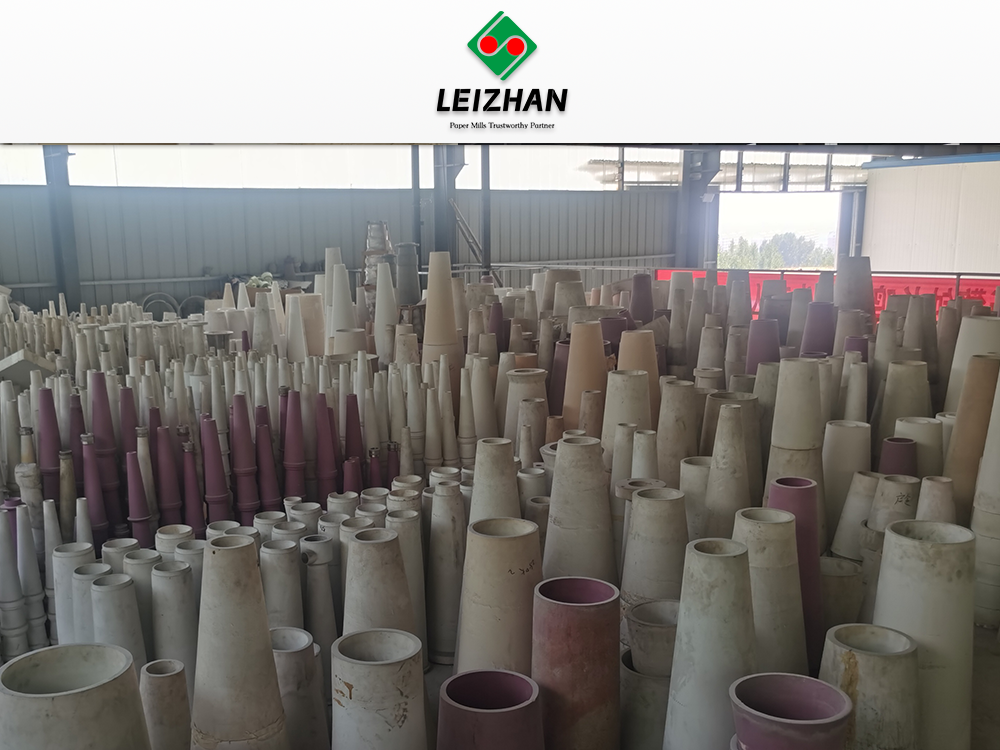
Operational lifespan depends heavily on the materials used to construct the lower cone, where centrifugal forces and abrasive wear are most intense. Polyurethane cones offer flexibility and impact resistance but degrade quickly under heavy sand loads. Cast iron provides excellent structural strength but suffers from corrosion and gradual erosion. High-alumina ceramics deliver exceptional resistance to highly abrasive sand and metal traveling at high velocities. Ceramic components prevent frequent maintenance shutdowns and maintain the internal geometry required for optimal vortex formation. When inspecting the cone during shutdowns, maintenance teams should follow a strict evaluation protocol.
Isolate the feed pump and lock out the main power supply.
Close the manual isolation valves on both the feed and accept lines.
Relieve internal pressure using the designated bleed valve.
Remove the lower cone section via the flanged connection.
Inspect the inner ceramic or polyurethane lining for grooving, pitting, or uneven wear patterns.
Measure the internal diameter of the reject apex and compare it to OEM specifications.
Reject Chamber Design and Discharge Mechanisms
Engineers must evaluate how the equipment handles the rejected material. Intermittent discharge systems utilize a reject chamber equipped with pneumatic double valves. The top valve opens to allow heavy debris to fall into the chamber, then closes before the bottom valve opens to dump the debris, preventing pressure loss. Continuous bleed systems maintain a constant, small flow of rejects, which is simpler but requires secondary processing. Most modern units feature a heavy-duty sight glass. This transparent section allows operators to visually monitor the reject chamber, ensuring it does not overfill and disrupt the internal vortex.
Discharge Mechanism Comparison
| System Type | Operational Mechanism | Fiber Loss Potential | Maintenance Requirement |
| Intermittent (Double Valve) | Sequential opening/closing of two pneumatic valves | Very Low | High (Valve seals, actuators) |
| Continuous Bleed | Constant open orifice at the apex | High (Requires secondary stage) | Low (No moving parts) |
Elutriation Water Injection
To maximize fiber yield, many advanced cleaners feature elutriation water injection at the reject tip. Elutriation, or dilution water, injects tangentially near the base of the cone. This clean water flow counteracts the downward movement of good cellulose fibers that get dragged along with the heavy debris. The injected water washes these lighter fibers back up into the accept stream. Implementing elutriation significantly minimizes fiber loss while allowing heavy slag to drop into the reject chamber unhindered. The elutriation water pressure must be maintained at 20 to 50 kPa higher than the internal pressure at the injection point to prevent stock from backing up into the water lines.
Pressure Drop and Energy Consumption Metrics
Maintaining the internal vortex requires a specific pressure differential between the feed inlet and the accept outlet. Engineers must evaluate the energy efficiency of the feed pump against the separation efficiency of the cleaner. A higher pressure drop generally increases cleaning efficiency by spinning the fluid faster, but it demands significantly more electrical energy from the feed pump. A standard pressure drop (Delta P) ranges from 100 to 150 kPa. Operators must find the optimal pressure setpoint that removes the required amount of heavy debris without wasting pump energy or causing excessive wear on the internal cone walls.
Operational Trade-offs: High Consistency vs. Medium/Low Consistency Cleaning
Consistency Ranges and System Placement
Pulp cleaners are categorized by the consistency of the stock they process. High consistency units operate between 2% and 6% solids. Medium consistency systems run at 1.5% to 2%, while low consistency systems handle heavily diluted stock below 1.5%. Mills position high consistency units immediately after the pulper or blow tank. At this stage, the stock is thick, and the debris is large and destructive. Placing these robust units at the front of the line acts as the first line of defense, protecting all subsequent thinning and screening stages from catastrophic mechanical damage.
Heavy vs. Light Impurity Targeting
High consistency units are strictly designed to target heavy debris with a high specific gravity. They excel at removing metal, glass, and stones. They are ineffective at removing lightweight contaminants. Downstream medium and low consistency cleaners are required to target light impurities. These forward and reverse cleaners handle plastics, styrofoam, stickies, shives, and fine dirt. A complete stock preparation system requires both high-consistency heavy removal and low-consistency light removal to achieve final paper quality. You cannot force a single cleaner type to handle both ends of the specific gravity spectrum.
Fiber Recovery Rates vs. Contaminant Removal
Centrifugal cleaning involves an inherent operational trade-off between cleanliness and yield. Higher centrifugal forces and wider reject openings increase impurity removal rates, ensuring a cleaner accept stream. These aggressive settings risk higher good-fiber rejection, sending valuable cellulose to the landfill. Operators must balance these metrics based on the specific furnish quality and the final product requirements. Utilizing elutriation water and optimizing the automated valve timing helps mitigate this trade-off, maximizing recovery without sacrificing cleanliness. Adjusting the dwell time of the top reject valve directly impacts the volume of fiber lost during each dump cycle.
Capacity vs. Footprint
When designing a mill layout, footprint is a major consideration. Single, large-diameter high consistency units process massive volumetric throughput. A single unit can often handle the entire production flow coming from the pulper, processing anywhere from 1,000 to 5,000 liters per minute. Low-consistency fine cleaning requires extensive multi-cyclone banks containing hundreds of small-diameter cones to process the same amount of fiber, due to the massive dilution water volumes required. The large single units save valuable floor space while providing critical coarse stock protection.
Implementation Risks and Mitigation Strategies
Risk: Plugging in the Reject Outlet
The most common operational failure is plugging at the reject outlet. This occurs due to the over-accumulation of heavy solids, the introduction of oversized tramp metal that bridges the opening, or a failure in the automated discharge valve sequence. When the outlet plugs, heavy debris backs up into the cone, disrupting the vortex and sending sand and metal directly into the accept stream. Mitigation requires implementing automated purge cycles controlled by the mill's DCS. Utilizing heavy-duty pneumatic knife gate valves prevents jamming. Ensuring proper pre-screening with junk traps and raggers in the pulper reduces the volume of oversized debris reaching the cleaner.
Risk: Accelerated Rotor and Cone Degradation
Processing highly abrasive recycled furnish, such as OCC heavily contaminated with street sand, causes premature wear on the lower cone section. As the cone wall erodes, the internal geometry changes, destroying the fluid dynamics required for efficient separation. To mitigate this risk, engineers should specify modular cone designs. Modular construction allows maintenance teams to replace only the high-wear lower apex rather than the entire unit. Upgrading the lower sections to high-alumina ceramic drastically extends the maintenance intervals compared to standard polyurethane or steel.
Risk: Suboptimal Pressure Differentials
Centrifugal separation fails if the internal vortex collapses. Vortex collapse is typically caused by fluctuations in feed pump pressure, sudden changes in stock consistency, or entrained air in the system. When the pressure differential drops, separation stops entirely. Mitigation involves installing precision pressure transmitters on both the feed and accept lines. These sensors must integrate directly into the mill's Distributed Control System for real-time monitoring. The DCS can then automatically adjust the feed pump's Variable Frequency Drive (VFD) to maintain the exact pressure drop required for continuous, stable operation.
Conclusion
Conduct a comprehensive furnish audit to determine the exact specific gravity and volume of contaminants entering your pulping process.
Install precision pressure transmitters on the feed and accept lines, integrating them into the DCS for automated VFD control.
Upgrade the lower cone sections of existing units to high-alumina ceramic if processing highly abrasive OCC or heavily sanded furnish.
Implement automated purge cycles on the reject discharge valves to prevent bridging and vortex collapse.
Request computational fluid dynamics (CFD) models from equipment manufacturers to verify pressure drop requirements before finalizing new installations.
FAQ
Q: What is the optimal consistency range for a high consistency centricleaner?
A: The optimal operating consistency typically ranges from 2% to 6%. Operating within this specific range allows the equipment to effectively separate heavy debris without requiring massive volumes of dilution water, thereby maintaining the efficiency and water balance of the coarse screening loop.
Q: Is a High Density (HD) Cleaner the same as a High Consistency Centricleaner?
A: Yes. In the pulp and paper industry, these terms are used interchangeably. Both refer to the centrifugal separation equipment positioned early in the stock preparation line to remove heavy contaminants like metal, glass, and sand from thick pulp suspensions.
Q: How does a centricleaner differ from a pressure screen in pulp processing?
A: A centricleaner separates contaminants based on specific gravity using centrifugal force, pushing heavy items to the outside. A pressure screen separates materials based on physical size using a physical barrier with specific slot or hole dimensions. Both are necessary for complete pulp purification.
Q: What causes a high consistency pulp cleaner to plug, and how can it be prevented?
A: Plugging usually results from the over-accumulation of heavy solids, oversized tramp metal bridging the gap, or a failure in the automated discharge sequence. Prevention requires implementing automated purge cycles, using heavy-duty pneumatic valves, and ensuring proper pre-screening at the pulper.
Q: Why is elutriation water used in the reject chamber of a centricleaner?
A: Elutriation water is injected at the base of the cleaner to counteract the downward flow of good cellulose fibers. It washes these lighter fibers back up into the accept stream, significantly minimizing fiber loss while allowing heavy slag to discharge normally.
Q: How often do the ceramic cones in a centricleaner need to be replaced?
A: Replacement frequency depends entirely on the abrasiveness of the furnish and operating hours. Highly abrasive recycled furnish like OCC with high sand content will wear down cones faster. Modular designs allow mills to replace only the worn lower apex, saving time and resources.
Q: What is the standard pressure drop required for efficient centrifugal cleaning?
A: The required pressure drop varies by specific equipment design and furnish type. Maintaining a precise, constant pressure differential between the feed and accept lines, typically between 100 and 150 kPa, is critical to sustaining the internal vortex and ensuring optimal separation.


