Minor degradation in centrifugal cleaner components leads to disproportionate losses in pulp quality, optical properties, and machine uptime. Mill engineers often trace contaminant bypass issues directly back to worn internal geometries. When dirt, grit, and sand slip past the reject stream, they enter the accept flow. This causes downstream defects, increases chemical bleaching demands, and accelerates wear on paper machine forming fabrics. Fluctuating operating pressures further complicate system control. These pressure drops stem directly from degraded internal parts.
Strategic procurement and proactive maintenance of Pulp Cleaner Accessories serve as your primary defense against unstable hydrodynamics. Evaluating these components represents a bottom-of-funnel decision for maintenance managers. You must maintain precise internal dimensions to guarantee consistent centrifugal force. High-quality replacement parts ensure that your cleaning system operates at peak efficiency, protecting both stock freeness and final sheet quality.
Consistent centrifugal force and pressure drop rely entirely on the dimensional integrity of internal cleaner components; higher pressure drops dictate faster slurry rotation and maximum separation force.
Material selection (e.g., ceramics vs. polyurethane) for Pulp Cleaner Spare Parts directly dictates abrasion resistance, chemical tolerance during boilouts, and replacement frequency.
Proactive replacement of reject tips and cones prevents the thickening factor from skewing, stabilizing the overall reject rate and protecting stock freeness.
Evaluating the operational reliability of premium accessories outweighs the short-term savings of low-grade aftermarket alternatives that risk catastrophic run-to-failure events.
The Mechanics of Pulp Cleaning Stability: Why Component Integrity Matters
Stable performance in a pulp mill requires meeting strict operational metrics. You need consistent contaminant removal efficiencies and stable stock freeness. Predictable pressure drops across the cleaner bank are non-negotiable. The ultimate goal remains the preservation of the pulp's physical strength and optical properties. High brightness and a low dirt count define top-tier pulp quality. Achieving these metrics depends entirely on the mechanical integrity of your separation equipment.
Centrifugal cleaners operate on strict hydrodynamic principles based on the free vortex theory. The system relies on precise internal geometry to function. This geometry converts the inlet pressure drop into high-velocity slurry rotation. As the fluid spins, it generates intense G-forces. These forces separate high-density contaminants from the usable cellulose fibers based on specific gravity and specific surface area. The heavy debris pushes outward against the cone walls and spirals downward toward the apex. The lighter, clean fibers migrate to the low-pressure center core and move upward through the vortex finder.
The separation process follows a specific sequence of fluid dynamics:
Tangential Entry: The stock enters the feed header and is injected tangentially into the upper cylinder, initiating the rotational flow.
Acceleration: As the internal diameter of the cone narrows, the rotational velocity of the fluid increases, multiplying the centrifugal force applied to the particles.
Stratification: Heavy contaminants (sand, bark, metal) migrate to the outer wall due to their higher specific gravity, while flexible cellulose fibers are caught in the drag force and pulled toward the center.
Reversal and Acceptance: The fluid hits the bottom of the cone, reversing its axial direction. The clean fiber core shoots upward through the vortex finder into the accept header.
Rejection: The heavy contaminants exit through the bottom orifice, controlled by the reject tip diameter.
The operational cost of component degradation is severe. Even millimeter-level wear on internal surfaces disrupts the established fluid dynamics. Abrasive materials like sand, glass, and staples scour the inner walls over time. This wear alters the angle of the cone and widens the reject aperture. When the geometry changes, the zero-velocity envelope shifts. The vortex loses stability. Heavy contaminants bypass the reject stream entirely and get pulled into the accept flow. Once these contaminants reach the paper machine, they degrade the final sheet's physical strength. They also ruin optical clarity, leading to rejected reels and lost production time.
Core Pulp Cleaner Accessories and Their Operational Impact
Maintaining a centrifugal cleaning system requires regular evaluation of specific component categories. Each part plays a distinct role in managing fluid dynamics and pressure drops. Understanding these roles helps maintenance teams prioritize replacement schedules effectively and prevent unexpected downtime.
Cones and Lower Sections
The lower cone handles the final stage of separation. It experiences the highest concentration of abrasive contaminants because the heavy debris is forced against its walls at maximum velocity. The material choice here dictates the lifespan of the entire unit. High-alumina ceramics (typically 96% Al2O3 or higher) offer maximum abrasion resistance. They are ideal for high-density cleaners processing recycled Old Corrugated Containers (OCC). Engineered polyurethane provides excellent impact resistance and flexibility. Polyurethane absorbs the shock of large tramp metal without shattering, making it suitable for specific operational stages where impact is a higher risk than pure abrasion.
Replacement Nozzles and Reject Tips
The reject tip sits at the very bottom of the cleaner. Its aperture size strictly controls the volumetric reject rate. Abrasive wear naturally widens this opening over time. A worn, widened reject tip triggers cascading negative effects across the entire system. A mere 1mm increase in the orifice diameter can increase the volumetric reject flow by over 15%. This leads to excessive good fiber loss. It skews the thickening factor and disrupts controlled consistency across the entire cleaner bank. Proactive replacement of these tips is mandatory for fiber conservation and maintaining system balance.
O-Rings, Gaskets, and Sealing Components
Sealing components maintain the necessary pressure differentials between the feed, accept, and reject headers. You need absolute airtight seals to prevent vacuum loss. Air entrainment severely degrades low consistency cleaner performance. When air enters the system, it disrupts the central vortex, causes foaming, and promotes the formation of stringy fiber bundles (spinning). Furthermore, these seals must possess high chemical resistance. They endure harsh paper machine boilouts involving hot sodium hydroxide and routine system cleaning protocols. Inferior elastomers degrade quickly under alkaline exposure, leading to sudden pressure drops and leaks.
Feed Headers and Acceptance Valves
Valves and headers control the fluid entering and exiting the system. Stable inlet pressure is a fundamental requirement for a stable vortex. Accessory valves regulate the pressure drop (Delta P) across the cleaner. This pressure drop is required to maintain optimal rotational velocity. If a valve fails to hold a steady pressure due to internal scoring or actuator failure, the slurry rotation slows down. Reduced velocity means lower centrifugal force, which immediately drops the contaminant removal efficiency.
Material Specifications for Cleaner Components
| Material Type | Primary Advantage | Best Application | Operational Vulnerability |
| High-Alumina Ceramic (96%+) | Extreme abrasion resistance | High-density cleaners, lower cones | Brittle under heavy mechanical impact |
| Engineered Polyurethane | Impact resistance and flexibility | Low-consistency cleaners, upper sections | Can degrade under extreme alkaline boilouts |
| Hardened Stainless Steel (316L) | Structural integrity and pressure tolerance | Feed headers, accept valves | Susceptible to scoring from sharp tramp metal |
| EPDM Elastomers | Alkaline and thermal resistance | O-rings, gaskets, system seals | Poor resistance to petroleum-based defoamers |
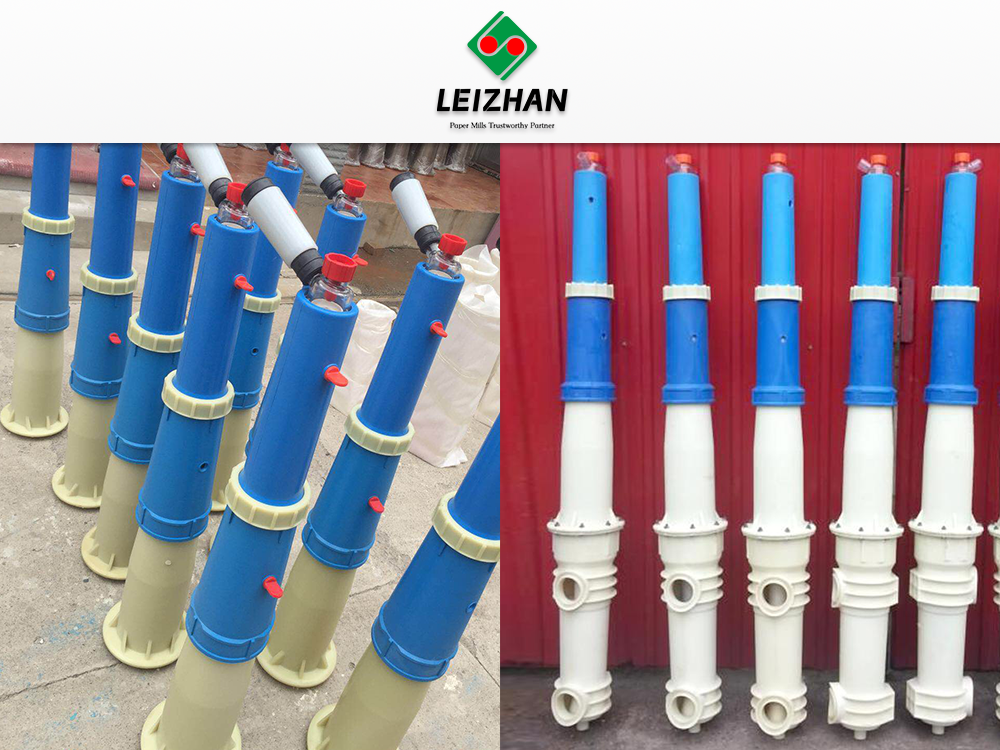
Evaluating Pulp Cleaner Spare Parts: OEM vs. Aftermarket
Choosing between Original Equipment Manufacturer (OEM) parts and third-party alternatives requires a strict evaluation framework. You must map specific component features to actual operational outcomes. Procurement decisions based solely on initial purchase price often lead to severe downstream losses. You must evaluate material durability, dimensional accuracy, and the risk of operational downtime.
Material durability directly impacts replacement frequency and maintenance schedules. You must assess the metallurgical or chemical composition of the spare parts. Compare this against the specific abrasive nature of your mill's furnish. OCC recycling introduces massive amounts of grit, glass, and staples. This requires highly abrasion-resistant materials. Virgin kraft processing deals with different contaminants and chemical environments. Furthermore, the components must survive aggressive chemical boilouts. Inferior plastics or rubbers will swell, crack, or dissolve when exposed to caustic cleaning agents at 180°F.
Dimensional accuracy dictates hydrodynamic flow. Centrifugal cleaners operate on exact tolerances. Even slight deviations in aftermarket parts alter the vortex finder's efficiency. If a replacement cone has a slightly different internal angle, the fluid velocity changes. This disrupts the controlled flow and shifts the separation zone. Heavy dirt may get pulled up into the accept stream. A vortex finder that is off-center by just 0.5mm will cause short-circuiting, where uncleaned feed stock bypasses the vortex entirely and exits through the accept header. You must demand precise dimensional guarantees from your suppliers to ensure seamless integration.
Evaluating long-term operational efficiency provides a clearer picture of true value. Cheap aftermarket parts require frequent changeouts. This drives up labor costs and increases maintenance downtime. More importantly, poorly fitting parts cause excessive fiber loss through the reject stream. Losing good cellulose fiber daily costs far more than the premium paid for high-quality, dimensionally accurate components. You must also factor in the risk of unexpected paper machine downtime caused by catastrophic component failure, such as a lower cone blowing out under pressure.
Risk Assessment Matrix for Spare Parts
| Evaluation Criteria | High-Quality Components | Low-Grade Alternatives | Operational Impact |
| Dimensional Tolerance | Exact match to OEM specs | Variable, prone to shifting | Vortex stability and separation efficiency |
| Chemical Resistance | High (withstands 180°F NaOH) | Low (swells or cracks) | Seal integrity and leak prevention |
| Abrasion Resistance | High (Ceramic/Hardened Alloy) | Low (Standard Plastics) | Lifespan of lower cones and reject tips |
| Surface Finish | Ultra-smooth internal walls | Rough or pitted surfaces | Prevention of fiber stringing and spinning |
Diagnosing Performance Drops: When to Replace Accessories
Transitioning from procurement to operational management requires vigilant monitoring. You must identify failing parts before they cause systemic issues. Relying on visual inspections alone is insufficient, especially since the wear occurs internally. You need a data-driven approach to diagnose performance drops. Implementing a robust monitoring strategy mitigates the implementation risks associated with component wear.
Monitoring the five pillars of cleaner control provides a reliable diagnostic framework. These critical parameters include feed pressure, accept pressure, reject pressure, feed consistency, and reject consistency. A deviation in any of these metrics signals internal accessory wear. For example, if the controlled consistency of the accept stream begins to fluctuate while the feed remains constant, you likely have a geometry issue inside the cleaner. Tracking these five pillars daily allows maintenance teams to spot trends before they turn into critical failures.
Analyzing pressure and reject fluctuations serves as a leading indicator of trouble. Pressure drop (Delta P) fluctuations point directly to internal wear or partial plugging. If the pressure drop decreases, the rotational velocity of the slurry drops. This reduces separation efficiency. A sudden spike in reject volume indicates that the reject tip has worn too wide. Conversely, a drop in reject volume suggests partial plugging of the tip by large debris or stickies. Both scenarios require immediate attention to restore system balance.
Mass balance audits confirm the extent of component degradation. You use mass balance data to detect when a reject tip has worn beyond acceptable tolerances. By measuring the input consistency against the accept and reject consistencies, you calculate the thickening factor. The thickening factor is the ratio of reject consistency to feed consistency. A skewed thickening factor confirms that fluid dynamics have broken down. This audit removes the guesswork from maintenance scheduling. It provides hard data proving that specific components no longer meet operational standards.
Scheduled maintenance minimizes operational dangers. The financial risks of waiting for a component to fail are massive. A run-to-failure approach often results in a catastrophic cone blowout. This spills stock onto the floor, creates safety hazards, and forces an emergency shutdown. Implementing a predictive replacement schedule based on tonnage processed is far safer. Track how many tons of furnish pass through the system. Replace high-wear items like reject tips and lower cones at predetermined intervals, regardless of visual appearance. This proactive strategy guarantees stable performance and protects machine uptime.
Maximizing ROI on High-Density and Low-Consistency Applications
Tailoring accessory selection to the specific stage of the cleaning system maximizes your operational efficiency. Different cleaning stages face entirely different operational challenges. You cannot use a one-size-fits-all approach for spare parts. Understanding the specific demands for each application ensures optimal performance and component longevity.
High-Density (HD) cleaners operate in brutal environments. They typically process stock at 2% to 4% consistency. They handle large, heavy tramp materials typical in OCC processing and broke recovery. You will find glass, staples, stones, and heavy plastics here. The focus for HD accessories must be extreme abrasion resistance. You need hardened alloys and high-alumina ceramics. These materials withstand the constant impact and scouring action of heavy debris. Maintaining the internal geometry of an HD cleaner ensures that maximum centrifugal force is applied to these destructive contaminants, preventing them from damaging downstream fine screens and refiner plates.
Low-Consistency (LC) cleaners serve a completely different purpose. They operate at 0.5% to 1% consistency. They focus on precision geometry and smooth internal finishes. LC cleaners remove fine dirt, sand, and shives. The goal is to clean the pulp without causing excessive good-fiber rejection. The internal surfaces must remain perfectly smooth to maintain a stable, high-velocity vortex. Any surface roughness disrupts the flow, pulling fine dirt into the accept stream or causing fibers to spin into strings. High-quality LC accessories directly protect the optical properties, Canadian Standard Freeness (CSF), and brightness of the final paper product.
Effective inventory management prevents extended downtime. You must develop strategies for stocking critical spare parts. Minimize lead times during unexpected outages by keeping essential components on hand.
Maintain a safety stock of lower cones and reject tips equal to at least 20% of your active cleaner bank.
Keep complete O-ring and gasket kits for every cleaner model in your facility.
Plan your inventory replenishment around scheduled system boilouts and annual maintenance shutdowns.
Store polyurethane components in climate-controlled areas to prevent degradation from extreme heat or UV exposure.
Conclusion
Conduct a comprehensive pressure-drop and reject-rate audit across your current cleaning banks to establish a baseline for component wear.
Perform a mass balance check by sampling feed, accept, and reject consistencies to verify your current thickening factors.
Consult with a separation specialist to evaluate your current spare parts inventory and identify any mismatched materials.
Update your mill's standard operating procedures to include a tonnage-based replacement schedule for all high-wear internal geometries.
FAQ
Q: What are the most commonly replaced pulp cleaner accessories?
A: The most frequently replaced components are reject tips, lower cones, and O-rings. These parts endure the highest levels of abrasion, pressure fluctuations, and chemical exposure. Reject tips wear out fastest due to the concentrated flow of heavy, abrasive contaminants exiting the bottom orifice of the cleaner.
Q: How often should pulp cleaner spare parts be replaced?
A: Replacement cycles depend entirely on your furnish type, operating pressure, and component material. Highly abrasive OCC furnish requires more frequent changeouts than virgin pulp. You should base replacement schedules on predictive monitoring of operating pressures, reject rates, and processed tonnage rather than simple time intervals.
Q: How does a worn reject tip affect pulp quality?
A: A worn reject tip widens the bottom aperture, which increases the volumetric reject rate. This causes excessive loss of good cellulose fiber and skews the system's thickening factor. Consequently, the altered fluid dynamics reduce overall contaminant removal efficiency, allowing dirt to enter the final pulp.
Q: Can upgraded accessories improve low consistency cleaner performance?
A: Yes. Upgrading to precision-engineered cones and vortex finders optimizes the internal fluid dynamics. Smoother internal finishes and exact dimensional tolerances improve the separation of fine dirt and shives. This directly enhances the brightness and optical properties of the final paper sheet.
Q: What causes pressure drop fluctuations in centrifugal cleaners?
A: Pressure drop fluctuations usually result from internal component wear, partial plugging of the reject tip, or failing seals. Worn geometry alters fluid velocity. Plugging restricts flow. Failing O-rings introduce air into the system, which disrupts the vacuum and reduces the slurry's rotational speed.
Q: How do system boilouts impact pulp cleaner spare parts?
A: Harsh cleaning chemicals used during boilouts can rapidly degrade inferior O-rings, gaskets, and standard polyurethane cones. The materials may swell, crack, or lose their sealing properties. Therefore, high chemical resistance is a mandatory purchasing criterion for all internal sealing components.


