Did you know even minor packaging defects trigger massive financial losses down the supply chain? In the high-stakes packaging industry, the structural integrity of your final product is simply non-negotiable. When faced with delamination, crushing, or severe warping, plant managers frequently point the finger at adhesive formulations or raw paper quality. The real culprit often hides in plain sight. It quietly degrades over time. I am talking about the condition of the transport fabric.
Looking at recent industry shifts, the surge in global e-commerce has forced corrugated plants to adapt rapidly. We are seeing a massive transition toward lightweight containerboard and high-speed automated production lines pushing past 350 meters per minute. As paper basis weights drop to optimize material costs, the margin for error in manufacturing shrinks drastically. Micro-flutes are replacing traditional profiles. This shift makes the precise moisture venting and pressure distribution provided by a premium corrugator belt far more critical today than a decade ago. This comprehensive guide explores exactly how these fabrics impact your output. We will look at how they interact with other machinery and why choosing advanced materials drastically improves your production efficiency.
Key Takeaways
Crucial Role in Bonding: The transport fabric applies the exact amount of mechanical pressure and thermal energy needed to cure the starch adhesive. It does this without crushing delicate internal flutes.
Moisture Management: High-quality synthetic structures absorb and release steam efficiently. Proper moisture venting stands as the primary defense against board warping and blistering.
Material Matters: Upgrading to advanced non-woven structures offers superior permeability, heat resistance, and uniform pressure distribution compared to legacy woven designs.
Synergy is Key: Achieving perfect cardboard output requires flawless mechanical synchronization between the transport fabric, the heating plates, and the single facer components.
Maintenance Equals Longevity: Routine surface cleaning, accurate tension tracking, and precise alignment are non-negotiable operational standards.
The Critical Role of the Corrugator Belt in Corrugated Board Manufacturing
What Happens in the Double Backer Section?
The double backer section serves as the critical juncture in a production line. Here, the final structural integrity of the packaging is established. Its primary function is to seamlessly join the single-face web to the bottom liner. This complex physical process demands an incredibly precise combination of heat, pressure, and time.
Acting as the primary transport mechanism through this rigorous environment, the fabric pulls the combined board over a series of heavy cast-iron heating plates. It then moves the web through a cooling section. During this transit, the material must hold the paper layers firmly together. Meanwhile, the starch-based adhesive reaches its gelatinization temperature, typically between 140°F and 160°F. Without a highly functional transport matrix, this journey becomes erratic. The result is immediate structural failures before the board even reaches the slitter-scorer.
The Traction and Pressure Dynamic
Operating a modern double backer requires mastering a delicate dynamic between traction and downward force. The fabric must provide sufficient surface friction to pull a heavy, continuous web of paper through the machine. Speeds often exceed 300 meters per minute in modern plants. Any micro-slippage causes shear stress. This aggressively smears the wet adhesive and ruins the internal bond.
Simultaneously, the system must apply downward pressure. The engineering challenge lies in applying just enough weight to force the liners and fluted medium together for a permanent bond. However, you must carefully avoid applying so much weight that you crush the fragile geometric flutes inside. A premium fabric achieves this delicate balance. It functions as a flexible, weighted cushion that dynamically adapts to the specific caliper of the board being produced.
Direct Ways Corrugator Belts Impact Board Quality
Heat Transfer and Adhesive Curing
The curing of starch-based adhesive is an unforgiving thermodynamic process. It relies heavily on consistent heat transfer. The job here is to press the bottom liner firmly and evenly against the scorching hot plates. Should the fabric become uneven, heavily worn, or glazed with dried glue, it inadvertently creates microscopic air pockets between the paper and the iron plates.
Because air acts as a thermal insulator, these tiny gaps lead to wildly inconsistent temperature profiles across the web. Areas that fail to reach the required gelatinization temperature remain wet. This results in a weak bond commonly known as a wet spot. Conversely, zones that receive excessive heat due to uneven tension can bake the paper. The fibers become brittle and crack during subsequent die-cutting operations.
Moisture Absorption and Evaporation
Applying liquid adhesive inherently introduces a massive volume of water into the paper web. As the cardboard races over the hot plates, this liquid rapidly flashes into steam. Therefore, when evaluating performance, permeability becomes a paramount metric. The material must act as a highly breathable membrane. It needs to allow pressurized steam to escape vertically through its synthetic fibers.
If the material lacks sufficient porosity due to poor manufacturing or excessive debris buildup, the steam becomes trapped inside the paper layers. This trapped moisture drastically alters the dimensional stability of the cellulose fibers. It leads directly to severe warping issues the moment the board exits the cooling section and hits ambient facility air.
Even Pressure Distribution
A top-tier fabric functions much like a high-density memory-foam cushion. At a microscopic level, corrugated board is never perfectly flat. Minor variations in paper thickness and adhesive application are inevitable realities on the plant floor. The fabric matrix must absorb these micro-variations. It must distribute uniform, homogenous pressure across the entire width of the web.
When pressure is distributed flawlessly, the adhesive line spreads evenly along the flute tips. This guarantees edge-to-edge bonding. However, if the material develops hard spots or loses its innate elasticity, it begins applying point-loading pressure. This creates localized areas of excellent bonding surrounded by disastrous zones of delamination. Ultimately, this tanks the overall burst strength of the finished box.
Flute Protection
The structural strength of any shipping container relies entirely on the integrity of its internal flutes. This attribute is objectively measured by the Edge Crush Test. If a fabric is too heavy, overly rigid, or improperly tensioned by rushed machine operators, it exerts a crushing downward force. This permanently fractures the flutes.
Once a flute collapses inside the double backer, the damage cannot be undone. The thickness of the board is permanently reduced. The ECT value plummets to unacceptable levels. Advanced fabrics are engineered with highly specific loft and compressibility parameters. They provide the necessary bonding weight while actively shielding the geometric shape of the flutes from mechanical trauma.
Common Board Defects Caused by a Faulty Corrugated Belt
Warping Dynamics
Warping remains arguably the most frequent and expensive defect in packaging manufacturing. It is almost always tied directly to the condition of the corrugated belt. Warp physically manifests when an uneven moisture profile develops between the top and bottom liners. Imagine a high-speed run of premium double-wall board abruptly halting downstream because the sheets are curling like potato chips. This is the harsh reality of poor moisture management.
When the fabric becomes clogged with paper dust or hardened starch, its permeability drops to zero. This traps steam against the top side of the board. Those fibers swell and expand, while the bottom liner dries and shrinks aggressively against the hot plates. Depending on machine tension and the exact location of the moisture trap, this imbalance forces the board into various warped shapes. These deformations cause catastrophic jams in downstream converting equipment.
Blistering and Delamination
Blistering and delamination refer to the catastrophic separation of the liner from the fluted medium. While operators instinctively assume this is a chemical issue with the glue kitchen formulation, it is far more frequently a mechanical failure of the transport fabric. If the material fails to provide adequate, uniform pressure, the liners simply will not make physical contact with the adhesive on the flute tips.
Building on this dynamic, if the fabric lacks the surface traction to keep the board moving smoothly, momentary hesitations over the hot plates occur. This causes the adhesive to flash-dry prematurely rather than gelling properly. Both of these mechanical failures result in large unbonded bubbles or the complete separation of the paper layers.
Edge Crush and Caliper Loss
Because the outer edges of the fabric are exposed to the highest levels of friction and frequently subjected to stray adhesive, they degrade much faster than the center profile. As an older belt ages, these heavily trafficked edges become noticeably thinner and harder.
To compensate for a general loss of traction, well-meaning operators often crank up the overall pneumatic tension. Unfortunately, this forces the hardened, worn edges to clamp down aggressively on the outer margins of the paper web. This disproportionate pressure crushes the flutes exclusively along the sides. It leads to inconsistent board thickness and boxes that inevitably buckle under warehouse stacking pressure.
Comparing Belt Technologies: Woven vs. Needle Punched
Historically, the packaging industry relied entirely on heavy woven belts. These rugged components were typically constructed from thick cotton yarns blended with synthetic fibers. The primary advantage of a woven structure is its sheer tensile strength.
Despite their toughness, woven technologies exhibit significant limitations when paired with the blistering speeds of modern machinery. The tight interlaced structure creates a relatively closed surface with inherently poor moisture permeability. To overcome these legacy limitations, the industry has shifted toward advanced non-woven technologies. Upgrading to a premium needle punched belt is now the gold standard for high-speed lines.
Here is a direct engineering comparison of the two dominant technologies:
| Feature / Performance Metric |
Traditional Woven Belts |
Advanced Needle Punched Belts |
| Moisture Permeability |
Low. Prone to trapping steam, increasing warp risk. |
Extremely High. Vertical fiber channels vent steam instantly. |
| Pressure Distribution |
Uneven. Yarn intersections create micro-pressure points. |
Uniform. Plush, felt-like surface acts as a shock absorber. |
| Flute Protection |
Moderate. Stiff structure can crush lightweight flutes. |
Excellent. Dynamic compressibility protects micro-flutes. |
| Heat Resistance |
Standard cotton blends degrade at higher temperatures. |
Superior. Integrated PET/Kevlar fibers withstand up to 240°C. |
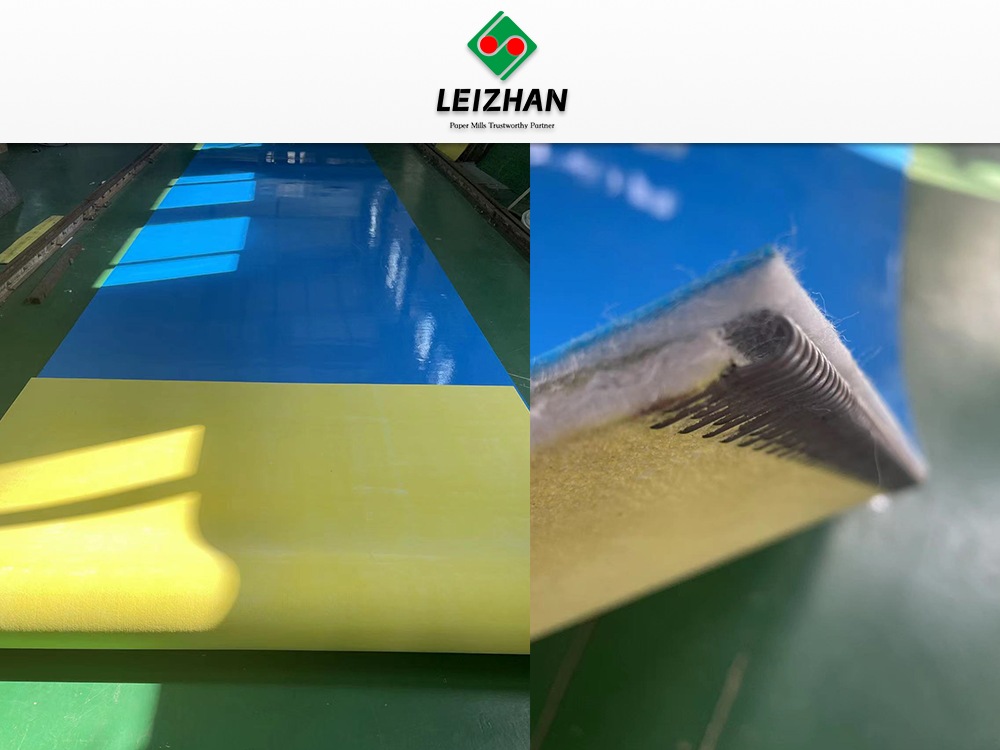
The manufacturing process of the modern non-woven alternative involves mechanically entangling hundreds of thousands of synthetic fibers vertically through a high-strength base fabric. This intensive process creates a thick, felt-like structure. The vertical fiber orientation creates thousands of microscopic exhaust channels. This allows steam to vent rapidly and virtually eliminates moisture-induced warp.
The Synergy Between Corrugating Rolls and the Belt
How the Single Facer Impacts the Double Backer
Achieving pristine board quality is a cumulative process. Structural defects created early in the line cannot be magically ironed out later. The fundamental foundation of your product starts at the single facer, specifically at the corrugating rolls. These heavy, precision-machined steel cylinders are responsible for forming the flat medium paper into rigid, geometric flutes.
If these steel rolls are worn, improperly aligned, or suffering from internal temperature fluctuations, they will produce flutes of varying heights. This defect is known on the floor as high-lows. When this defective single-face web reaches the double backer, the transport fabric faces an impossible task. Even the most advanced, highly permeable fabric cannot apply uniform pressure to a web that has uneven flute heights. It will only contact the tallest flutes, leaving the shorter ones unbonded.
Speed Synchronization
Flawless production requires seamless mechanical synergy between the single facer and the double backer. The exact speed at which the steel rolls produce the single-face web must be perfectly synchronized with the speed at which the fabric pulls the combined board through the hot plates.
If the material pulls even slightly faster than the single facer feeds, it introduces longitudinal tension. This stretches the wet paper fibers and shears the curing adhesive. In contrast, if it pulls slower, the web will accumulate, buckle, and jam. Modern facilities utilize sophisticated electronic drive systems and tension control loops to ensure these critical components operate in perfect harmony.
Equipment Selection and Maintenance Protocols
Actionable Selection Criteria
When production data clearly indicates it is time for a replacement, selecting the appropriate material is a critical engineering decision. Upgrading your corrugator equipment requires matching specific technical parameters to your plant's daily realities.
For modern high-speed corrugators running above 250 m/min, look for needle-punched structures featuring Kevlar reinforced edges. These edges prevent premature fraying against the machine frame. The ideal thickness typically ranges between 9mm and 10mm. This specific caliper provides enough loft to protect micro-flutes while maintaining the rigidity needed for heavy double-wall grades. Furthermore, ensure the synthetic blend incorporates high-grade PET fibers capable of withstanding continuous exposure to 240°C heating plates without glazing.
Routine Cleaning and Unclogging
The operational environment of a packaging plant is inherently dirty. Microscopic paper dust, stray starch adhesive, and ambient facility debris constantly settle on the machinery. Over weeks of operation, these contaminants embed themselves deep into the fabric pores. This destroys the material's permeability.
To maintain crucial steam venting capabilities, routine and aggressive cleaning is essential. Plants should utilize continuous cleaning systems like automated rotary brushes. These run constantly during production to sweep away loose debris. Beyond daily sweeping, operators must perform deep inspections during scheduled maintenance shutdowns. Technicians should manually remove hardened adhesive spots using low-pressure steam cleaning. This ensures the synthetic fibers remain porous and flexible.
Proper Tension and Tracking
A transport fabric is only as effective as its physical alignment. Improper tensioning remains the leading cause of premature mechanical failure. If the pneumatic tension is set too loose, the fabric will slip on the steel drive rollers. This causes severe friction burns. If tension is dialed too high, it places immense strain on the seams and machine bearings.
Tracking is the act of keeping the fabric perfectly centered on the rollers. Should the material wander to one side, the edges will violently scrape against the heavy machine frame. Utilizing high-quality automatic tracking guides and strictly calibrating the tensioning cylinders ensures the material runs true.
Conclusion
The transport fabric within your double backer is far more than a simple conveyor. It is a vital, dynamic tool that actively controls heat transfer, moisture release, and pressure application. As the industry continues its march toward lighter papers and faster processing speeds, relying on outdated or degraded materials is a guaranteed recipe for excessive waste and rejected orders.
By upgrading to advanced synthetic solutions and maintaining strict mechanical synergy with your single facer components, you can effectively eliminate the root causes of warping, blistering, and flute crush. Do not wait for a catastrophic failure to evaluate your machinery condition. Assess your current operational performance today, implement proactive maintenance routines, and select the right engineering materials. For plants looking to optimize their production line, exploring high-performance solutions from LeiZhan Paper Tech will ensure maximum efficiency and flawless board quality.
FAQ
Q1: How long does a typical corrugator belt last?
The operational lifespan depends heavily on the production environment, the specific materials used, and the rigor of the facility's preventative maintenance program. Typically, a standard woven design may last between 12 to 18 months under continuous high-speed operation. However, advanced synthetic needle-punched models often extend this lifespan to 18 to 24 months due to their superior thermal resistance. Keep in mind that excessive tension or inadequate cleaning protocols will significantly reduce these timelines.
Q2: Why is my corrugated board warping after leaving the double backer?
Warping is almost universally a symptom of a severe moisture imbalance within the paper layers. When the board exits the cooling section, it should possess a uniform moisture profile. If the transport fabric is clogged with paper dust or gelatinized starch, it loses its vital permeability. This traps the steam generated by the curing adhesive. This trapped moisture forces the liners to expand unevenly, resulting in up-warp, down-warp, or S-warp.
Q3: What makes a needle punched belt better than a woven one?
Traditional woven designs are highly durable but possess inherent limitations regarding surface smoothness and moisture venting. A needle-punched alternative is manufactured by mechanically interlocking heat-resistant synthetic fibers into a heavy-duty base fabric. This creates a highly porous, three-dimensional structure that allows steam to escape rapidly. Additionally, the non-woven surface is significantly softer and more uniform. This acts as a protective shock absorber.
Q4: Can a bad corrugator belt cause edge crush issues?
Absolutely. A degraded transport fabric is a primary mechanical culprit for edge crush defects. As the material ages, poor tracking alignment often causes the outer edges to rub against the steel machine frame. This leads to fraying and thinning. When the edges become thinner or stiffer than the center profile, the downward pressure applied across the heating plates becomes wildly disproportionate. This forces the edges of the board to bear excessive weight, crushing the flutes.
Q5: How often should I clean my corrugator belt?
Effective maintenance requires a multi-tiered approach. Continuous cleaning systems, such as automated rotary brushes, should run constantly during normal operation to manage loose paper dust. However, dry surface brushing cannot remove embedded starch adhesive. Deep cleaning and manual unclogging must be scheduled during routine maintenance shutdowns, typically every three to four weeks. Technicians should utilize targeted steam applications to dissolve hardened glue.
Q6: How does belt permeability directly affect board warp?
Permeability determines how fast steam can escape the paper web during the heating process. When liquid starch adhesive heats up, it releases steam. If the fabric has low porosity, the steam is forced back into the top liner. This causes the top fibers to swell with moisture while the bottom liner dries out against the hot plates. This severe moisture gradient is the exact mechanical cause of board warp.
Q7: What is the ideal tension for a modern corrugator belt?
Ideal tension varies based on the specific machine width, board grade, and belt architecture. However, a general engineering baseline for modern needle-punched materials is maintaining a running tension between 15 to 25 N/mm. Applying too much tension compresses the internal loft of the fabric, destroying its ability to protect flutes. Always consult your specific equipment manual and material supplier for exact pneumatic cylinder pressure settings.


