I have spent years walking the floors of heavy manufacturing plants, and you would be surprised how often microscopic debris completely derails industrial production. In paper mills and printing facilities, dirty machinery rolls are the leading cause of massive downtime and severe product defects. This is exactly where the unsung hero of industrial maintenance steps in. A highly engineered Doctor Blade System solves these expensive issues. It precisely scrapes contaminants away from rotating cylinders, ensuring continuous high-speed operations run without a hitch.
In this comprehensive engineering guide, we will break down exactly how this mechanical assembly works on the factory floor. You will learn about its core components, the various material options available, and the critical maintenance practices required to maximize equipment efficiency. Whether you are a plant manager, a maintenance engineer, or a procurement officer, understanding these operational nuances is vital. It extends roll life and directly protects your bottom line.
Key Takeaways
A precise scraping setup works by applying uniform linear pressure against a moving roll to shear away contaminants, water, or excess ink without damaging the sensitive roll surface.
The entire mechanism relies on the seamless integration of three primary components: the wear edge, the clamping mechanism, and the oscillation structure.
Choosing the right material is crucial for balancing cleaning efficiency and roll protection across different machine sections.
A high-quality holder is the foundation of the setup. It is absolutely essential for maintaining the exact contact angle and dynamically compensating for roll surface irregularities.
Investing in a premium, custom-engineered solution significantly reduces machine downtime, extends roll life, and dramatically improves the final quality of the manufactured product.
What is a Roll Cleaning Assembly?
At its core, this system is a highly specialized mechanical assembly used extensively across various heavy industries. You will find them predominantly in paper manufacturing, printing presses, and industrial coating machines. Their primary engineering purpose is straightforward yet critical. They keep rotating cylinders—commonly referred to as rolls—clean, smooth, and fully functional during continuous, high-speed operation. Industrial rolls are subjected to incredibly harsh conditions. Without a reliable cleaning mechanism, they quickly accumulate unwanted substances that compromise the entire manufacturing process.
Specifically, within the pulp and paper industry, this equipment plays a highly specialized role. Throughout the papermaking process, from the wet end to the dry end, rolls are constantly exposed to water, sticky pitch, bark fragments, and loose cellulose fibers. The system is responsible for removing excess water in the press section. Furthermore, it safely peels the delicate paper web off the roll during unexpected sheet breaks and continuously scrapes away adhesive buildup.
The bottom line is undeniable. Without a functioning cleaning mechanism, production lines suffer from constant operational defects. Contaminant buildup leads to frequent web breaks, uneven moisture profiles in the paper, and ultimately, catastrophic damage to the roll covers. Because replacing or resurfacing a massive industrial roll requires significant capital expenditure, this scraping assembly acts as an essential insurance policy for your entire facility.
The Core Anatomy of the Setup
Understanding how this equipment functions requires a detailed breakdown of its physical components. Each part is engineered to work in perfect synchronization. This ensures that the scraping action remains consistent across the entire length of the machine.
The Scraping Edge
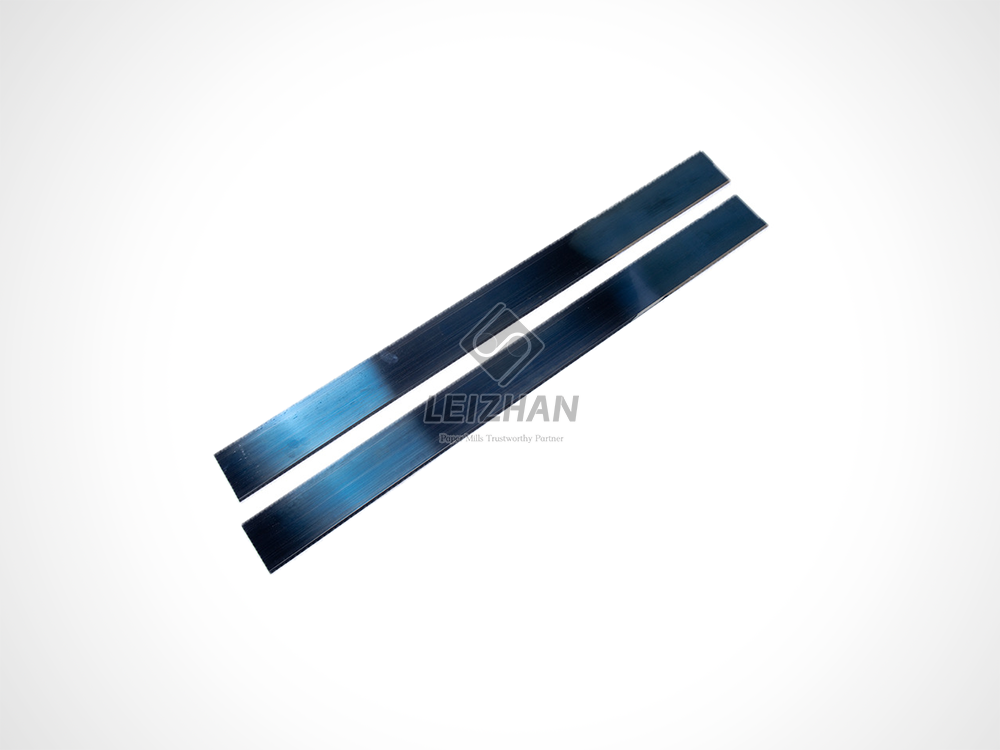
This is the actual wear part of the assembly that makes direct physical contact with the rotating roll. Acting as the primary scraper, a high-quality Doctor Blade is a long, thin strip of material that spans the entire width of the cylinder. Because it is subjected to constant friction and harsh operational environments, it is designed to wear down over time. Consequently, maintenance teams must replace it periodically to maintain optimal cleaning performance.
The Precision Clamping Mechanism
The Doctor Blade Holder is the precision mechanism that secures the wear part firmly in place. However, its role extends far beyond merely gripping the material. Industrial rolls can span several meters in width, and they are rarely perfectly uniform. A premium holder is engineered to distribute linear pressure evenly across the entire length of the roll. It actively compensates for minor surface variations and thermal expansion to ensure consistent, gap-free contact.
The Structural Beam
Supporting the holder is the heavy structural framework, also known as the beam. This robust structure spans the total width of the machine. The primary function of the beam is to provide absolute rigidity. Any deflection or bending in the structure would alter the contact angle or reduce pressure in the center of the roll. In addition, the sheer mass and structural integrity of the beam prevent harmful vibrations from transferring to the scraping edge.
Loading and Oscillation Mechanisms
For the setup to clean effectively, it must be pushed against the roll with controlled force. This is achieved through loading mechanisms, which can be either pneumatic—using compressed air tubes—or mechanical. Pneumatic systems are generally preferred in modern mills for their ability to apply continuous, uniform pressure dynamically.
In addition, the system utilizes an oscillator. This mechanism slowly moves the entire assembly slightly back and forth horizontally. This continuous micro-movement is crucial. It prevents trapped abrasive particles from cutting deep, localized grooves into the expensive roll surface.
| Component | Primary Function | Potential Risk if Malfunctioning |
| Wear Edge | Direct contact and shearing of contaminants. | Poor cleaning, streaks, or roll scoring. |
| Holder | Securing the edge and distributing pressure evenly. | Uneven wear, severe vibration, and skipped sections. |
| Beam | Providing structural rigidity across the machine width. | Deflection causing loss of center contact. |
| Oscillator | Horizontal movement to distribute wear evenly. | Grooving and permanent damage to the roll cover. |
Step-by-Step: Operational Physics on the Factory Floor
The operation of this equipment relies on applied physics and precise mechanical action. During operation, several distinct phases occur simultaneously to achieve a perfectly clean roll surface.
Precise Positioning and Angle Adjustment
Before the machine even starts rolling, the system must be rigorously calibrated. The angle at which the edge meets the roll is critical. Industry standards dictate setting this angle between 25 to 30 degrees, depending on the specific application and roll material. If the angle is too steep, the edge acts like a chisel and aggressively gouges the roll. Conversely, if it is too shallow, contaminants simply wedge underneath it, lifting it away from the surface entirely.
Uniform Pressure Application
Once the geometric angle is set, the loading mechanism is activated. This applies consistent, linear pressure—often measured in Pounds per Linear Inch, or PLI—via the holder. The ultimate goal is to ensure the edge touches the roll evenly from end to end. This leaves absolutely no microscopic gaps for water, ink, or debris to pass through. Modern pneumatic systems use air tubes to micro-adjust this pressure dynamically as conditions change.
The Shearing Action
As the massive industrial roll spins against the stationary edge, immense hydrodynamic forces come into play. The applied pressure combined with the precise angle creates a powerful shearing action. This physically separates the layer of water, pulp, or ink from the roll surface. The removed material is then directed smoothly over the top of the assembly and falls into a designated catch pan, safely diverted away from the moving paper web.
Industry Trends: The Shift Toward Smart Doctoring
Looking at recent developments across the industrial manufacturing sector, there is a clear trend toward automation and predictive maintenance. Modern facilities are increasingly moving away from purely mechanical setups and adopting smart roll cleaning technologies. Industry analysts note that integrating IoT sensors into the beam and holder assemblies allows operators to monitor dynamic wear, vibration frequencies, and pressure distribution in real time.
This data-driven approach shifts maintenance from a reactive scramble to a predictable schedule. For instance, sensors can detect subtle changes in friction before a catastrophic web break occurs. Adapting to these advanced diagnostic capabilities is quickly becoming a competitive necessity rather than just a luxury, drastically minimizing sudden downtime and optimizing the lifecycle of expensive consumables.
Exploring Material Technologies
Material selection fundamentally impacts how the system performs. Different sections of a manufacturing plant face wildly different challenges. This requires specialized materials to balance cleaning efficiency with equipment protection.
Composite Solutions
A premium Carbon Fiber Doctor Blade is constructed using advanced composite materials. Manufacturers typically bind carbon fibers within a high-strength epoxy resin matrix. These units are exceptionally lightweight yet incredibly strong.
They offer high stiffness, which prevents hydrodynamic deflection under heavy loads. Furthermore, they are highly resistant to extreme heat and harsh industrial chemicals. They are the premier choice for high-speed paper machines, heavy-duty scraping environments, and applications where maintaining absolute stiffness is a top priority.
Advanced Ceramic Technologies
For highly abrasive environments, engineers turn to a Ceramic Doctor Blade. This type utilizes either a solid ceramic composition or a specialized thermal spray coating applied to a base material. Top-tier ceramic options feature a porosity of less than 1 percent and a micro-hardness exceeding HV 1200.
Ceramic is extremely durable and provides superior wear resistance. The primary advantage of this material is its ability to maintain a perfectly sharp, precise metering edge over an extended period without degrading. These are ideal for sensitive rolls where maintaining a precise edge is critical for product quality, such as in specialized coating processes.
Steel, Bronze, and Polymers
Traditional materials still hold significant value in specific operational scenarios. Steel is often used for heavy creping applications where maximum force is required. Bronze, being a softer metal, is utilized for cleaning softer rolls where steel would cause immediate damage. Polymers—such as ultra-high-molecular-weight polyethylene—are used for gentle water removal on highly sensitive covers. This ensures cleaning occurs without any risk of scratching.
Why the Holder is the Heart of the Assembly
While the edge makes physical contact, it is entirely useless without a properly engineered holder. The holder dictates how well the entire assembly performs its intended function on the factory floor.
Balancing Rigidity and Flexibility
Modern holders are true marvels of engineering. They balance the need for structural rigidity with localized flexibility. Advanced designs feature flexible top plates backed by pneumatic air tubes. This air-loaded design allows the holder to micro-adjust to the exact contour of the roll. Since industrial rolls often have a slight crown—a thicker diameter in the center to compensate for bending—the holder must flex precisely to maintain uniform contact pressure.
Rapid Consumable Changes
In industrial manufacturing, machine downtime is incredibly expensive. A well-engineered holder allows maintenance personnel to perform rapid consumable changes. Systems designed with slide-out mechanisms or quick-release clamps ensure that a worn edge can be replaced in minutes rather than hours. This keeps the production line moving and minimizes financial losses.
The Business Impact and ROI
For plant managers and procurement officers, evaluating equipment is fundamentally about return on investment and risk mitigation. Upgrading to a modern, highly engineered setup yields significant and measurable business benefits.
Protecting Massive Capital Equipment
Industrial rolls are massive, highly engineered components. They are incredibly expensive to manufacture and maintain. Think about it. A single deep groove on a granite roll costs thousands of dollars to regrind. A precise scraping system prevents scoring, grooving, and chemical damage to the roll cover. By preserving the integrity of the roll, facilities save hundreds of thousands of dollars in premature roll resurfacing or outright replacement.
Improving Final Product Quality
The quality of the final manufactured product is directly tied to the cleanliness of the machinery. A perfectly clean roll ensures a flawless paper finish, consistent moisture profiles, and perfect ink distribution. Upgrading the system eliminates sheet marks and coating defects. This leads to higher product acceptance rates and fewer customer rejections.
Proactive Maintenance and Troubleshooting
Implementing a proactive maintenance strategy is the most effective way to ensure consistent product quality and prevent catastrophic machine failure. Relying solely on reactive maintenance always leads to extended, costly operational downtime.
Dynamic and Static Monitoring
Routine inspections should be divided into dynamic observations while the machine is running and static evaluations during scheduled shutdowns. During dynamic inspections, operators must carefully monitor the equipment for any signs of vibration or chattering. Chattering occurs when the edge rapidly bounces against the roll surface rather than maintaining smooth contact. This is typically a symptom of inadequate loading pressure or worn bearings.
The Most Critical Calibration
The operational angle is arguably the most critical parameter in the entire setup. If the angle is excessively steep, it drastically increases friction and creates a severe risk of gouging the roll cover. Maintenance teams must use precision inclinometers during every change to verify tolerances.
Ensuring Proper Seating
The physical holder is constantly exposed to a harsh environment filled with wet pulp, sticky pitch, and chemical residues. If debris is allowed to accumulate inside the clamping mechanism, the new material will not seat perfectly flat. Even a microscopic misalignment caused by dried pulp creates a pressure differential. Cleaning the holder thoroughly during every consumable change is an absolute necessity.
| Observable Symptom | Potential Root Cause | Recommended Corrective Action |
| Chattering and Vibration | Incorrect angle, insufficient loading pressure, or failing oscillator bearings. | Recalibrate the angle to 25-30 degrees. Increase pneumatic pressure. Replace worn bearings. |
| Streaking on the Surface | Localized debris buildup in the holder, damaged edge, or uneven roll surface. | Clean the holder clamping mechanism thoroughly. Replace the damaged wear part. |
| Premature Wear | Excessive loading pressure, incorrect material selection, or highly abrasive contaminants. | Reduce loading pressure. Upgrade to a highly durable ceramic or carbon fiber material. |
A Standardized Guide to Equipment Selection
Selecting the correct roll cleaning equipment is a complex engineering decision. Because industrial machines operate under vastly different conditions, a one-size-fits-all approach is entirely ineffective. Use these standardized criteria to guide your procurement.
Rule 1: Hardness Matching
The fundamental rule of selection is that the scraping material must be inherently softer than the roll cover it is cleaning. Otherwise, it will slowly machine away the expensive surface. Rolls covered in soft rubber or synthetic polymers require highly flexible, low-friction scraping materials like polyethylene. In stark contrast, hard rolls made of granite or chilled iron can withstand much harder materials, such as composite carbon.
Rule 2: Speed and Temperature Compensation
Machine speed and operating temperature dramatically influence structural requirements. High-speed applications generate significant kinetic energy, which is prone to bending traditional plastic backward. To counteract this, high-speed machines require materials with an exceptionally high strength-to-weight ratio. Similarly, operating temperature is critical in dryer sections, where synthetic polymers will melt. This necessitates heat-treated metallic alloys or specialized fiberglass.
Rule 3: Section-Specific Customization
Industrial manufacturing lines are divided into distinct operational sections. Therefore, the equipment must be custom-engineered to match the exact width, diameter, and environmental conditions of the specific machine section.
The Forming Section: Deals primarily with bulk water removal. Components must be entirely corrosion-resistant.
The Press Section: Handles sticky contaminants like pitch. Loading mechanisms must deliver precise pressure to shear away stubborn residues.
The Dryer Section: Characterized by extreme heat and baked-on contaminants. This requires heavy-duty structural beams to prevent thermal warping.
Conclusion
A precise scraping setup is the definitive safeguard for keeping industrial rolls perfectly clean and fully functional. It relies entirely on the delicate synergy between the wear edge, the precision holder, and applied pneumatic pressure. Quality components easily prevent costly machine damage during daily operations. Furthermore, upgrading your materials significantly reduces expensive operational downtime.
Ultimately, superior holders protect your capital equipment and improve overall product quality. Evaluate your current factory setup today to ensure maximum cleaning efficiency. I highly recommend sourcing high-efficiency, custom-engineered solutions from trusted industry leaders like Leizhan Paper Tech. Investing in reliable technology now will protect your valuable industrial machinery for years to come.
FAQ
How often should the wear edge be replaced?
It depends entirely on the operating environment, machine speed, and the specific material in use. In highly abrasive conditions, standard polymer options may only last a few days. However, upgrading to a premium carbon fiber or ceramic option can extend the operational lifespan significantly, often lasting several months. Replacement is strictly required whenever the leading edge becomes visibly rounded, chips appear, or when the system begins leaving streaks of water on the roll surface.
What happens if the operational angle is wrong?
Operating at an incorrect angle leads to severe mechanical and quality issues. If the angle is too shallow, the rotational force of the roll drives water and debris underneath the edge, lifting it up and rendering it useless. If the angle is too steep, it acts like a chisel. This excessive steepness causes severe chattering, accelerates wear, and creates a high probability of permanently scoring the expensive roll cover.
Can I use the same setup for the press section and the dryer section?
No, you cannot use identical systems across different machine sections. The press section operates in a wet environment dealing with sticky pitch and moisture, requiring corrosion-resistant materials and specific flexibility. In contrast, the dryer section operates at extremely high temperatures to remove baked-on fibers. Each section demands a custom-specified holder, loading mechanism, and material to function safely and efficiently.
What is the correct pressure for scraping?
The correct linear pressure varies based on the roll cover and the application, usually measured in PLI. For gentle water removal on soft rubber rolls, a low pressure of 1.0 to 1.5 PLI is often sufficient. For heavy-duty applications like scraping baked-on contaminants in a dryer section, the pressure might need to be increased to 3.0 PLI or higher. Always consult the manufacturer's specifications to avoid overloading and damaging the roll.
Why does chattering occur on the machine?
Chattering is a rapid, destructive vibration caused by a breakdown in smooth friction between the edge and the roll. It usually stems from an excessively steep contact angle, insufficient loading pressure from the pneumatic tubes, or worn-out oscillator bearings. If you hear or see chattering, operators must stop the section immediately, check the angle with an inclinometer, and inspect the holder for debris buildup.


