Introduction
Walk onto any modern paper mill floor, and the sheer scale of the material handling equipment demands immediate respect. Industrial warehouse environments present numerous operational hazards, particularly when personnel work alongside heavy rotating machinery. According to recent occupational safety data, machinery-related accidents account for a massive percentage of severe workplace injuries. These incidents often stem from a fundamental misunderstanding of kinetic energy and inadequate protective measures.
Within the packaging and paper logistics sectors, specialized wrapping equipment serves as a critical piece of infrastructure. This sophisticated machinery is engineered to secure large cylindrical loads—such as massive corrugated medium rolls, heavy wire reels, or industrial textiles—by applying tight layers of protective plastic film. The process of managing these massive weights involves significant rotational momentum. A standard industrial paper cylinder can weigh upwards of five tons. When this immense mass is set into motion, the kinetic forces generated are staggering.
Consequently, facility managers and safety compliance officers frequently face a critical question. Does this type of machinery actually require physical barriers? Some floor supervisors mistakenly argue that physical fences slow down production or complicate routine maintenance. In reality, modern engineering proves otherwise.
Recent shifts in industrial automation reveal a sharp pivot toward predictive safety architectures. Facilities are no longer just installing passive fences; they are integrating smart sensors that monitor barrier integrity in real-time. This evolution reflects a broader industry consensus. Unguarded high-inertia machinery is now viewed as an unacceptable operational liability. This article provides an objective, evidence-based analysis demonstrating that safety barriers are not merely optional accessories—they are mandatory requirements. By understanding the inherent risks and reviewing strict legal standards, facilities can safeguard their workforce while preventing costly operational downtime.
Key Takeaways
- Protection is Essential: Heavy cylindrical wrappers strictly require comprehensive containment systems to prevent severe crush injuries, accidental entanglement, and hazardous pinch-point exposures.
- Securing the Work Area: Modern packaging systems utilize a sophisticated combination of physical perimeter fencing and optical sensors to secure the designated work area without compromising daily throughput.
- Regulatory Compliance: International frameworks legally mandate proper machine containment for all automated and semi-automated wrapping lines.
- High-Risk Components: The rapidly moving film delivery mechanism represents one of the most dangerous mechanical parts, necessitating specific anti-fall devices and localized shielding.
- Return on Investment: Allocating capital toward machinery with integrated protective features effectively reduces insurance premiums, mitigates legal liabilities, and eliminates unpredictable injury-related downtime.
Understanding the Wrapping Machine and Its Inherent Risks
To accurately assess the necessity of physical barriers, one must first visualize the mechanical forces at play during a standard wrapping cycle. Industrial automated machinery operates with power and speed that easily exceed human reaction times. This makes baseline risk identification absolutely crucial before a single roll is processed.
The Mechanics of Heavy Material Rotation
These specialized wrapping systems operate by rotating a massive cylindrical load on a driven roller bed or turntable while simultaneously dispensing tensioned plastic film. The physical dynamics of Reel Handling demand industrial-grade motors capable of generating substantial torque. Whether the load consists of kraft paper, corrugated medium, or steel cables, it often weighs thousands of kilograms. If a structural failure occurs or a forklift operator slightly misaligns the load during placement, the resulting momentum can cause catastrophic damage to the surrounding infrastructure and nearby personnel.
Identifying the Primary Hazards
Routine risk assessments of these automated lines typically highlight three primary mechanical hazards that demand immediate mitigation.
First, the exact interface where the heavy rotating cylinder makes contact with the machine’s steel drive rollers creates a severe in-running nip point. Any limb or tool caught in this junction will be subjected to extreme crushing forces. Second, the rotational motion of the load creates a high-risk environment for entanglement. Loose clothing, lanyards, or even an unfastened high-visibility vest can be rapidly caught by the spinning load or the tensioned film itself. Finally, cylindrical loads are inherently prone to rolling. Without proper floor-level containment protocols and sturdy physical barriers, a misaligned multi-ton load could roll off the platform, presenting a lethal crush hazard to anyone walking nearby.
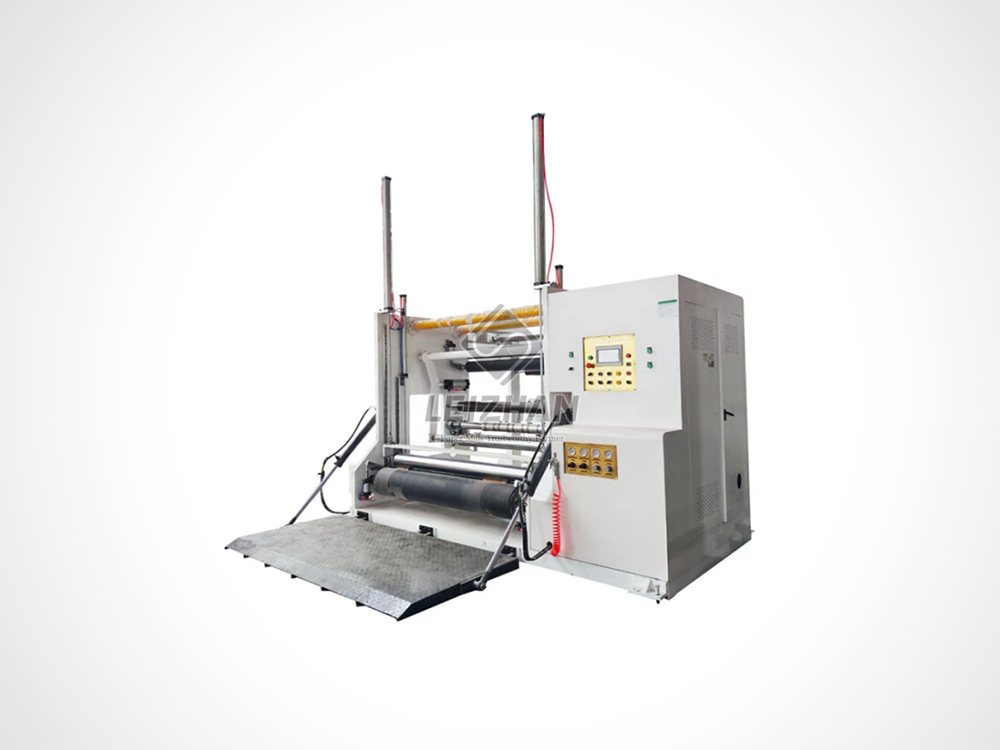
So, Does the Machine Actually Need Protection?
When evaluating safety protocols for heavy rotational equipment, ambiguity is simply not an option. Facility managers must rely on established engineering controls to definitively mitigate risk on the factory floor.
The Short Answer is Absolutely Yes
From an engineering and occupational health standpoint, any industrial asset featuring exposed moving parts that pose a risk of injury requires adequate isolation. Because these systems combine heavy load rotation with high-speed vertical movements, operating them without a robust Safety Guard system is both highly dangerous and legally non-compliant.
Fully Automatic vs. Semi-Automatic Operations
The specific containment requirements vary heavily depending on the equipment's operational classification and the level of human interaction required.
Fully automatic systems require complete perimeter enclosure, typically in the form of heavy-duty welded steel fencing. Because they operate continuously without direct human intervention—often fed blindly by automated conveyors—the entire operational footprint must be completely isolated from pedestrian traffic. The machine might start unexpectedly based on a sensor trigger, leaving no time for a nearby worker to react.
In contrast, semi-automatic machines require operators to manually attach the plastic film to the load before initiating the cycle via a control panel. Operators must also manually cut the film afterward. Therefore, they demand strategic shielding around the moving mast. This must be combined with emergency stop mechanisms and optical sensors that protect the worker while still allowing necessary access for loading and unloading.
Critical Safety Guard Types for Your Equipment
Selecting the appropriate protective apparatus requires a nuanced understanding of how different safety devices function within a bustling industrial environment. Modern setups utilize a defense-in-depth approach, layering physical and electronic measures to ensure fail-safe operations.
Physical Perimeter Fencing
Physical fencing serves as the foundational line of defense. Constructed from reinforced steel wire mesh and heavy-duty posts, these barriers physically enclose the active wrapping area. They effectively prevent unauthorized personnel, distracted forklift drivers, and passing contractors from inadvertently wandering into the danger zone. Furthermore, interlocked access gates ensure that if a maintenance technician opens the door to enter the enclosure, the primary power circuit is instantly severed, halting all motion immediately.
Light Curtains and Laser Scanners
While steel fences are impenetrable, they cannot be placed across the pathways where conveyors or forklifts must enter to deliver the heavy loads. To bridge this gap, optical safety devices become essential. Light curtains emit a dense, invisible grid of infrared beams across the entrance to the Operator Zone. If a worker steps through this optical threshold while the machine is active, the safety logic controller triggers an instantaneous emergency stop. Advanced systems even feature intelligent muting capabilities, allowing them to differentiate between a recognized paper roll on a conveyor and a human silhouette.
Carriage Enclosures and Anti-Fall Devices
Statistically, the component that holds the stretch film roll and travels vertically up and down the machine's steel mast is one of the most dangerous parts of the entire setup. This Film Carriage houses high-speed pre-stretch rollers that create severe shearing hazards. To mitigate this, manufacturers install localized physical shields around the rollers. Additionally, because this heavy metal unit is suspended by chains or belts, anti-fall mechanisms such as redundant safety catches or heavy-duty ratchet systems are legally mandated. Should a lifting belt snap, the anti-fall device instantly locks the unit to the mast, preventing it from plummeting onto a worker below.
OSHA, CE, and Regulatory Compliance: What the Law Says
Implementing protective measures is not merely a corporate best practice; it is a strict legal requirement enforced by international regulatory bodies. As the manufacturing sector evolves, regulatory agencies are increasingly utilizing digital audit trails and advanced monitoring to ensure factories actively maintain safety devices in working order.
General Machine Guarding Standards
In the United States, the Occupational Safety and Health Administration enforces standard 29 CFR 1910.212, which mandates general requirements for all industrial machines. The regulation explicitly states that one or more methods of machine guarding must be provided to protect employees from hazards such as in-running nip points, rotating parts, and flying debris. Similarly, across Europe, the CE Machinery Directive requires manufacturers to design equipment that eliminates mechanical risks by default. This explicitly mandates interlocked barriers and fail-safe emergency stop protocols for automated packaging equipment.
The Consequences of Non-Compliance
Failure to implement adequate protection carries severe, business-threatening consequences. Regulatory inspectors specifically target unguarded rotational and automated equipment during routine facility audits. Non-compliance can result in hefty financial penalties, exponential increases in legal liability during civil litigation, and mandatory facility shutdowns until the safety violations are entirely rectified. In today's hyper-connected industrial landscape, the reputational damage of a preventable workplace accident can also sever ties with major supply chain partners.
Common Mistakes to Avoid During Daily Operations
Even the most advanced, expensive safety systems can be completely compromised by human error or poor procedural adherence on the floor. Avoiding common operational mistakes is critical for maintaining a secure, highly productive environment.
Bypassing or Disabling Safety Interlocks
Perhaps the most dangerous behavioral mistake in any industrial setting is the intentional bypassing of safety interlocks. Floor operators, often under intense pressure to meet aggressive production quotas, might tape over optical sensors, wedge interlock switches closed, or prop open safety gates to clear jams faster. This creates a false sense of efficiency while entirely neutralizing the machine's safety architecture. Management must cultivate a safety-first culture where tampering with protective controls is grounds for immediate disciplinary action.
Entering the Danger Zone Prematurely
Workers must be rigorously trained to respect the machine's operational cycle. A frequent, highly dangerous error is stepping into the active area to cut the film or apply a shipping label before the rotating base and the vertical mast have come to a complete, verified halt. Even after the motor powers down, a multi-ton spinning reel retains massive residual kinetic energy. Operators must wait for visual or auditory signals from the control panel confirming a zero-energy state.
Poor Material Loading Practices
Proper material handling techniques during the loading phase form the foundation of a safe wrapping cycle. Utilizing reckless forklift maneuvers or misaligning the heavy cylinder on the drive rollers can cause the load to sit unevenly. This not only risks the heavy cylinder violently ejecting during high-speed rotation, but a careless forklift driver can also easily crush the perimeter fencing. They might also knock the precise optical sensors out of alignment, rendering the entire safety system inoperable.
The True Cost of Ignoring Safety vs. The Return on Investment
When capital expenditure decisions are debated in boardrooms, procurement teams sometimes view integrated safety systems as an unnecessary luxury that inflates the initial purchase price. However, objective financial analysis reveals a very different reality.
The Financial Impact of Workplace Injuries
The financial toll of a severe industrial accident extends far beyond the immediate ambulance bill. The iceberg model of accident costs demonstrates that direct expenses—like workers compensation and emergency medical care—represent only a tiny fraction of the total financial impact. Indirect costs are exponentially higher. These include the immediate halt of the production line, the cost of repairing damaged machinery, the overtime pay required to catch up on lost throughput, and the administrative nightmare of regulatory investigations. A single severe crush injury can cost an organization hundreds of thousands of dollars.
How Proper Protection Actually Saves Money
Investing in comprehensive safety infrastructure delivers a highly measurable Return on Investment. Facilities with documented, fully compliant safety systems often qualify for significant reductions in their commercial liability and workers compensation insurance premiums. Furthermore, robust safety environments inherently boost operational efficiency. When floor workers are confident that the machinery is safely contained and fail-safes are active, they navigate their tasks with greater speed and less hesitation. Finally, sturdy physical fences protect the expensive machine itself from accidental forklift collisions, thereby extending the lifespan of the equipment and drastically reducing ongoing repair costs.
Upgrading Your Equipment: What to Look for in a Safe Machine
As industrial safety standards continuously evolve and become more stringent, older legacy equipment often falls out of compliance. This prompts forward-thinking facilities to evaluate comprehensive equipment upgrades. When dealing with heavy-duty paper processing equipment, engineering standards must be rigorous.
Integrated Safety vs. Aftermarket Add-ons
While it is technically possible to retrofit an aging wrapping machine with aftermarket safety relays, external fencing, and bolt-on light curtains, purchasing a modern machine with factory-integrated safety is fundamentally superior. Integrated systems utilize advanced Safety Programmable Logic Controllers and Category 4 safety circuits designed specifically for that machine's exact kinematics.
| Safety Feature Metric |
Aftermarket Retrofit Systems |
Factory-Integrated Systems (Leizhan Standard) |
| Emergency Stop Response Time |
Often >500ms due to relay latency |
Instantaneous <100ms dynamic braking |
| Sensor Integration |
Surface-mounted, highly prone to misalignment |
Embedded securely within structural steel pillars |
| Operational Maintenance |
High frequency of false trips and adjustments |
Minimal to zero daily intervention required |
| Regulatory Compliance |
Varies wildly based on installation quality |
Full CE/OSHA compliant out-of-the-box |
Key Technical Specifications to Demand
When drafting specifications for a new machine, procurement teams should accept no compromises. Look for equipment capable of safely handling massive operational parameters. For instance, high-end rewinding and wrapping machinery must securely manage paper widths up to 6000mm and operating speeds reaching 2000m/min. Demand pneumatic safety chucks, redundant emergency stop circuits, high-resolution light curtains with intelligent muting, and mechanical anti-drop devices on the vertical mast. These modern features guarantee that the equipment meets current legal standards and provides the absolute highest level of protection for your invaluable workforce.
Conclusion
A heavy-duty packaging system handles immense industrial weights and operates at speeds that demand profound respect. Because of the extreme kinetic energy and inherent mechanical hazards involved, operating this equipment without a comprehensive safety containment system is absolutely non-negotiable.
Physical barriers, interlocked gates, and intelligent optical sensors work in harmony to protect your workers from catastrophic harm. They prevent severe crush injuries, eliminate entanglement risks, and ultimately save your business from costly, unpredictable operational downtime. Properly implemented safety protocols never hinder your warehouse productivity; rather, they ensure sustainable, confident, and continuous daily operations.
Take the time to audit your current wrapping stations for regulatory compliance today. If your legacy equipment falls short, consider consulting with a packaging machinery expert to upgrade your production line. Discover high-performance, fully compliant solutions by exploring a modern Reel Stretch Wrapping Machine to ensure a secure, highly efficient workplace for years to come.
FAQ
Are safety guards mandatory for all stretch wrappers?
Yes, occupational safety agencies such as OSHA in the US and the CE directive in Europe legally require comprehensive machine guarding for any industrial equipment with moving parts that pose a hazard. While the exact configuration depends on whether the machine is fully automatic or semi-automatic, a baseline of verified physical or optical protection is always mandatory.
How do light curtains work on these wrapping machines?
Light curtains emit a continuous, invisible grid of infrared beams across the entrance to the active work zone, acting as an immaterial barrier. If an operator or a forklift breaks any of these beams while the machinery is actively running, the safety controller detects the interruption instantly. It then triggers an immediate mechanical and electrical emergency stop, eliminating the hazard before a person can reach the moving parts.
Can I retrofit my old reel wrapper with new safety features?
Yes, many older legacy wrapping machines can be successfully retrofitted with modern safety components, including welded wire mesh fencing and optical barriers. However, retrofitting requires complex electrical integration. In many operational scenarios, it is actually more cost-effective and reliable over the long term to upgrade to a completely new machine that features factory-integrated, modern safety technology built directly into its core logic.
Why is the film delivery carriage considered so dangerous?
The carriage mechanism is highly hazardous because it moves vertically along a steel mast at very high speeds while housing motorized pre-stretch rollers that create severe pinch points. Furthermore, it is a heavy metal component suspended by chains or heavy-duty belts. If a lifting mechanism fails, a carriage lacking a mechanical anti-fall device can drop instantaneously, making physical guarding and redundant safety catches absolutely critical for operator survival.
What is the safest way to load a heavy cylinder into the machine?
The absolute safest loading method involves removing the human element entirely by utilizing automated infeed conveyors. When manual loading is unavoidable, operators should use specialized heavy-duty pallet jacks or rely on highly trained forklift operators. Before the load enters the wrapping zone, the operator must visually verify that the machine is fully powered down or locked in a safe state, ensuring no accidental rotation can occur during the transfer process.
What is the minimum safe distance for an unguarded stretch wrapper?
There is no acceptable minimum safe distance for an unguarded industrial wrapper. Regulatory standards dictate that high-inertia rotating equipment must be physically guarded or electronically interlocked. Relying on painted floor lines or distance alone is a direct violation of modern occupational safety codes.
How often should optical safety sensors be calibrated and tested?
Optical safety sensors, including light curtains and laser scanners, should undergo a functional verification test at the beginning of every single operational shift. Comprehensive calibration and deep maintenance inspections by a certified technician should be conducted at least annually, or immediately following any physical impact to the sensor housings.


