Unplanned machine downtime is a silent profit killer on any high-volume packaging line. When a primary wrapping system fails, it creates an immediate bottleneck. This halts the entire warehouse workflow. However, these costly mechanical failures rarely happen overnight. They are almost always the direct result of neglected routine upkeep. Implementing a proactive maintenance strategy entirely prevents these unexpected disruptions. In this engineering guide, we will explore the essential maintenance protocols required to keep your packaging operations running at peak efficiency. We will cover critical components like gear drives, overhead bearings, and structured inspection routines.
Key Takeaways
- Preventative Care Drives ROI: Establishing a strict, documented maintenance routine minimizes unexpected downtime. This proactive approach significantly extends the operational lifespan of your packaging equipment and protects your capital investment.
- Focus on the Big Three: The vast majority of mechanical failures in rotary arm systems stem from the neglect of three critical components. These are the gear reducer, the overhead slewing bearing, and the lift chains. Consistent lubrication and tension monitoring for these parts are non-negotiable.
- Safety First: Maintenance personnel must always adhere strictly to proper Lockout/Tagout, known as LOTO, safety guidelines. Securing the machine before performing any inspections prevents severe workplace injuries.
- Daily Inspections Matter: Identifying minor issues early prevents catastrophic damage. Catching film carriage jams, debris buildup, or sensor misalignments during daily visual checks saves thousands in repair costs.
Understanding Heavy-Duty Rotary Arm Systems & Industry Trends
In modern high-volume packaging operations, specialized machinery is required to secure loads that traditional equipment simply cannot handle. Unlike standard turntable models where the pallet spins precariously on a moving base, a rotary arm machine keeps the pallet completely stationary. A mechanical arm suspended from a robust overhead frame rotates around the load to dispense stretch film.
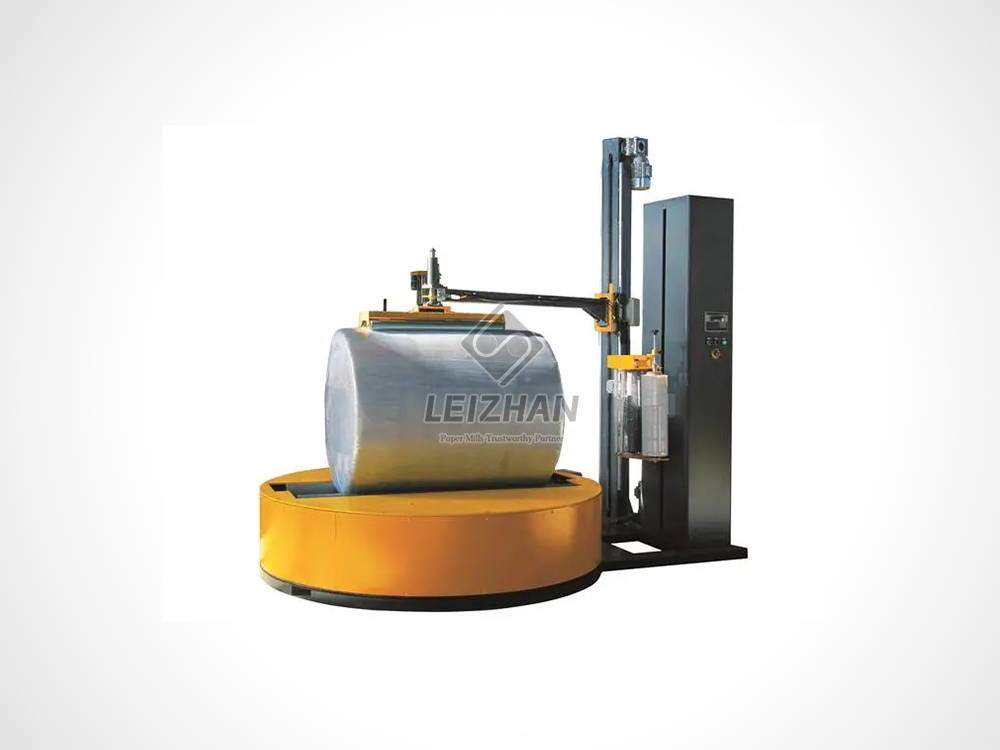
This stationary-load design is indispensable for industries dealing with unstable, extremely heavy, or unusually shaped pallets. Imagine a towering stack of fragile beverage cartons or a massive industrial paper roll. Spinning these on a turntable is a recipe for disaster. For such rigorous applications, utilizing Heavy-Duty Rotary Arm Stretch Wrappers ensures the load's integrity remains uncompromised during the wrapping cycle. Furthermore, these machines are highly favored in washdown environments because the floor remains clear of mechanical bases. This allows for rapid and thorough sanitation.
Looking at current industry trends, the industrial packaging sector is rapidly shifting away from reactive repairs toward predictive maintenance. Modern facilities are increasingly outfitting their end-of-line wrappers with IoT-enabled sensors. These devices track real-time vibration and thermal data. This technological leap allows plant managers to detect microscopic anomalies in rotating components before they escalate into full-blown mechanical failures. Specifically in the paper manufacturing sector, where equipment handles massive rolls weighing upwards of 3000kg, data-driven maintenance is becoming the new baseline. Even without advanced sensors, recognizing that the high-speed centrifugal force of the rotating arm places extraordinary dynamic stress on overhead structural components is the first step in formulating an effective care plan.
The Financial Impact of a Preventative Service Schedule
Adopting a reactive approach to machine maintenance is a highly inefficient strategy. Waiting for a component to snap or seize before addressing it drains profitability. Picture this scenario. It is the end of the month, shipping deadlines are looming, and your primary wrapper suddenly stops due to a seized bearing. The resulting expedited shipping penalties, idle labor costs, and lost production time will far exceed the price of routine maintenance parts.
To avoid this nightmare, implementing a meticulously documented proactive service schedule is an absolute necessity. Regular, calendar-based maintenance directly preserves the capital investment of your machinery. By adhering to manufacturer-recommended intervals, facilities can extend the machine's lifespan by several years. Components kept clean, well-lubricated, and properly aligned experience drastically less friction and thermal stress.
Equally important is cultivating a facility-wide culture of ownership. Operators should be trained to use their senses daily. Teach them the distinct sound of a healthy machine. This empowers them to immediately flag the dry squeal of an under-lubricated bearing or the rhythmic slapping of a loose drive chain. Accurately logging these observations in a centralized system ensures no critical checks are bypassed.
Core Maintenance Points: The Big Three
To keep a rotary arm wrapper functioning flawlessly, maintenance teams must prioritize the three most vulnerable mechanical components. A failure in any of these areas guarantees an immediate production halt.
The Gearbox: The Heart of the Rotation
The industrial gearbox is responsible for reducing the high-speed rotation of the electric motor into the high-torque, controlled movement required to swing the heavy metal arm. Because of the massive moment of inertia created during acceleration and deceleration phases, this component absorbs severe torque loads.
Daily visual inspections should focus on the input and output shaft seals. If you spot oil weeping or pooling at the base, the seal is compromised. This will rapidly lead to fluid loss and internal gear destruction. Additionally, use an infrared thermometer to monitor the housing temperature. Excessive heat is a primary indicator of degraded lubrication or internal friction. Always follow the guidelines for draining and replacing the synthetic gear oil, ensuring you use the precise viscosity recommended.
The Ring Bearing: Ensuring Smooth Operation
Often referred to as a slewing bearing, the slewing ring bearing is the massive circular anchor that physically supports the entire suspended weight of the rotary arm. It allows the arm to glide smoothly around the central mast.
Strict greasing intervals are the lifeblood of this component. Inject the specified heavy-duty, extreme-pressure lithium grease into the fittings while the arm is slowly rotating. This ensures the lubricant distributes evenly across all internal raceways. When purging old grease, inspect it closely. The presence of metallic flakes or grit is a definitive warning sign of severe internal wear and impending failure.
The Chain Drive: Power Transmission and Tension
Whether it is used to connect the motor to the rotational mechanism or to raise and lower the film carriage along the vertical mast, the heavy-duty chain drive endures constant cyclical loading.
Chains naturally elongate over time due to mechanical wear on the pins and bushings. Maintenance technicians must regularly measure and adjust the tension. A chain that is too tight will prematurely destroy motor bearings. Conversely, a loose chain will slap against the mast, causing jerky movements and skipped sprocket teeth. Apply only specialized, non-tacky industrial chain lubricants. Standard thick grease will attract airborne debris, creating a highly abrasive paste that accelerates wear.
Maintenance Focus: Standard vs. Heavy-Duty Applications
Understanding the operational environment dictates the intensity of your maintenance program. Below is a core comparison detailing how maintenance shifts when dealing with heavy-duty applications like paper roll wrapping.
| Maintenance Parameter | Standard Pallet Wrapper | Heavy-Duty Paper Roll Wrapper |
| Load Capacity Stress | Up to 1500kg. Standard structural checks. | Up to 3000kg. Requires frequent torque checks on floor anchors and mast bolts due to immense rotational inertia. |
| Bearing Lubrication | Monthly or every 10,000 cycles. | Bi-weekly. High dust environments require frequent grease purging to remove abrasive paper particulates. |
| Film Carriage Upkeep | Standard roller cleaning. | Critical tension calibration. Must handle max roll diameters of 1500mm and widths of 3200mm without film snapping. |
| Sensor Maintenance | Weekly wipe down. | Daily optical cleaning. Paper dust frequently triggers false safety interlocks on laser scanners. |
Comprehensive Inspection Checklist
A structured checklist transforms abstract maintenance goals into actionable daily, monthly, and annual tasks. Cross-reference these baseline recommendations with your specific operational manual.
Daily checks rely heavily on visual and sensory evaluations to catch obvious anomalies before the heavy workload begins. Visually confirm the entire rotational path is free of physical obstructions, misplaced pallets, or loose tools. Wipe down photo-eye sensors, load-height sensors, and safety laser scanners using a clean, dry microfiber cloth. Check the pre-stretch rubber rollers for built-up adhesive tack or torn film tails.
Monthly upkeep requires briefly taking the machine offline for physical inspections and targeted lubrication. Lubricate all drive and lift chains with a penetrating oil, and physically measure the deflection to verify chain tension. Pump the specified volume of grease into the slewing bearing fittings. Examine carriage lift belts for fraying, cracking, or missing teeth.
Annual deep-dive tasks require planned downtime and specialized tools to reset the machine's baseline performance. Drain the old gear oil, inspect it for metal shavings, and refill the unit. Use a calibrated torque wrench to check all floor anchors and mast bolts. Perform a rigorous, documented test of all emergency stop buttons and safety bumpers to ensure immediate kinetic shutdown.
Essential Safety Protocols
Servicing suspended, high-speed rotational machinery introduces severe workplace hazards. The kinetic energy stored in a moving arm can be lethal. Strict safety protocols are an absolute operational mandate.
Never bypass Lockout/Tagout procedures. Before stepping into the wrapping zone or climbing a ladder to service overhead components, neutralize all electrical and pneumatic power sources. Apply a physical padlock to the main breaker. Relying solely on the machine's pause button is a dangerous gamble.
Furthermore, because the rotary arm sits on a bearing, it can swing freely if the motor brake is disengaged. Before performing drive system maintenance, physically secure the arm to the stationary frame using heavy-duty straps or mechanical locking pins. An unsecured steel arm drifting due to gravity can easily knock a technician off a ladder. Remain acutely aware of pinch points, particularly the crush hazard zone where the heavy film carriage travels vertically.
Troubleshooting Common Anomalies
Even with meticulous care, mechanical anomalies will surface. Diagnosing these issues systematically prevents unnecessary parts replacement and gets the line running faster.
When the arm fails to move in a fluid circle, it places immense strain on the structural frame. First, isolate the noise. If a grinding noise emanates from the center pivot, inspect the gear reducer for leaks or check the ring bearing for a lack of grease. If you hear a distinct clanking noise, the drive chain is likely loose and slapping against the mast.
Stretch film snapping mid-cycle is a frustrating issue that severely impacts throughput. The most common culprit is sticky pre-stretch rollers covered in adhesive residue. Safely lock out the machine and clean the rollers with isopropyl alcohol. If the rollers are pristine, access the PLC control panel to recalibrate the secondary tension settings.
If an operator presses the start button and the machine remains idle, it is almost always a safety interlock issue. Verify all E-stops are pulled out and reset. Ensure the safety fence doors are fully latched. Finally, check the main photo-eye sensor path to ensure the forklift driver placed the load perfectly dead-center.
Equipment Selection Guide: Matching Specs to Production
A critical aspect of facility management is knowing when to repair existing equipment versus upgrading to a purpose-built machine. When selecting a new heavy-duty wrapper, standard specifications will not suffice for extreme applications like paper mills or steel manufacturing.
First, evaluate your maximum load parameters. If you are handling industrial paper rolls, the wrapper must accommodate a maximum roll diameter of at least 1500mm and a maximum width of 3200mm. The structural frame and bearing must be rated for a maximum weight of 3000kg to 5000kg. Using an undersized machine will result in immediate bearing failure.
Second, look at control systems and throughput. A high-efficiency line demands PLC automatic control with an automatic film cutting and clamping mechanism. This eliminates the need for operators to manually attach or cut the film, drastically improving safety and speed. Ensure the rotation speed can comfortably handle your required output, typically ranging from 15 to 30 rolls per hour depending on the wrap layers.
Conclusion
Maintaining your wrapping equipment requires diligence and a respect for kinetic forces. By understanding the core mechanics of your stationary-load machines and paying close attention to the gear drives, slewing bearings, and lift chains, you prevent minor friction from escalating into major structural failures. Implementing a strict, consistently logged service routine protects your financial investment and ensures worker safety. If your current equipment is constantly breaking down under heavy loads, it may be time to upgrade to a system built for your specific demands. Evaluate your production needs and explore robust, industry-specific packaging solutions at Leizhan Paper Tech to keep your end-of-line operations running seamlessly.
FAQ
Q1: How often should I lubricate the ring bearing on my rotary arm stretch wrapper?
The lubrication frequency depends heavily on your facility's production volume and environmental conditions. As a general baseline, the bearing should be greased every 30 to 60 days, equating to roughly 10,000 wrap cycles. However, if your machine operates in a dusty environment like a paper mill, you must lubricate it bi-weekly to flush out abrasive particulates.
Q2: What are the signs that my wrapper's gearbox is failing?
A failing gear unit exhibits several measurable symptoms before a complete breakdown occurs. Look for excessive heat generation where the housing becomes too hot to touch safely. Watch for visible oil leaks pooling around the output seals. Listen for a loud, metallic grinding or whining noise during the arm's rotation.
Q3: Why is my chain drive making a slapping noise?
A distinct slapping or clanking noise indicates that the drive chain has stretched over time. When it becomes too loose, the slack is violently pulled taut when the motor engages, causing the chain to slap against the mast or the sprockets. This requires immediate attention to adjust the tensioning bolts.
Q4: Can I use standard grease for all parts of the stretch wrapper?
No, utilizing a single type of standard grease for the entire machine is a critical engineering error. The gear reducer requires a precise viscosity of synthetic oil. The main overhead bearing necessitates a heavy-duty, extreme-pressure lithium-based grease. Lift chains require a specialized, dry-film industrial lube that penetrates the links without attracting ambient dust.
Q5: What is the most important daily maintenance task for heavy-duty rotary arm stretch wrappers?
Beyond mandatory safety checks, the most critical daily task is maintaining the cleanliness of the machine's optical sensors and the pre-stretch carriage. Wiping down the photo-eye sensors prevents the machine from registering false faults. Clearing the pre-stretch rollers of sticky adhesive ensures accurate film tension.
Q6: How long does a heavy-duty rotary arm stretch wrapper typically last?
With a rigorous, documented preventative maintenance schedule, a high-quality rotary arm wrapper can operate efficiently for 10 to 15 years. Neglecting core components like the slewing bearing or gearbox can reduce this lifespan to under 5 years, especially in demanding environments handling loads over 2000kg.
Q7: What is the main difference between turntable and rotary arm wrappers regarding maintenance?
Turntable wrappers require significant maintenance on the floor-level base, dealing with drive wheels and support bearings that often get crushed by forklifts or clogged with floor debris. Rotary arm wrappers keep the load stationary, shifting the maintenance focus entirely to overhead structural components, suspension bearings, and ensuring the mast is perfectly plumb.


