Picture the loading dock at the end of a busy third shift. While the average person might just see a few discarded rolls of plastic, operations teams see a massive line item bleeding their annual budget. Dumpsters overflow with tangled webs of clear plastic. This common warehouse scene represents thousands of dollars in wasted capital.
Inefficient manual wrapping processes lead to excessive material use and skyrocketing procurement costs. Relying on physical strength rather than mechanical precision yields inconsistent results. Human error guarantees material waste.
Modern facilities realize that a high-quality pallet wrapper is a highly effective waste-reduction system. We will explore exactly how much packaging material is squandered daily. Let us uncover the hidden financial penalties and demonstrate how upgrading your equipment saves your bottom line.
Key Takeaways
- Manual Wrapping is the Biggest Culprit: Hand-wrapping a load typically wastes 20 to 40 percent more plastic compared to automated machinery.
- Mechanical Elongation is Your Secret Weapon: Modern packaging equipment utilizes advanced technology to stretch the material by up to 300 percent. This drastically reduces overall material usage while maintaining load stability.
- Hidden Costs Add Up: Wasted plastic systematically increases waste hauling fees, labor hours, and the risk of damaged goods due to poor containment.
- Sustainability is Achievable: Optimizing equipment settings and exploring recyclable materials helps warehouses significantly reduce their carbon footprint.
- ROI is Fast: Investing in the correct automated wrapping solutions often pays for itself within months through measurable reductions in daily material expenditures.
The Reality of Stretch Film Waste in Warehouses
Linear low-density polyethylene is heavily consumed globally across the logistics sector. A high-volume distribution center easily chews through tens of thousands of pounds annually. Recent market intelligence indicates a fundamental shift in secondary packaging logistics. With petroleum-based resin prices fluctuating wildly and strict corporate sustainability mandates taking effect, operations managers are under immense pressure to cut plastic consumption. Data-driven material reduction has evolved from a fringe green initiative into a primary operational metric. Supply chains are aggressively transitioning toward intelligent automation to track and minimize every ounce of plastic deployed.
Operational audits expose a massive gap between used material and wasted material. Used material is the precise mathematical amount required to achieve optimal containment force. Wasted material encompasses redundant revolutions or unnecessarily thick gauges. Facilities relying on unstandardized procedures often waste up to one-third of their total inventory.
Why does this happen? It is the natural byproduct of systemic human error. When workers manually secure loads, physical fatigue sets in. To compensate for their inability to pull the plastic tight, operators overlap layers excessively. Without automated tracking metrics, managers cannot forecast unpredictable usage. One forklift operator might apply 15 revolutions for a standard shipment. Another might use 25 for the exact same profile. This lack of standardization drives up baseline operational costs.
Manual Wrapping vs. Machine Pallet Wrappers: A Direct Comparison
Human biomechanics fundamentally limit manual labor efficiency. An average worker walking backward can only stretch standard plastic by about 10 to 20 percent. As the shift drags on, applied tension drops significantly. The plastic remains loose and flabby. Workers apply multiple redundant layers just to feel secure about the shipment. This introduces severe ergonomic risks like back strain and slip-and-fall hazards.
Transitioning to automated solutions changes the mathematics of your shipping dock. Automation eliminates guesswork entirely. Integrating robust equipment ensures mathematically precise layers of protection.
| Performance Metric | Manual Hand Wrapping | Automated Machine Wrapping |
| Film Stretch Potential | 10% - 20% max | Up to 300% |
| Material Waste | Extremely High | Near Zero |
| Containment Force | Inconsistent and weak | Highly uniform and locked |
| Labor Efficiency | Slow and physically demanding | Fast and automated |
| Load Integrity | Vulnerable to transit shifting | Rock-solid stability |
The Mechanics of Pre-Stretch Technology
This specific mechanical feature separates rudimentary wrapping from highly optimized packaging. A sophisticated carriage threads the plastic through specially geared rollers. Before making contact with the boxes, a secondary roller spins much faster than the primary one. This rapid action elongates the material. It thins the plastic while increasing its tensile strength.
Let us look at actual engineering specifications. High-performance models, such as the advanced wrapping systems developed by Leizhan Paper Tech, feature programmable PLC controls and precision-engineered pre-stretch carriages. These systems routinely achieve a pre-stretch rate of 250 to 300 percent. The math is straightforward. One foot of material pulled off the core instantly becomes up to four feet of usable wrap.
If a warehouse processes 100 skids daily, a manual operation might exhaust ten full rolls. Utilizing a high-efficiency carriage cuts that requirement to just three or four rolls. Furthermore, mechanical elongation actively improves safety. Stretched polyethylene acts like a taut rubber band. It possesses memory and constantly attempts to snap back. This constant tension grips the pallet load tightly. It prevents any shifting or swaying during rough transit.
Hidden Costs Destroying Your Margins
The most visible penalty is the direct hit to your procurement budget. Purchasing 30 percent more material than necessary diverts thousands of dollars from facility upgrades. However, direct costs are just the tip of the iceberg.
In addition, wasted plastic introduces a secondary expense known as the dumpster fee penalty. In industrial logistics, you pay a premium to throw things away. Commercial waste fees are calculated based on volume. Filling dumpsters with discarded roll cores and excessively wrapped plastic accelerates pickup schedules. This drives up monthly sanitation fees significantly.
Excessive waste often correlates with badly applied tension. Operators might use too much plastic but fail to apply the correct squeezing pressure. During transit, highway vibration causes loose loads to shift. This leads to crushed boxes and ruined inventory. The financial penalty of product damage far outweighs the initial cost of the plastic.
Proven Engineering Strategies to Optimize Usage
Match the chemical formulation to your equipment. Using hand-wrap material on a high-speed automated machine results in constant snapping. Conversely, using premium machine-grade plastic for manual labor wastes capital. Ensure your resin formulation matches your specific equipment.
Dial in your containment force. More layers do not equal a safer shipment. Operations teams should utilize digital tension meters to test applied pressure. Once optimal tension is identified, lock the machine settings via the PLC panel. This ensures security without applying wasteful layers.
Execute regular equipment maintenance. An industrial machine is only as efficient as its maintenance schedule. Over time, carriage rollers accumulate dust and sticky resin build-up. Worn gears cause the plastic to slip or micro-tear. Implementing a strict routine prevents this mechanical failure.
Train your operations team to monitor film consumption metrics. A rampant issue is operators manually overriding programmed settings to add extra wraps. Proper training establishes trust in the mathematical precision of the equipment.
Right-size your material gauge. Procurement departments often default to purchasing the thickest plastic available. Advances in polymer engineering have introduced multi-layered nano-films. A thinner, high-performance material stretched correctly routinely outperforms a thicker plastic that is barely stretched.
Environmental Impact and Sustainable Alternatives
Traditional polyethylene is highly effective for heavy logistics but presents a distinct environmental challenge. Designed to be sticky and stretchable, it tangles in municipal recycling sorting machines. Immense volumes end up in landfills contributing heavily to industrial carbon footprints.
Despite these challenges, the material is highly recyclable if handled correctly at the facility level. Warehouses can turn a waste expense into a minor revenue stream by implementing a dedicated baling system. Keep the used plastic clean and strictly separated from rigid strapping. Compress the waste into dense bales. Commercial recyclers purchase these clean bales to manufacture composite decking and secondary packaging.
As sustainability mandates grow stricter, the market is developing alternatives. Facilities are testing bio-based plastics derived from plant materials. For closed-loop supply chains, reusable heavy-duty nets offer a viable zero-waste alternative.
Equipment Selection Guide for Maximum ROI
Before requesting capital for new equipment, establish a baseline cost. Divide your total monthly plastic cost by the total number of skids shipped. Compare this bloated baseline against the projected efficiency of an automated system.
Selecting the appropriate machinery requires specific operational parameters rather than guesswork. Evaluate your daily throughput volume. If a facility processes fewer than 15 units a day, manual labor might still be economically justifiable. Once volume exceeds 20 units daily, a semi-automatic machine equipped with a powered carriage becomes mandatory.
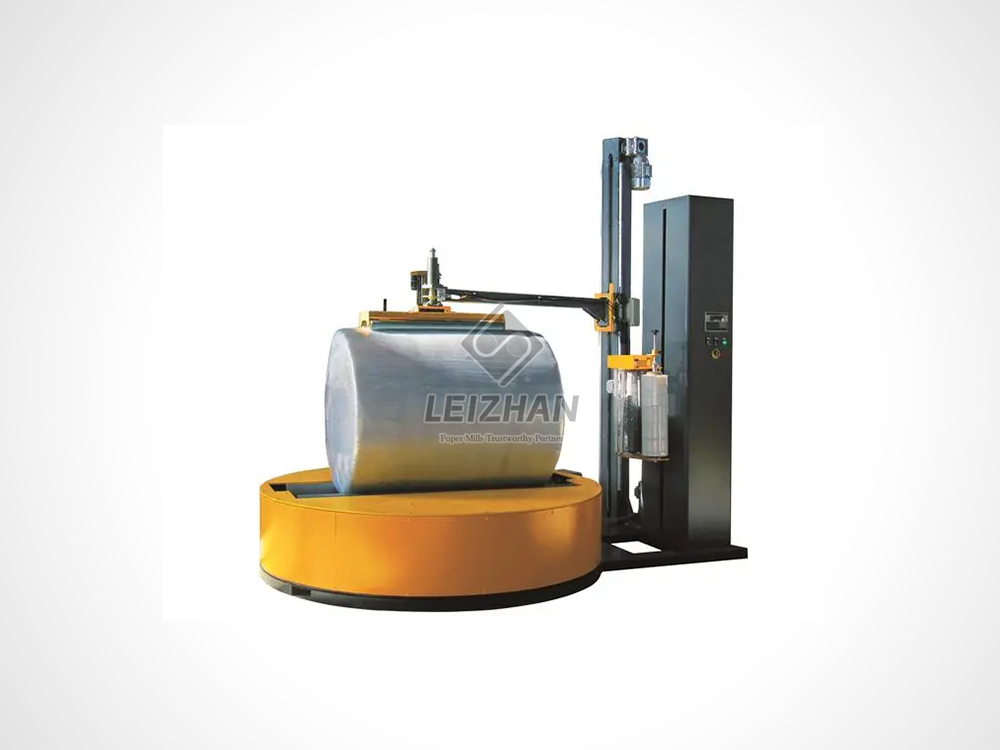
Specifically, examine your load weight and dimensions. Standard automated turntables handle up to 2000 kilograms with a 1500-millimeter diameter. For exceptionally heavy or unstable loads, a rotary arm wrapper ensures the pallet remains stationary while the film carriage rotates around it.
Calculate your payback period. A high-quality machine reduces material usage by up to 70 percent. The cumulative savings on plastic, combined with reduced labor hours and eliminated product damage, typically pay off the capital expenditure within 12 to 18 months.
Conclusion
Wasting secondary packaging material is an easily solvable warehouse problem. Transitioning from chaotic manual labor to a machine-assisted process fundamentally upgrades your operational efficiency. Optimizing how you secure your goods is a complete win. It slashes procurement costs, secures cargo for rough transit, and protects the environment from unnecessary plastic pollution.
Take a walk down to your loading dock today. Audit your current wrapping process and look inside your commercial dumpsters. If you are ready to stop bleeding capital, explore the advanced, automated stretch film packaging solutions engineered by Leizhan Paper Tech to find the exact configuration that meets your operational demands.
FAQ
How much stretch film does a standard pallet require?
The exact amount varies based on the height, weight, and profile of the goods being shipped. A properly machine-wrapped standard unit usually requires between 2 to 4 ounces of plastic. Manual wrapping relies on human tension and heavy overlapping, which typically consumes 8 to 10 ounces of material for the exact same load.
What is the ideal pre-stretch percentage for a pallet wrapper?
Standard industrial machines typically offer 200 to 250 percent elongation capabilities. One foot of plastic becomes three to three-and-a-half feet. High-end advanced models reach 300 percent or more. The ideal rate depends entirely on your specific material gauge and the structural stability of the boxes.
Can pallet wrap be recycled?
Yes, the vast majority of this material is highly recyclable. To be accepted by commercial recycling facilities, the plastic must be kept completely clean, baled properly, and separated from other warehouse waste like rigid strapping, dirt, and paper shipping labels.
Will a thinner stretch film save me money?
Not always. While down-gauging is a popular industry trend, if a plastic is too thin for your specific load profile, it will inevitably puncture or tear on sharp box corners. This causes operators to stop the machine, discard the broken plastic, and re-wrap the entire unit. True cost savings require finding the perfect balance between material thickness and machine tension.
How do I calculate stretch film cost per pallet?
To determine your exact cost, divide the price of a single roll by its total length. Measure how many feet of plastic your machine uses to wrap one complete load. Multiply the cost per foot by the feet used per load. Automated machines with high pre-stretch capabilities significantly lower this final number compared to manual application.
What is the difference between cast and blown stretch film?
Cast film is manufactured using an extrusion process that cools the plastic rapidly. This results in excellent clarity, quiet unwinding, and consistent thickness. Blown film is extruded and expanded with air, making it tougher and more puncture-resistant. However, it is louder when unwinding and has less clarity. Selection depends on your specific load profile and warehouse environment.


