Warehouse managers and packaging engineers face a familiar set of logistical hurdles every single shift. The production line ends, but the bottlenecks begin. Inconsistent load containment and the steadily rising costs of manual labor plague daily operations. When pallets are not wrapped efficiently or securely, the entire supply chain suffers. Shipments get delayed. Products get damaged.
To address these compounding inefficiencies, the material handling sector has experienced a massive shift toward advanced technology. Traditional wrapping methods, such as strenuous hand-wrapping or stationary turntable machines, often fail to keep pace with high-capacity production needs. Manufacturing facilities are expanding rapidly. Equipment must adapt.
Industry analysts note a distinct pivot in end-of-line packaging trends. Driven by surging e-commerce volumes and chronic labor shortages, supply chain leaders are abandoning rigid, bolted-down machinery. Modern logistics demands modularity. Facilities require equipment that adapts to shifting floor plans without triggering costly structural modifications. This industry-wide push for agility makes mobile robotics the new standard for dynamic warehouses.
Consequently, a highly adaptable robot stretch wrap machine has emerged as a game-changing solution. This article explores exactly where and how this innovative technology fits into a modern facility. We will provide objective, engineering-focused insights to help decision-makers determine if this equipment is the right capital investment for their operations.
Key Takeaways
- Versatile Footprint: Robotic wrappers offer unmatched spatial flexibility. They fit into tight, dynamic, or unconventional spaces where traditional turntable wrappers simply cannot be installed.
- Seamless Integration: These automated machines easily integrate at the end of a production sequence. They create a hands-free packaging workflow that eliminates end-of-line bottlenecks.
- Handling Unconventional Loads: Mobile wrappers excel at securing oversized, extremely heavy, or fragile loads. You never have to move an unsecured pallet again.
- High Return on Investment: Implementing this technology reduces stretch film waste through advanced pre-stretch capabilities. It minimizes product damage and reallocates manual labor to higher-value tasks.
- Future-Proofing: Adapting mobile units ensures your facility remains agile. You stay ready to scale production without requiring massive layout overhauls.
What Exactly is a Robot Stretch Wrap Machine?
To understand where this equipment fits, we must define its core mechanics. Traditional turntable wrappers spin the pallet on a motorized base. Rotary arm wrappers use a massive fixed steel frame to spin film around a stationary pallet. Robotic wrappers operate with distinct autonomy. They bring the wrapping process directly to the load.
Built-in sensors, programmable logic controllers, and sophisticated automation software allow these machines to read the physical dimensions of a pallet in real-time. The machine automatically calculates the height, width, and required containment force. It applies the exact film tension needed without human intervention. This data-driven approach removes human error, ensuring consistent structural integrity for every single pallet.
Consider the mobile autonomous units. These battery-operated robots drive themselves. An operator drops a pallet on the floor, attaches the film, and walks away. The robot navigates a precise circular path, dispensing film from bottom to top. Once finished, it moves out of the traffic lane. The floor is instantly clear.
Fixed robotic systems utilize multi-axis industrial arms. They articulate to wrap pallets at extremely high speeds. While stationary, their advanced articulation allows them to maneuver stretch film around complex configurations with surgical precision. These are typically integrated directly into high-speed conveyor systems for massive production volumes.
Assessing Your Current Cell Layout: Where Does It Physically Fit?
Integrating new machinery always raises immediate concerns about floor space. Traditional wrappers require a large, dedicated, and permanent footprint. Facilities must bolt them to the floor. They must allocate permanent staging areas around them for forklift clearance.
In manufacturing, a packaging cell refers to a specific arrangement of equipment designed to optimize material flow. Integrating a mobile wrapper into your cell layout is highly efficient. It does not disrupt forklift traffic or pedestrian safety zones. Because it is portable, it does not require a permanent installation footprint. When the machine is idle, it parks in a compact charging station.
This portability offers a massive advantage for large facilities with decentralized packing stations. Instead of transporting a heavy, unstable, unwrapped pallet across the warehouse, you bring the machine directly to the pallet. This decentralized approach drastically reduces unnecessary forklift travel time and mitigates safety risks.
Integrating with an Automated Palletizing Line
A frequent and costly issue in high-throughput facilities is the end-of-line bottleneck. This discrepancy occurs when a high-speed palletizing line stacks products much faster than the packaging team can secure them. Unwrapped pallets accumulate on the factory floor. Tracking delays multiply, eventually forcing the palletizer to halt production entirely.
Placing a high-speed robotic wrapper immediately at the discharge point of the palletizer ensures a continuous workflow. As soon as a load is built, the robotic system initiates the wrapping cycle. This immediate containment ensures the load is structurally secured before it is ever moved. Carton shifting is virtually eliminated.
Achieving true end-to-end efficiency requires machines to communicate. Modern robotic wrappers integrate into the facility's central control network via Warehouse Management Systems. They receive real-time data from upstream conveyors, allowing the wrapper to pace itself. If the line speeds up, the robot adjusts its cycle time accordingly to maintain perfect synchronization.
Actionable Selection Guide: Where Does Each Wrapper Fit Best?
Standard wrappers are sufficient for uniform goods, but robotic wrappers truly shine in challenging environments. Evaluating your specific product types and operational parameters will clarify which technology is the right fit. We have compiled a direct comparison to guide your engineering and procurement decisions.
| Wrapper Type | Best Fit Scenario | Footprint Requirement | Max Load Capacity |
| Turntable Wrappers | Standard, uniform pallets. Low-to-medium volume operations. | Large, permanent dedicated space. | Strictly limited by motor capacity, typically around 1500kg - 2000kg. |
| Rotary Arm Wrappers | Highly unstable, lightweight loads. High-speed conveyor integration. | Massive fixed steel frame, high ceiling clearance required. | Virtually unlimited, as the load rests on the floor or conveyor. |
| Mobile Robot Wrappers | Oversized, heavy, or fragile loads. Decentralized packing stations. | Zero permanent footprint. Requires 3-4 feet of driving clearance. | Infinite. The machine drives around the stationary load. |
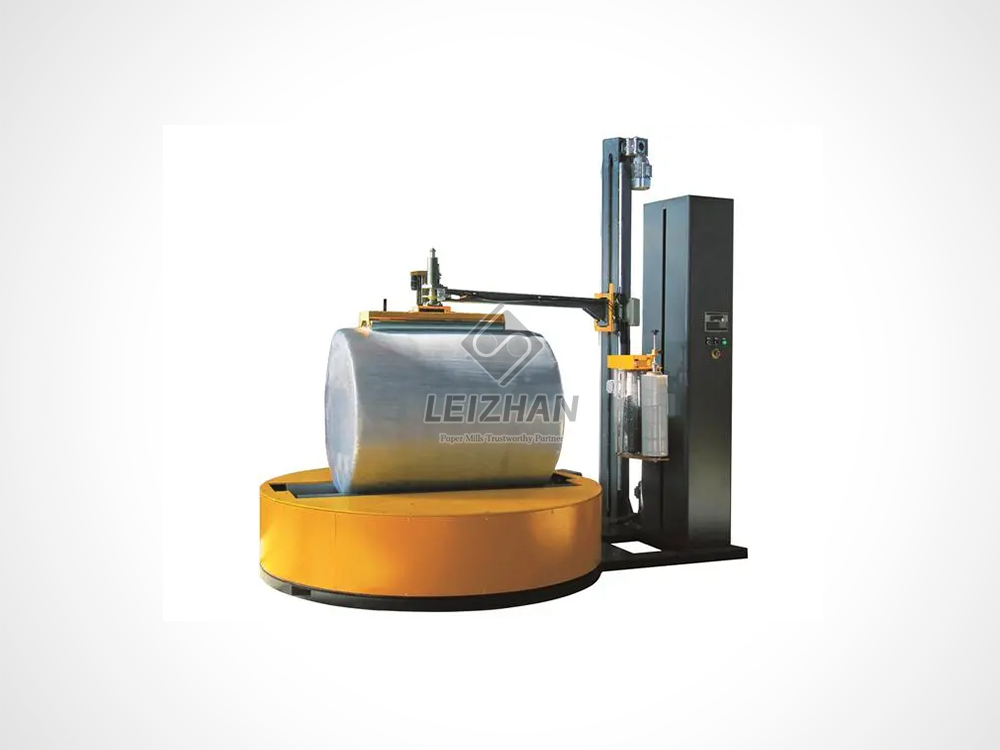
For oversized and oddly shaped loads, standard turntable machines fail. They have strict size limitations dictated by the diameter of their spinning base. If a pallet overhangs the turntable, it cannot be wrapped safely. A mobile robot eliminates this limitation entirely. It easily navigates massive, irregularly shaped pallets like heavy machinery components, doors, or oversized paper rolls.
Consider the logistics of handling extremely heavy or unstable loads. Picture a forklift operator navigating a 2,500-pound pallet of loosely stacked items across a bustling warehouse. Every sharp turn risks a catastrophic spill. Wrapping the load directly in place on the floor eliminates the need to move unsecured freight. This completely mitigates a major logistical risk.
Third-party logistics providers often deal with a high-mix environment. They process a wide variety of pallet sizes and weights daily. A robotic wrapper is perfect here. Its sensors automatically scan and adjust the wrapping parameters for each unique load, requiring zero manual recalibration between cycles.
Common Mistakes to Avoid When Implementing Wrapping Automation
Investing in advanced packaging equipment is a significant operational upgrade. However, poor implementation diminishes its effectiveness. Engineering teams must avoid several common design and operational pitfalls.
Ignoring battery and charging logistics is a critical error for mobile units. Failing to plan for charging downtime can halt end-of-line production mid-shift. Facilities must establish a strict charging schedule or invest in interchangeable battery packs to ensure continuous, multi-shift operation.
Floor quality is another frequent oversight. Mobile robots rely on precision wheels and sensors to navigate. They require relatively smooth, level concrete floors. Deep cracks, uneven surfaces, or excessive debris disrupt the machine's path. This causes uneven film application or triggers unwanted safety shutdowns.
Underestimating film quality is a costly mistake. High-tech equipment requires high-quality consumables. Using cheap, low-grade stretch film on a sophisticated robotic arm or mobile unit leads to constant film snapping. Machine downtime spikes, and load containment is ultimately compromised.
Overlooking safety protocols leads to workplace accidents. While robots are designed to improve safety, introducing autonomous movement into a human workspace requires preparation. Management must ensure safety scanners are properly calibrated. Employees must receive adequate training on interacting with automated equipment on the floor.
The Return on Investment of Upgrading to a Robot Stretch Wrap Machine
Capital expenditures must be justified by measurable financial returns. Upgrading to a robotic wrapper yields significant benefits across three primary operational categories.
Material savings through film pre-stretch provide the fastest payback. Manual wrapping typically achieves a film stretch rate of only 10 to 20 percent. In stark contrast, industrial robotic machines feature powered pre-stretch carriages. These systems routinely stretch the film by 250 to 300 percent before it touches the load. A single roll of film lasts significantly longer, drastically reducing annual consumable costs.
Labor reallocation transforms warehouse efficiency. Manual wrapping is labor-intensive, time-consuming, and notorious for causing repetitive motion injuries. Automating this process eliminates the hidden costs of manual labor, including injury claims and fatigue-driven slowdowns. Workers are freed up for higher-value tasks, such as order picking, quality control, or outbound auditing.
Reduction in product damage protects your bottom line. Inconsistent manual wrapping leads to loose loads that shift or collapse during transit. A robotic wrapper applies mathematically optimized containment force to every inch of the pallet. Products survive the supply chain intact. Costly returns, freight claims, and damaged goods write-offs drop significantly.
Conclusion
A robotic stretch wrapper is not merely a supplementary piece of equipment. It is a strategic logistical upgrade. By integrating this technology, facilities optimize their floor space, eliminate bottlenecks at the end of the production line, and drive comprehensive warehouse efficiency.
The initial capital investment may be higher than purchasing basic manual tools or entry-level turntables. However, the long-term operational flexibility, enhanced worker safety, and drastic material savings make it a highly profitable decision. Evaluate your current floor space, track your production bottlenecks, and upgrade your workflow. Explore the high-performance wrapping solutions at Leizhan Paper Tech to find the exact configuration that meets your facility's unique operational demands.
Frequently Asked Questions
How much space is required to operate a mobile robot stretch wrap machine?
It generally requires about 3 to 4 feet of clearance around the perimeter of the stationary pallet. This allows the machine's sensors to navigate successfully without obstruction, making it highly adaptable to various, tightly-packed facility layouts.
Can a robotic arm wrapper keep up with a high-speed palletizing line?
Yes. Fixed robotic arm systems are incredibly fast and are specifically engineered for high-throughput environments. They easily match the rapid pace of automated palletizers, preventing any end-of-line bottlenecks from forming.
What is the maximum weight a robot stretch wrap machine can handle?
Because the pallet remains stationary on the warehouse floor, the weight limit is essentially infinite. Unlike turntable wrappers that must physically support the load's weight on a motor, the robot only registers the physical dimensions of the load, not its mass.
How do robotic wrappers handle heavy paper rolls?
Robotic wrappers are highly effective for paper rolls. Specialized parameters can be programmed into the machine's control system to adjust tension specifically for cylindrical shapes. This ensures the heavy rolls are tightly bound without crushing the edges of the paper.
What is the maintenance schedule for mobile wrapping robots?
Industrial mobile wrappers require routine preventative maintenance similar to a forklift. This includes daily sensor wiping, weekly battery terminal inspections, and monthly checks on the pre-stretch carriage rollers and drive wheels to ensure optimal film yield and navigation accuracy.
Does it require special stretch film?
While it utilizes standard machine-grade stretch film, it is highly recommended to use high-performance, high-yield film. This allows you to take full advantage of the machine's robust pre-stretch capabilities, maximizing your material cost savings and preventing film breakage.
How long does the battery last on a mobile robotic wrapper?
Most standard industrial models can wrap between 150 to 250 pallets on a single full charge. This capacity easily covers a standard 8-hour operational shift before the machine needs to be plugged into its charging station.


