Introduction
Walk onto any active shipping dock, and you will likely hear the familiar, high-pitched screech of hand-applied stretch film. For facility managers and plant engineers, that specific sound is synonymous with escalating manual operational expenses, excessive material waste, and frustrating bottlenecks. As global supply chains demand increasingly faster turnaround times, relying on manual end-of-line packaging is no longer a sustainable strategy. Upgrading to Pallet Wrapping Automation has evolved from a simple capital expenditure into a critical necessity for modern logistics hubs.
Many decision-makers instinctively hesitate when confronted with the initial price tag of heavy machinery. Shifting the analytical framework reveals that the financial recovery timeline for these systems is often surprisingly short. This comprehensive breakdown explores exactly how fast you can anticipate a tangible return on investment. By objectively analyzing substantial workforce reallocations, massive material conservation opportunities, and overall operational efficiency improvements, the financial logic behind automating your packaging line becomes undeniable.
Key Takeaways
- Typical Break-Even Timeline: Most commercial facilities achieve a full financial return within 12 to 24 months, strictly depending on daily throughput and operational volume.
- Major Cost Drivers: The two primary catalysts for rapid financial recovery are significant workforce expense reductions and achieving up to 55% in material conservation through mechanical pre-stretch capabilities.
- Damage Reduction: Automated wrappers guarantee consistent load containment. This rigid stability drastically minimizes product damage during transit, serving as a hidden but substantial driver for financial returns.
- Operational Scalability: Integrating mechanized machinery empowers your supply chain to manage accelerated throughput without the need to continuously expand your manual workforce during peak seasons.
Global Logistics Trends: The Shift Away from Manual Packaging
Recent market analyses indicate a massive paradigm shift across the packaging and logistics sectors. Driven by chronic labor shortages, rising wages, and the relentless pace of modern e-commerce, facilities are completely rethinking their end-of-line workflows. Industry data shows that warehouses relying on manual labor for repetitive tasks are experiencing higher turnover rates and struggling to meet stringent retailer compliance standards.
Consequently, transitioning to automated systems has become a baseline survival strategy rather than a luxury upgrade. Faster, standardized wrapping times are critical to keeping the entire supply chain flowing smoothly. When pallets are wrapped manually, the shipping dock frequently transforms into a choke point. This delay holds up outbound trucks and incurs steep detention fees. Mechanizing your output rate ensures that end-of-line packaging never dictates the pace of your broader operation.
The Business Case for Mechanized Load Containment
The modern packaging industry demands consistency, speed, and rigid cost control. Understanding this business case requires looking well beyond the initial purchase order and evaluating the long-term financial impact on the entire facility infrastructure.
It is entirely natural for procurement teams to view heavy machinery as a daunting capital hurdle. Transforming the mindset from a sunk capital expense to a cost-saving investment changes the narrative entirely. When you install advanced wrapping systems, you are essentially pre-paying for years of reduced consumable usage and optimized labor hours. The equipment functions as a revenue-protecting asset that predictably lowers variable operational expenses day after day.
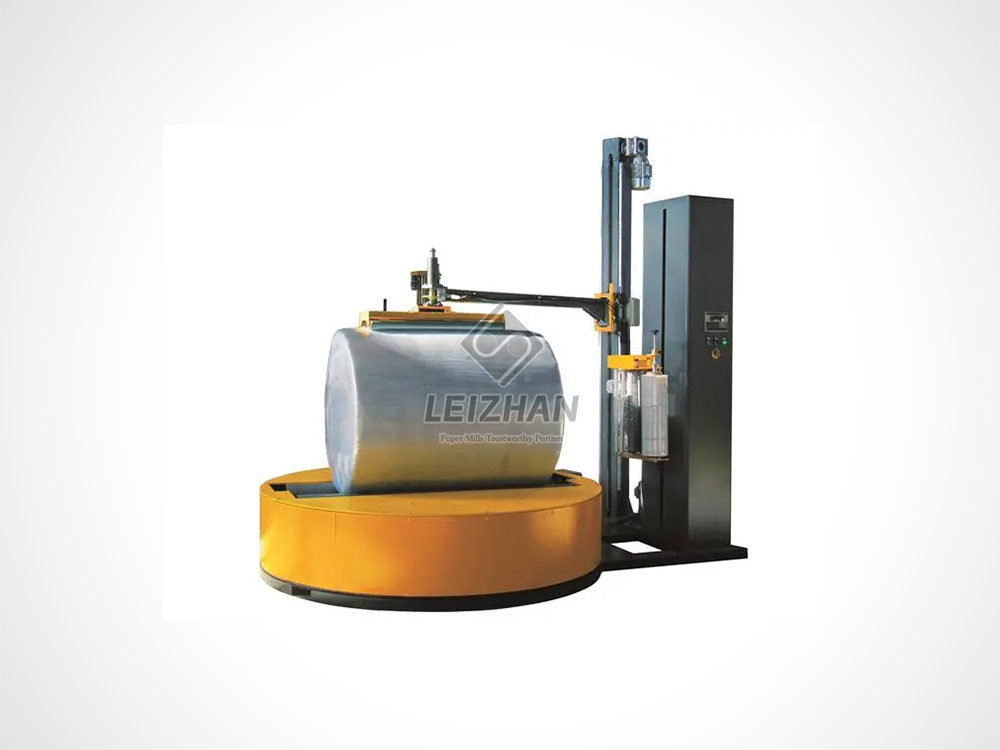
How Workforce Reallocation Accelerates Returns
When evaluating equipment upgrades, human capital consistently ranks as the most expensive variable. Breaking down the actual cost of manual wrapping versus an automated approach reveals stark differences in daily operational bleed.
A prevalent misconception is that mechanization strictly exists to eliminate jobs. In reality, a prudent engineering strategy uses automation to reallocate existing workers to higher-value, revenue-generating tasks. Instead of paying an employee to spend five minutes walking in dizzying circles around a pallet, that same individual can be reassigned to operate a forklift, manage quality control, or expedite order picking. This strategic reallocation slashes your dedicated Labor Cost for packaging to a mere fraction of its former total.
Picture a warehouse worker walking backward, dragging a heavy roll of film around a towering stack of boxes while continuously bending and pulling. This process is ergonomically disastrous. Over time, these repetitive motions lead to severe musculoskeletal strain, fatigue, and dizziness. Facilities relying on hand-wrapping face higher rates of absenteeism, expensive compensation claims, and increased overtime pay. Automated machines absorb all this physical punishment. Protecting your workforce from physical burnout indirectly lowers insurance premiums and turnover rates.
The Impact of Advanced Pre-Stretch Technology
While human effort is the most visible expense, consumable waste remains the silent profit killer in packaging departments. There is an enormous amount of hidden waste in manual wrapping processes that simply goes unnoticed during the daily hustle.
Human operators are physically incapable of stretching wrapping film to its maximum engineered yield. They typically achieve only a 10% to 20% stretch. To compensate for a perceived lack of stability, workers naturally over-wrap pallets, applying far more layers than structurally necessary. The technological cornerstone of modern automated wrappers is the powered pre-stretch carriage. High-performance models utilize a series of motorized rollers to elongate the plastic by 250% to 300% before it ever touches the load. One meter of film off the roll is instantly transformed into three or four meters of highly tensioned packaging material.
To put this into perspective, consider a mid-sized distribution center processing 50 pallets per day. If manual wrapping consumes roughly $1.50 worth of plastic per pallet, the annual consumable cost hovers around $19,500. By introducing a machine equipped with a powered carriage, the facility achieves a massive Film Saving. The daily cost plummets, equating to nearly $9,750 in pure savings per year strictly from material efficiency.
Core Comparison: Manual vs. Semi-Automatic vs. Fully Automatic
Selecting the correct tier of machinery is critical to optimizing your financial return. Over-investing in a system that exceeds your volume will unnecessarily prolong the recovery timeline, while under-investing leaves efficiency gains on the table. Below is a practical breakdown to guide your engineering and procurement teams.
| Operational Feature | Manual Wrapping | Semi-Automatic Wrappers | Fully Automatic Systems |
| Pre-Stretch Yield | 10% - 20% Maximum | Up to 250% - 300% | Up to 300%+ |
| Daily Throughput | Under 15 Pallets | 20 to 100 Pallets | 100+ Pallets |
| Human Intervention | 100% Manual Labor | Forklift loading & push-button start | Zero intervention inline conveyor |
| Estimated Break-Even | N/A constant loss | 12 to 18 Months | 18 to 24 Months |
Actionable Selection Criteria
For mid-volume operations processing between 20 and 100 pallets daily, semi-automatic wrappers serve as the industry standard. Machines featuring a 1500mm to 2000mm turntable diameter and a 2000kg load capacity handle the vast majority of standard logistics requirements. Because the upfront cost is relatively modest, facilities with tight capital budgets often experience an exceptionally fast ROI.
Conversely, enterprise-level facilities handling upwards of 100 pallets daily require fully automatic systems. These units integrate directly into existing conveyor lines. Pallets move into the wrap zone, get secured at high turntable speeds, and exit without any human intervention. The machine automatically applies, wraps, cuts, and seals the tail. The complete elimination of human intervention creates compounding long-term savings.
Hidden Factors: Load Containment and Damage Reduction
When calculating equipment justification, most managers stop at workforce and materials. Several hidden costs heavily impact the bottom line and must be factored into any serious engineering audit.
The primary purpose of stretch film is to achieve proper load containment. This is the exact holding force required to keep a pallet intact during transit vibrations. Human wrappers cannot apply consistent tension. One side may be tight while the other is dangerously loose. Automated systems apply the exact same wrap profile, tension, and overlap to every single load, ensuring uniform stability that meets rigorous transportation standards.
Improperly secured pallets are the leading cause of tipped loads and freight damage. When a pallet collapses in the back of a truck, the financial loss often exceeds the cost of a month of consumables. Businesses face replacement costs, reverse logistics expenses, and severely damaged customer relationships. Standardizing stability through mechanization drastically reduces the percentage of goods damaged in transit.
Step-by-Step: Calculating Your Exact Recovery Timeline
To transition from abstract concepts to concrete financial planning, facility managers must conduct a localized audit. Calculating your specific Payback Period requires objective data collection regarding your current manual baseline.
Begin by quantifying your existing daily expenses. Track the average time it takes an employee to secure a load, and multiply this by your daily volume and the employee fully loaded hourly wage. Next, review your monthly invoices to establish your baseline material spend. Comb through your accounting logs to estimate the average monthly cost of goods damaged in transit due to load failure.
Once your baseline is established, forecast your expenses post-integration. Factor in the machine efficiency. You can safely reduce your current material spend by 40% to 50% with a 250% pre-stretch carriage. Subtract your projected automated expenses from your current manual expenses. Take the total cost of the machine installation and divide it by your total annual savings. The resulting number represents your break-even point in years.
Conclusion
Upgrading your end-of-line packaging processes is undeniably a smart, forward-thinking engineering choice. The transition is driven by massive workforce expense reductions, incredible material conservation, and the critical minimization of product damage during shipping. Every single month your team spends manually circling pallets is valuable capital left bleeding on the warehouse floor. Stop guessing at your operational losses and start calculating your true potential savings today. For proven, industrial-grade solutions tailored to your specific throughput, visit Leizhan Paper Tech to explore high-performance stretch wrapping equipment and secure your bottom line.
FAQ
How many pallets a day justifies buying an automated wrapper?
Generally, if your facility is securing more than 15 to 20 pallets a day, a semi-automatic machine will start paying for itself. At this volume, the combination of workforce reallocation and material conservation creates a viable financial case, usually resulting in a break-even point within 18 to 24 months.
Does pallet wrapping automation really save that much film?
Yes, the material savings are scientifically measurable and highly impactful. Because industrial machines utilize powered pre-stretch technology, they safely and consistently elongate the plastic up to 300%. This mechanical advantage cuts your consumable costs by 30% to 55% compared to manual hand-wrapping.
What is the maintenance cost of an automatic stretch wrapper?
Routine maintenance is surprisingly minimal and highly predictable. Standard upkeep involves basic lubrication of the carriage chains, sensor cleaning, and occasional turntable inspection. High-quality machines are engineered to run reliably for years in harsh warehouse environments, meaning maintenance costs rarely impact the overall return on investment timeline.
How much floor space does a pallet wrapper need?
A standard semi-automatic turntable wrapper requires a relatively small footprint, typically around 2.5 meters by 1.5 meters. You must also account for a clear loading zone for forklifts or pallet jacks to maneuver safely. Fully automatic inline systems require more space as they integrate directly into existing conveyor layouts.
Can fully automatic machines keep up with high-speed supply chains?
Absolutely. Fully automated systems are specifically designed to integrate seamlessly into demanding, high-speed environments. Many enterprise-grade machines are capable of processing upwards of 100 pallets per hour. By matching or exceeding the speed of your production lines, they eliminate dock bottlenecks entirely and ensure fluid outbound logistics.


