Are spatial bottlenecks ruining your production floor? Investing in end-of-line packaging automation is a proven game-changer for load stability and labor reduction. Yet, many buyers make a critical error during procurement. They ignore the true physical footprint required to operate the equipment safely. This oversight creates severe safety hazards and logistical nightmares.
In this comprehensive guide, you will learn exactly how to calculate the exact area needed. We will explore how different equipment types interact with your active environment. You will also learn to factor in those easily forgotten operational clearances. By the end, you will possess the layout strategies necessary to make a confident, space-conscious purchasing decision.
Key Takeaways
- Machine Type Matters: The required footprint varies drastically between standard turntable wrappers, rotary arm setups, and mobile robotic units. Each system interacts with your facility spatial constraints differently.
- Turntable Diameter is Key: The size of your largest load directly dictates the required turntable diameter. This serves as the non-negotiable baseline for your physical footprint.
- Factor in Hidden Space: True footprint calculations must always include forklift loading zones, operator safety clearances, and routine maintenance access. Ignoring these leads to operational bottlenecks.
- Smart Layout Planning: Strategic warehouse placement maximizes operational efficiency. It improves worker ergonomics and ensures a seamless flow from the packaging zone to the shipping dock.
Current Industry Trends: The Push for High-Density Automation
Recent market analyses reveal a massive shift in warehouse logistics. Industrial real estate premiums are skyrocketing globally. Consequently, facility managers are aggressively moving away from sprawling equipment. The current trend heavily favors compact, modular packaging systems. High-density automation is no longer a luxury. It is a baseline requirement. Facilities must integrate machinery seamlessly into existing spaces without demanding costly structural expansions.
Why Floor Space is a Critical Factor in Equipment Selection
When facility managers evaluate packaging equipment, the focus heavily leans toward throughput speeds and film yield. Space is frequently the most overlooked constraint in Bottom-of-Funnel purchasing decisions. Buyers often review basic dimensions on a spec sheet. They fail to visualize how the equipment will integrate into their bustling environment.
The financial cost of this inefficiency is substantial. Poorly planned equipment placement disrupts established traffic flow. Forklifts are forced to take dangerously narrow routes or longer detours. For instance, an operator might be unable to safely access the carriage to thread a new roll of film because a storage rack is in the way. The anticipated labor savings quickly evaporate into prolonged downtime.
Understanding your exact available Floor Space serves as a critical filter during the procurement process. It immediately narrows down options. This helps you objectively choose between semi-automatic models, fully automatic inline systems, or mobile solutions. A system that fits perfectly on paper but chokes a main transit aisle in practice is a massive liability.
How Turntable Diameter Dictates Your Spatial Envelope
For operations relying on standard stretch wrappers, the Turntable Diameter is the absolute starting point for calculating the spatial envelope. This circular steel plate dictates how wide the base must be. It subsequently influences the overall length and width of the entire unit.
A standard industry rule dictates that the turntable must be large enough to safely accommodate the diagonal measurement of your largest pallet. Facility planners cannot simply match the width of the load to the plate. A standard 40-inch by 48-inch CHEP pallet has a diagonal measurement of approximately 62.5 inches. Therefore, industry-standard 65-inch turntables perfectly accommodate this load with a slight safety margin. Smaller 59-inch models would fall dangerously short.
Furthermore, overhang considerations play a massive role in footprint calculations. Irregularly shaped products often stick out past the wooden edge of the pallet. This increases the effective diagonal measurement significantly. Wrapping an overhanging load on an undersized turntable poses a high risk. The corners of the product may strike the vertical mast during rotation, causing catastrophic damage to both the goods and the machinery.
Footprint Breakdown by Equipment Type
The amount of square footage you must allocate depends entirely on the mechanical design of the machinery. Different technologies require distinct spatial envelopes to operate efficiently and safely. Let us look at the practical data comparison.
| Equipment Type | Typical Base Footprint | Required Operating Clearance | Best Application Scenario |
| Semi-Auto Turntable | 100 inches L x 60 inches W | 2 to 3 feet safety perimeter | Standard pallets, moderate volume |
| Rotary Arm Wrapper | 140 inches L x 140 inches W | Fenced safety enclosure | Unstable or extremely heavy loads |
| Mobile Robotic Wrapper | Compact storage space | 3 to 4 feet driving radius | Tight spaces, varying locations |
| Vertical Waste Baler | 60 inches L x 40 inches W | Front loading and bale ejection zone | Scrap management in packaging areas |
With a moderate space profile, a typical semi-automatic turntable unit requires roughly 100 inches in length by 60 inches in width. The load itself spins. Therefore, the surrounding area must remain completely free of obstructions to accommodate the rotating corners of the pallet. There must be zero physical barriers within the rotational radius.
Conversely, rotary arm systems demand a massive space profile. Operating on an inverted principle, the pallet remains stationary on the floor while a mechanical arm swings around it to apply the film. Safety regulations mandate a significantly wider, permanently fenced-in perimeter due to the high-speed movement of this heavy steel arm.
Offering a highly flexible profile, a mobile Pallet Wrapping Machine drives itself around a stationary load. The robot itself is compact. It is often no larger than a standard pallet jack. However, it requires a clear navigating perimeter of 3 to 4 feet during operation.
The Hidden Footprint: Calculating Safety and Operational Clearances
Evaluating the physical dimensions of the steel frame is only the first step. The true spatial requirement includes the hidden footprint. This is the mandatory empty space required to interact with the machinery safely on a daily basis.
You must account for material handling equipment. If loading with a counterbalanced forklift, calculate the turning radius. The driver must be able to approach, deposit the load, and reverse without striking adjacent racking. Specifically, if using a pallet jack on a low-profile turntable, the mandatory loading ramp extends the footprint by 4 to 5 feet on the loading side. This significantly increases the overall length of the unit.
Ergonomics directly impact daily productivity. Facility planners must leave adequate room for workers to walk around the machine. They need space to safely attach the film to the pallet and interact with the control panel. Imagine an operator forced to lift and thread a 40-pound roll of stretch film in a cramped 12-inch clearance. This is a prime recipe for musculoskeletal injuries. A minimum clearance of 24 to 36 inches on the carriage side is strongly recommended.
Strategic Layout Planning for Your Packaging Zone
Integrating new equipment requires a holistic approach. It should never be an afterthought. The machinery must be strategically positioned to complement the broader material handling flow.
The placement of your packaging station dictates the efficiency of your end-of-line process. Should it be located near the loading dock for immediate shipping? Or should it be placed at the end of a production line to minimize the travel distance of unstable pallets? Centralizing your hub might serve multiple picking zones efficiently. However, it requires wider aisles for converging forklift traffic.
To ensure a seamless installation, facility managers should follow a strict Layout Planning checklist. First, measure the ceiling height. Ensure adequate clearance for the machine mast. Standard masts are often 80 to 110 inches tall. Next, map the power and air supply. Verify the location of power drops to avoid running heavy cables across the floor. Finally, trace the traffic routes. Tape out the proposed footprint on the floor and physically drive a forklift around it.
Space-Saving Solutions: Integrating Balers and Wrappers
Optimizing your packaging footprint is not limited to the wrapper itself. A high-volume packaging line generates massive amounts of cardboard and plastic scrap. Storing loose scrap consumes valuable Warehouse space and creates severe fire hazards.
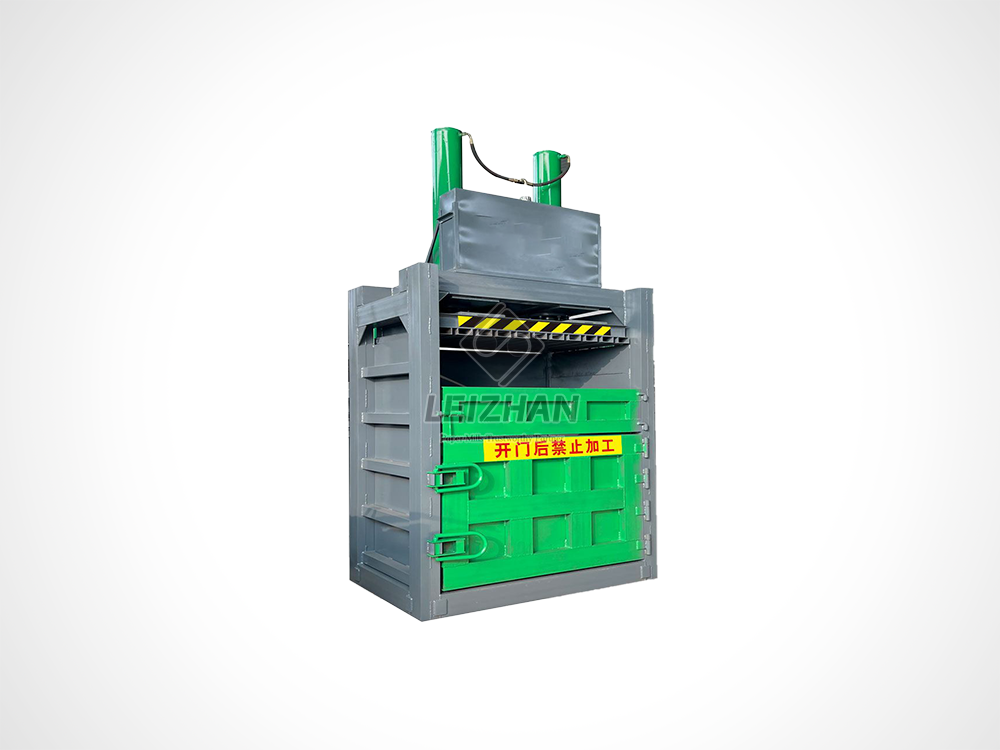
Smart engineers integrate compact waste management directly into the packaging zone. Deploying a high-efficiency Vertical Waste Paper Baler adjacent to your wrapper reclaims wasted floor space immediately. Top-tier industrial balers feature a highly compact vertical design. They deliver immense hydraulic pressing force while occupying minimal square footage. By compressing bulky waste into dense, stackable bales, you eliminate the need for sprawling scrap bins. This dual-equipment layout strategy dramatically improves workflow efficiency and keeps your transit aisles entirely clear.
Cost vs. Space: Budgeting for Your Ideal Setup
When budgeting for new technology, buyers must evaluate the financial relationship between equipment cost and the value of commercial real estate. Every square foot dedicated to machinery is a square foot subtracted from revenue-generating storage.
Warehouse square footage is exceptionally expensive. In highly constrained facilities, paying a premium upfront for a space-saving mobile robot or a compact vertical baler yields a superior Return on Investment. Dismantling valuable pallet racking to fit a larger machine is rarely cost-effective. The long-term cost of lost storage capacity must be factored into the total cost of ownership.
Finally, buyers must budget for layout modification costs. Installing heavy machinery often requires pouring specialized, leveled concrete pads. You may need to relocate existing pallet racking to create enough clearance. Installing steel protective bollards around the machine perimeter is also critical to prevent forklift impacts.
Conclusion
The footprint of your packaging equipment is a crucial metric. It combines physical dimensions, loading methods, and mandatory safety clearances. Always remember that the size of your largest load directly drives the core machine size. This dictates exactly how it will fit into your daily operations.
Before making any final purchasing decisions, take the time to physically tape out these exact dimensions on your facility floor. Doing so will reveal hidden bottlenecks and ensure seamless integration.
Are you ready to optimize your end-of-line process and scrap management? Explore high-performance, space-saving equipment designed for modern facilities. Visit Leizhan Paper Tech to find the exact machinery that matches your specific spatial and operational requirements.
FAQ
What is the standard footprint of a semi-automatic stretch wrapper?
A standard semi-automatic turntable wrapper typically requires a base footprint of around 100 inches in length by 60 inches in width. However, you must add an additional 24 to 36 inches around the entire perimeter for safe operator access and maintenance.
How close can I install racking to my packaging station?
You should never install racking flush against the machine. Maintain an absolute minimum distance of 3 feet from the furthest moving part of the wrapper. This ensures forklifts have enough turning radius to load the machine without striking the adjacent racks.
How much space do I need around a pallet wrapping machine?
Generally, you need at least 2 to 3 feet of absolute clearance around the entire perimeter of the machine. This space is not just for the moving parts of the equipment. It is critical for safe operator access. Workers need adequate room to safely attach the stretch film, interact with the digital control panel, and perform regular film roll changeovers.
Does a pallet jack ramp add to the machine footprint?
Yes, significantly. If you are utilizing a low-profile turntable designed for pallet jack loading, the ramp is a mandatory component. A standard incline ramp will extend the physical footprint by approximately 4 to 5 feet on the loading side. You must also factor in the length of the pallet jack itself and the operator walking behind it.
Can the equipment be easily moved if I change my warehouse layout?
The mobility depends entirely on the model. Standard semi-automatic turntable wrappers are often designed with built-in forklift pockets. This allows them to be relatively easily lifted and relocated. However, fully automatic systems and heavy-duty rotary arm machines are generally bolted directly into the concrete floor to ensure stability.
What happens if my load is larger than the turntable diameter?
If the load overhangs the turntable excessively, it creates severe mechanical and safety issues. During rotation, the overhanging corners of the pallet may strike the vertical mast or the film carriage. This causes catastrophic damage to the equipment and ruins the product. You must either size up the machine to a larger diameter or utilize a specialized extended-mast configuration.


