Choosing the right packaging equipment is a critical decision for any warehouse, distribution center, or production facility. If you are evaluating a turntable stretch wrapper for your end-of-line packaging process, you must answer one vital question. Are your specific product loads compatible with this machinery? A turntable operates by spinning the pallet on a rotating base while dispensing film. Therefore, the physical characteristics of your load dictate its overall success. Shape, weight, and stability are the ultimate deciding factors.
In this comprehensive guide, we break down exactly which loads suit this equipment. We will explore how to evaluate your pallet weight and load stability, alongside when you might need to consider alternative machinery. By taking an objective, data-driven approach to your packaging line, you can minimize product damage, reduce material waste, and optimize your operational efficiency.
Key Takeaways
- Ideal Match: Turntable stretch wrappers are perfectly suited for stable, uniform loads with moderate to high pallet weights ranging up to 4,000 to 5,000 lbs.
- Load Stability is Key: Because the load spins rapidly, products must possess enough structural integrity to withstand centrifugal force without tipping or shifting during the wrapping cycle.
- Handling Unstable Loads: Minor instability can be managed using specialized accessories like top platens. However, extremely fragile or wobbly loads are better suited for stationary wrapping methods.
- Turntable vs. Rotary Arm: If your load is excessively heavy, unusually shaped, or highly unstable, a rotary arm system serves as the optimal alternative. In this setup, the load remains still while the mechanical arm spins.
- ROI and Efficiency: Matching your load type to the precise stretch wrapper reduces film waste, prevents product damage, and ensures compliance with safe Less-Than-Truckload shipping standards.
What is a Turntable Stretch Wrapper and How Does It Work?
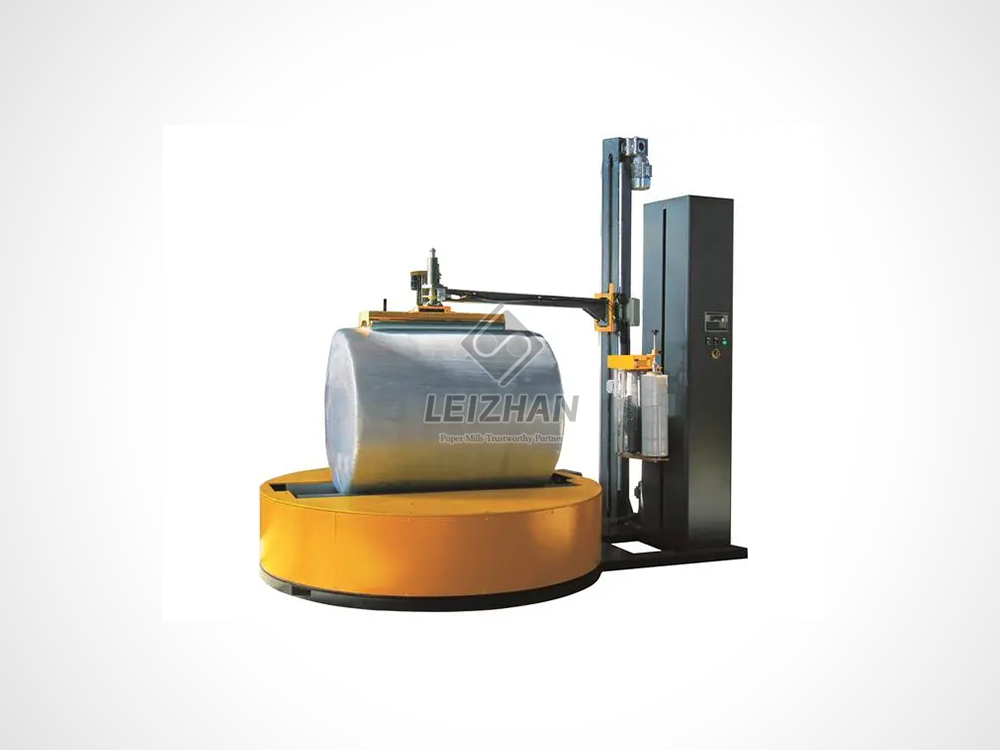
At its core, a turntable stretch wrapper consists of two primary components. The first is a rotating circular base known as the turntable. The second is a vertical mast that houses the film delivery system, commonly referred to as the carriage. Picture a bustling loading dock. A forklift operator carefully places a loaded pallet onto the circular steel platform. As the base begins to spin, the film carriage moves rhythmically up and down the vertical mast. It dispenses stretch film, applying a precisely calibrated containment force around the products. The overlapping layers of plastic create a secure, unitized load ready for rough transport.
These machines fall into semi-automatic and fully automatic categories. Semi-automatic versions require an operator to manually tie the film to the pallet before pressing start, and then cut the tail once the cycle concludes. In contrast, fully automatic systems integrate seamlessly into existing conveyor lines. They automatically clamp, wrap, cut, and wipe the film without any direct human intervention. This hands-free operation makes them indispensable for high-volume production environments.
From an engineering perspective, the turntable model remains the industry standard simply due to its exceptional cost-to-benefit ratio. Its straightforward mechanical design requires less maintenance than more complex robotic systems. Furthermore, it occupies a relatively compact footprint on the warehouse floor, making it an easy retrofit for existing facilities.
The Ideal Loads for a Turntable Stretch Wrapper
While highly versatile, these wrappers are engineered to perform best with specific load profiles. Understanding these parameters ensures peak machine performance and prevents frustrating product damage during the wrapping process. Why do perfectly good pallets sometimes collapse mid-wrap? It usually comes down to a mismatch between the load profile and the machine's capabilities.
Uniform and Square Loads
The easiest and safest loads to wrap on a turntable are perfectly stacked, cubed loads. When boxes of equal size are stacked in a uniform grid, the load maintains a highly predictable center of gravity. This geometric symmetry allows the stretch film to apply uniform containment force. All flat surfaces and corners receive equal tension. Without irregular protrusions or deep gaps in the stacking pattern, the risk of film punctures drops significantly.
Standard Pallet Dimensions
Most standard industrial machines are designed with base diameters ranging from 1500mm to 1650mm. A typical 1650mm turntable comfortably accommodates the universally standard 40 by 48 inch pallet used across North America. When placing a load on the platform, operators must ensure the pallet is perfectly centered. Off-center placement creates an elliptical rotation path. Specifically, this unevenly distributes centrifugal force and places unnecessary, damaging mechanical strain on the drive motor and slew bearings.
Optimal Pallet Weight Ranges
When evaluating equipment compatibility, pallet weight acts as a primary determining factor. Standard models generally handle loads between 1,000 lbs and 4,400 lbs with remarkable efficiency. Interestingly, a heavier pallet weight often improves the wrapping process. A massive load possesses a lower center of gravity. This physical trait helps keep the wooden skid firmly grounded against the steel turntable during rotation, actively resisting the outward pull of centrifugal forces. Conversely, if a load is too light, the tension of the stretch film combined with the spinning motion can actually pull the pallet off-center.
Understanding Load Stability: The Centrifugal Force Factor
To understand why certain loads fail on a turntable, one must consider the physics at play. The primary physical force exerted during a wrapping cycle is centrifugal force.
How Rotation Affects the Load
Turntables typically spin at speeds of 10 to 15 revolutions per minute. As the pallet rotates, centrifugal force pushes outward on the stacked products. The further an item is from the center of the pallet, the greater the outward force it experiences. Furthermore, the taller the load, the more pronounced this outward sway becomes at the top layers. If the frictional forces between the stacked boxes are insufficient to counteract this pull, the load will shift, lean, or completely collapse mid-cycle.
Evaluating Your Load Stability
Before investing in new machinery, facility managers must objectively evaluate their load stability. The push test is not highly scientific, but it is incredibly effective on the warehouse floor. If a fully stacked, unwrapped load can be moved across the concrete floor on a manual pallet jack at a brisk walking pace and brought to a sudden stop without the top layers sliding, it typically possesses enough inherent stability to survive a turntable wrapping cycle.
Wrapping Less-Than-Truckload Shipments
For facilities that rely heavily on mixed freight shipping, achieving optimal load stability is non-negotiable. These shipments are transferred multiple times between different trucks and regional terminals. They are exposed to severe vibrations, sudden braking, and rough forklift handling. A stretch wrapper secures these mixed loads by applying consistent, engineered containment force. By locking the load to the pallet and compressing the products into a single monolithic unit, the wrapper drastically reduces the statistical probability of in-transit freight damage.
Managing an Unstable Load on a Turntable
Not every production line outputs perfectly cubed, heavy boxes. Many facilities must wrap challenging, irregular products. Fortunately, a tricky profile does not automatically disqualify the use of a turntable wrapper.
Recognizing an Unstable Load
Identifying an unstable load early in the packaging design phase prevents costly operational bottlenecks. Common culprits include lightweight empty PET bottles, which lack the mass to resist film tension. Top-heavy pallets where the center of gravity is dangerously high also pose a significant risk. In addition, irregularly shaped automotive parts or poorly stacked mixed boxes often sway the moment the turntable begins to accelerate.
Machine Upgrades for Unstable Loads
Manufacturers have developed several mechanical and programmatic solutions to stabilize difficult loads during the wrapping process.
- Top Platens: The most effective physical upgrade is the addition of a top platen. This is a pneumatic or mechanical press attached to a secondary overhead mast. It lowers a padded plate onto the top of the load, applying steady downward pressure. This acts as a temporary anchor, holding wobbly products firmly in place while the base spins.
- Custom Wrap Cycles: Modern machines feature programmable logic controllers that allow operators to customize the wrap cycle. For a precarious stack, the machine can be programmed with a slow start feature, gradually ramping up the rotation speed. Lowering the carriage speed and reducing film tension during the first two bottom wraps gently secures the base before full force is applied.
- Roping: Roping is a technique where the stretch film is bunched together into a thick, rope-like cable at the bottom of the cycle. This cable is driven down over the edge of the pallet base, effectively locking the stacked products to the wooden skid. It prevents the load from sliding off during rotation and subsequent transit.
Turntable Stretch Wrapper vs. Rotary Arm: Which Do You Need?
When load characteristics exceed the physical capabilities of a standard turntable, facility managers must evaluate alternative technologies to maintain safety and efficiency.
When the Turntable is Not Enough
There are distinct scenarios where a turntable wrapper is fundamentally inadequate. If a facility routinely processes extremely heavy loads exceeding 5,000 lbs, placing that much stress on a motorized turntable base will lead to premature mechanical failure. Specifically, ultra-fragile loads that cannot tolerate any rotational movement demand a different approach. The same applies to washdown environments in the food industry where floor-mounted motors risk severe water damage.
The Rotary Arm Solution
In these demanding scenarios, a rotary arm stretch wrapper provides the necessary solution. Unlike a turntable, a rotary arm machine allows the pallet to remain entirely stationary on the concrete floor or on a heavy-duty conveyor. The machine consists of an overhead mechanical arm that suspends the film carriage. During the cycle, the arm rotates rapidly around the stationary pallet. Because the load never moves, centrifugal force is entirely eliminated, making it impossible for the rotation to cause a load collapse.
Cost and Footprint Comparison
Making an informed purchasing decision requires comparing the logistical realities of both systems.
| Specification | Turntable Stretch Wrapper | Rotary Arm Stretch Wrapper |
| Load Movement | Pallet rotates at 10 to 15 revolutions per minute | Pallet remains completely stationary |
| Max Weight Capacity | Typically 4,000 to 5,000 lbs | Virtually unlimited, relying on floor capacity |
| Floor Space Required | Minimal, approximately 8 by 8 feet | Substantial, requires structural safety fencing |
| Initial Investment | Lower average cost | Higher average cost |
| Ideal Load Profile | Stable, cubed, moderate weight | Unstable, ultra-heavy, or washdown environments |
While the rotary arm offers superior handling for difficult loads, it requires a significantly larger footprint due to the sweeping radius of the arm and the mandatory safety fencing required to protect nearby workers.
Industry Trends Shaping Packaging Automation
The packaging sector is currently experiencing a rapid technological evolution. Recent industry analyses indicate a massive shift toward data-driven, sustainable packaging automation. As global supply chains face persistent labor shortages, relying on manual wrapping is no longer a viable long-term strategy. Facilities are moving toward smart stretch wrappers equipped with IoT sensors. These advanced systems monitor film usage in real-time, detect film breaks instantly, and alert maintenance teams before a minor mechanical issue causes unplanned downtime.
Furthermore, sustainability mandates are pushing warehouse managers to drastically reduce plastic waste. This environmental push directly influences machine selection. Facilities are upgrading to wrappers with high-performance pre-stretch carriages capable of stretching film up to 300 percent. This technology not only slashes plastic consumption but also reinforces load stability, perfectly aligning with modern green logistics initiatives.
Key Specifications to Match Your Load
Once you have determined that a turntable wrapper is suitable for your daily operations, selecting the exact machine specifications is the next critical step. You must look at the hard data.
Weight Capacity and Profile
Turntables are generally manufactured in two distinct profiles, high-profile and low-profile. Low-profile models sit just a few inches off the ground and can be equipped with a long access ramp. This allows operators to load the machine using a standard manual pallet jack, making it ideal for lighter loads and facilities without dedicated forklift operators. High-profile turntables are elevated, typically sitting 10 to 12 inches off the floor. They require a forklift for loading but are often built with thicker steel plates and heavier bearings, making them better suited for maximizing a 2,000 kg weight capacity.
Wrap Height Limits
Matching the machine's mast height to your tallest expected pallet is crucial. Standard masts typically accommodate loads up to 2000mm to 2400mm tall. However, if your warehouse stacks products near the clearance limit of standard shipping trailers, you will need to specify an extended mast. Failing to match the mast height means the film carriage cannot reach the top of the load, leaving the upper layers completely unsecured and vulnerable to shifting.
Pre-Stretch Capabilities
The type of film delivery system directly impacts both load containment and operational costs. Power pre-stretch carriages use a series of motorized internal rollers to stretch the film by 250 to 300 percent before it ever touches the load. This process not only triples the yield of a single roll of film but also changes the physical properties of the plastic. It gives the film a memory that causes it to constrict tightly around the pallet over time. For standard loads, this ensures maximum containment force without crushing the fragile corners of cardboard boxes.
Maximizing Warehouse Efficiency and ROI
Investing in end-of-line packaging automation is ultimately an exercise in improving operational efficiency and achieving a measurable return on investment.
A Plant Manager’s Guide to Savings
Choosing the correct machine based on empirical load data drastically reduces overhead. Manual wrapping is incredibly labor-intensive, ergonomically hazardous, and highly inconsistent. A warehouse worker manually wrapping a pallet typically achieves less than 20 percent film stretch, leading to massive material waste. By transitioning to an automated turntable equipped with power pre-stretch technology, facilities routinely reduce their film consumption by up to 50 percent. Furthermore, the consistency of machine-applied containment force drastically lowers the rate of products damaged in transit, directly protecting the company's bottom line and preserving vital client relationships.
Sourcing the Right Equipment
Achieving these savings requires partnering with reputable manufacturers who provide equipment tailored to specific load requirements, rather than pushing a one-size-fits-all solution. Careful evaluation of equipment specifications against daily operational demands ensures the chosen system will deliver long-term reliability and scale alongside your business growth.
In conclusion, a turntable stretch wrapper handles the vast majority of standard warehouse loads. It is a highly versatile and cost-effective piece of machinery. As long as your products fit within standard pallet weight limits and maintain reasonable load stability, this equipment will efficiently streamline your daily operations. However, for exceptionally heavy or critically unstable pallets, upgrading to a rotary arm wrapper is the safer choice. Evaluate your specific daily loads carefully before purchasing to ensure the best possible return on investment.
Can a turntable stretch wrapper handle very light loads?
Yes, but very light loads, such as empty aluminum cans or plastic bottles, may shift due to the rapid spinning motion. You may need to reduce the turntable speed, lower the film tension during the initial wrap, or utilize a pneumatic top platen to hold the lightweight load securely in place.
What is the maximum pallet weight for a standard turntable wrapper?
Most standard semi-automatic turntable wrappers are engineered to handle pallet weights up to 4,000 to 4,400 lbs. For anything heavier, a specialized heavy-duty turntable is required, or a rotary arm machine is highly recommended to prevent severe motor strain and bearing failure.
How do I know if my load is too unstable for a turntable?
A reliable rule of thumb is the manual transit test. If the unwrapped load sways, leans, or threatens to tip over when moved carefully with a forklift or manual pallet jack, it is likely too unstable for a standard turntable without the addition of stabilization accessories.
Is a semi-automatic or fully automatic turntable better for my loads?
This decision depends primarily on your daily throughput volume rather than the specific load type. Semi-automatic machines require a human operator to attach and cut the film, making them great for lower-volume facilities. Fully automatic systems are ideal for high-volume, continuous lines where loads are conveyed directly onto the turntable without stopping.
How much stretch film can I save with a power pre-stretch carriage?
By upgrading from manual wrapping or a basic friction-brake carriage to a motorized power pre-stretch carriage, facilities typically reduce their film consumption by 50 to 60 percent. Systems capable of 250 percent pre-stretch turn one meter of film off the roll into three and a half meters of wrapped coverage.
What is the standard turntable diameter and how does it affect my pallet?
Standard turntable diameters generally measure between 1500mm and 1650mm. This size safely supports standard industrial pallets without overhang. If your facility uses oversized pallets, you must select a larger turntable base to prevent the pallet corners from protruding, which poses a severe safety hazard and strains the machine's rotation mechanism.
Ready to upgrade your end-of-line packaging efficiency? Visit Leizhan Paper Tech to explore high-performance wrapping solutions, compare detailed machine specifications, and find the perfect stretch wrapper tailored to your facility's unique load requirements.


