Did you know warehouse machines cause thousands of injuries yearly? Industrial packaging environments inherently prioritize throughput and speed. However, this operational velocity must be carefully balanced with strict protective protocols. Upgrading your packaging line undoubtedly boosts facility productivity. Yet, unguarded machines create severe crush and pinch risks that can devastate a workforce.
Securing pallet loads involves real physical danger. Facilities relying on manual labor face high rates of ergonomic injuries. Conversely, those using outdated machinery expose personnel to catastrophic mechanical hazards. Fortunately, upgrading to modern stretch wrap equipment equipped with advanced protective features prevents these hazards entirely. Investing in the right mechanisms shields workers from harm. Furthermore, it improves overall operational efficiency by drastically reducing costly downtime.
In this comprehensive guide, we will break down exactly which protective barriers work best. You will learn how they function mechanically and how to choose the appropriate machinery to maximize workplace security and your financial return on investment.
Key Takeaways
- Upgrading to automated machinery significantly reduces the ergonomic and physical risks associated with manual hand wrapping.
- Advanced physical barriers create a vital separation between operators and moving mechanical parts.
- High-tech photoelectric sensors offer an invisible safety net that instantly halts the machine if a worker enters the hazard zone.
- Accessible and highly functional emergency halt buttons remain non-negotiable features for preventing workplace accidents.
- Investing in safe pallet wrapping solutions directly drives down hidden operational costs, including workers compensation claims and damaged goods.
The Critical Role of Operator Safety in Pallet Wrapping
Prioritizing operator safety forms the absolute foundation of a successful and highly productive packaging line. In industrial environments, heavy pallet loads intersect with fast-moving machinery and human workers. This intersection creates a landscape ripe for potential hazards. Recognizing and mitigating these risks is mandatory for operational stability.
Recent industry analyses highlight a definitive shift in end-of-line packaging. Driven by chronic labor shortages and heightened regulatory scrutiny from safety organizations, modern logistics centers are rapidly abandoning manual processes. The prevailing trend favors fully integrated automated packaging lines. In these modern setups, built-in protective measures are a foundational requirement rather than an aftermarket afterthought. Smart facility managers now recognize that proactive hazard prevention is far more cost-effective than reactive accident management. Sensor integration and internet-of-things monitoring are becoming the new baseline for compliance.
The debate between manual labor and automation often centers on speed. Yet, hazard reduction remains the most critical differentiator. Hand wrapping pallets requires repetitive bending, awkward backward walking, and heavy lifting of tensioned film rolls. This grueling manual process frequently leads to musculoskeletal disorders. Transitioning to machinery mitigates these ergonomic hazards entirely. However, introducing automated systems brings its own set of mechanical risks if the apparatus lacks proper guarding. Machines are fundamentally safer than manual labor, but only when engineered with the correct physical and electronic shields to isolate kinetic energy from human workers.
Common Warehouse Accidents Caused by Unguarded Machinery
Unguarded machinery presents several severe hazards in a busy warehouse environment. Understanding the mechanics of these risks is the first step toward effectively mitigating them through proper equipment selection.
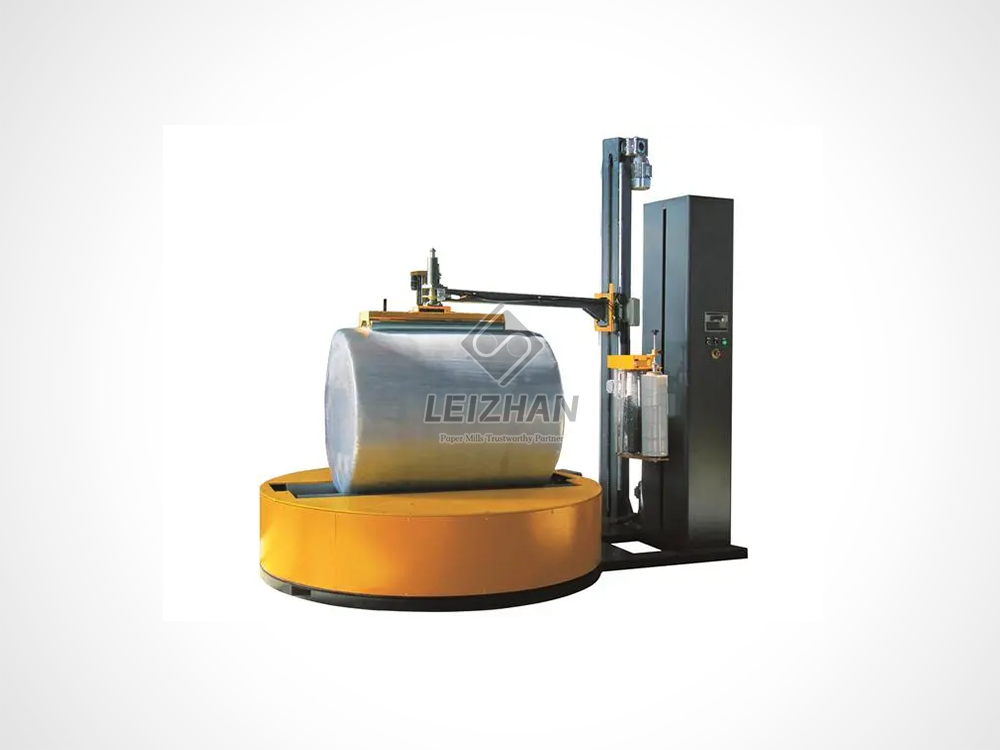
Rotating turntables and high-speed rotary arm wrappers generate immense torque. Without proper boundaries in place, these moving components can easily catch loose clothing, limbs, or forklift forks. Crush hazards are particularly severe near the machine mast and the base of the turntable. If a worker reaches in to adjust a load during a cycle, the lack of a physical barrier can result in catastrophic injuries.
Picture a bustling loading dock at peak hour. Forklifts zip past while operators rush to meet dispatch times. In this chaotic environment, a low-profile turntable without clear boundaries becomes an invisible tripwire. The area surrounding packaging machinery often contains stray film rolls and trailing power cables. When this active zone lacks a clear enclosure, workers face a high risk of tripping. A fall near operating machinery is exceptionally dangerous.
Specifically, stretch film operates under high tension to secure irregular pallets properly. If the film snaps during a high-speed cycle, it causes a violent whiplash effect. Adequate guarding protects the worker from unpredictable film breaks, acting as a shield against the snapping plastic.
Essential Safety Guards for Packaging Systems
To counteract mechanical risks, facilities must implement robust physical defenses. Relying on operator awareness is never enough. The following integrated systems form the core of a secure packaging environment.
Physical Fencing and Enclosures
The most fundamental method of hazard isolation is physical separation. Heavy-duty wire mesh or solid steel fencing around the perimeter establishes a clear boundary. These physical barriers prevent unauthorized personnel and stray forklifts from entering the active wrapping zone. Fencing is bolted directly to the concrete floor, providing a permanent perimeter that delineates the operational footprint.
Interlocking Access Gates
For operators to load and unload pallets, access points through the fencing are required. These access points utilize interlocking systems to provide secure control. Interlock switches connect directly to the main control panel. The system simply cannot operate unless the safety guard gate is securely closed and electronically locked. If an operator opens the gate while the machine is in motion, the circuit breaks immediately. This foolproof mechanism cuts power to the drive motors instantly.
Safety Bumpers and Pressure-Sensitive Mats
In scenarios where full fencing is not feasible, tactile devices offer critical protection. Pressure-sensitive mats surround the machine base. They detect the weight of a person stepping onto them to instantly pause the wrapping cycle. Similarly, safety bumpers attach to the leading edges of moving components like rotary arms. Upon physical contact, the bumper compresses and triggers an immediate halt.
| Guard Mechanism | How It Works | Best Application Scenario | Throughput Impact |
| Steel Fencing | Physical barrier bolted to the floor | High-traffic areas with heavy forklift movement | Low. Requires manual gate operation. |
| Photoelectric Sensors | Infrared beams detect intrusion | High-speed conveyor-fed automated lines | High. Seamless pallet entry and exit. |
| Pressure Mats | Tactile weight detection on the floor | Semi-automatic standalone turntables | Medium. Good for tight spaces. |
How Light Curtains Revolutionize Protection
While physical fences provide excellent protection, they can sometimes impede workflow. High-throughput facilities require constant forklift access. This is where advanced photoelectric technology provides an optimized modern solution.
A light curtain is a highly sophisticated photoelectric device used to safeguard personnel. It consists of a transmitter and a receiver. The transmitter projects an invisible grid of infrared light beams across the access points of the packaging machinery. This creates a virtual barrier rather than a physical one. Consequently, it allows for a more open floor plan while maintaining strict hazard protocols.
The mechanics of this infrared system are highly responsive. If an operator hand or a misplaced pallet breaks any part of the infrared grid, the control system reacts in milliseconds. The programmable logic controller receives the signal and triggers an immediate halt to all moving parts. It engages mechanical brakes to stop the turntable instantly.
Furthermore, advanced systems feature muting capabilities. Muting allows the system to temporarily suspend the protective function to let a wrapped pallet exit via a conveyor. It does this without stopping the machine, while still detecting human entry. This proves that high throughput and strict hazard prevention can seamlessly coexist.
Emergency Stop Systems: Your Last Line of Defense
Despite the implementation of automated barriers, manual intervention mechanisms remain a critical component of machine design. Unforeseen anomalies require immediate human override. You cannot rely solely on automated sensors when mechanical failures occur.
An emergency stop button serves as the ultimate fail-safe. When pressed, it immediately cuts the electrical power to all drive motors and applies mechanical brakes. This instantaneous shutdown prevents minor mechanical issues from escalating into catastrophic workplace accidents. Unlike a standard pause button, an emergency override requires a manual reset procedure before the machine can be restarted.
For this system to be effective, it must be highly visible and easily accessible. Standard placement includes the main operator control panel, the film carriage assembly, and areas adjacent to the loading zones. Anyone in the vicinity must be able to reach a button within a split second.
Many industrial setups utilize supplementary mechanisms like safety trip cords. These heavy-duty cords run along the entire perimeter of the machine. They allow operators to halt the apparatus instantly by pulling the cord from any angle. This provides comprehensive coverage even if the worker is trapped.
Actionable Steps to Choosing the Right Equipment
Selecting the correct machinery requires an objective engineering approach. Stop guessing about load stability and throughput needs. Follow these standardized criteria to ensure optimal performance.
First, assess your load profile with hard numbers. If your typical pallets weigh up to two thousand kilograms, a heavy-duty frequency-controlled turntable is required. Highly unstable loads require rotary arm wrappers that keep the pallet stationary on the floor. This eliminates the risk of the load toppling during high-speed rotation.
Second, demand advanced film delivery systems. Look for powered pre-stretch carriages capable of reaching two hundred and fifty percent to three hundred percent stretch ratios. These mechanisms not only secure the load tighter but eliminate the manual strain of pulling film by hand. Automated film clamping and cutting features further remove the operator from the hazard zone at the end of every cycle.
Third, verify the control architecture. Modern industrial wrappers should feature a programmable logic controller with an intuitive touch screen interface. The electrical cabinet must support comprehensive lock-out tag-out procedures. Secure maintenance access is just as critical as daily operational security.
Finally, partner with a reputable manufacturer. Invest in trusted industry brands that prioritize built-in engineering over aftermarket retrofits. Factory-integrated systems perform more reliably than third-party add-ons.
The Return on Investment of Safety: Driving Costs Down
Investing in robust protective mechanisms is not merely a regulatory compliance exercise. It is a strategic financial decision that yields a measurable return on investment.
Documented operational upgrades directly impact your bottom line. Insurance providers frequently reduce liability rates for facilities that proactively install advanced guarding and comprehensive hazard protocols. A lower incident rate translates directly to significantly lower annual insurance overhead.
Beyond insurance, a secure working environment significantly improves employee morale. When workers feel protected from severe mechanical hazards, job satisfaction rises. Reducing employee turnover saves organizations thousands of dollars in constant recruitment and training costs.
In addition, advanced automated systems maximize film yield. Facilities often save substantial capital annually simply by reducing wasted plastic. This material savings rapidly offsets the initial capital expense of the machinery. Consistent operation ensures maximum uptime and predictable productivity.
Conclusion
The primary goal of end-of-line packaging is to secure pallets tightly for transit. Accomplishing this without compromising the well-being of your workforce is paramount. The shift from manual labor to automated machinery eliminates ergonomic strains, but it introduces kinetic risks that must be managed with precision.
Features like physical fencing, infrared optical fields, and immediate manual overrides are essential investments. By neutralizing pinch points and preventing forklift collisions, modern machinery ensures a smooth workflow.
Do not wait for an incident to reevaluate your warehouse protocols. Upgrade your packaging line to find the perfect balance of efficiency and hazard prevention. Ready to eliminate warehouse hazards while boosting your packaging throughput? Explore the high-performance, safety-integrated machinery at Leizhan Paper Tech. Visit https://www.leizhanpapertech.com to find the perfect automated wrapping solution tailored to your operational needs.
Frequently Asked Questions
What OSHA standards apply to stretch wrappers?
In industrial settings, stretch wrappers fall under general machinery guarding standards. Regulations require that any machine part, function, or process that may cause injury must be safeguarded. This includes enclosing rotating turntables and ensuring pinch points on film carriages are physically inaccessible during operation.
How do safety scanners differ from light curtains?
While both use photoelectric technology, they operate differently. A light curtain creates a vertical, two-dimensional invisible wall across a specific access point. A laser safety scanner sweeps a horizontal plane across the floor, creating customizable warning and stop zones around the entire perimeter of the machine. Scanners are highly effective for complex, open-floor layouts.
Can I add a protective enclosure to my existing equipment?
Yes, many modern protective features can be retrofitted to older machines. However, depending on the age and electrical wiring of your current equipment, upgrading to a completely new machine with factory-integrated systems often proves more cost-effective and reliable.
Which is better for operator protection: physical fencing or infrared sensors?
It depends heavily on your specific operation. Physical fencing provides a robust barrier ideal for heavy-traffic areas where forklift collisions are a major concern. An infrared barrier offers excellent protection while allowing for faster throughput, making it ideal for high-speed automated lines.
How often should the emergency override button be tested?
An emergency override mechanism should be tested regularly. Operators should perform this functional test during routine daily or weekly maintenance checks to ensure the machine halts immediately and the reset function works properly.


