Introduction
When upgrading facility packaging lines, operations managers always hit the same wall. Who exactly will run the new equipment? Fully autonomous systems run themselves but cost a fortune. Manual wrapping drains your crew. A Semi Automatic Pallet Wrapping Machine hits the sweet spot between mechanical muscle and human control. This guide breaks down the exact floor roles that handle these machines daily.
We will look at the necessary skills and the exact workflow from dropping the pallet to cutting the film. Understanding this human element is how you calculate real return on investment. If you want to kill the hand-wrap process, this breakdown shows how the equipment fits your current team without causing operational friction.
Key Takeaways
- Versatile Operation: You do not need a specialized technician. Existing warehouse staff operate this equipment, ensuring smooth integration.
- Minimal Human Intervention: Manual tasks are brief. The operator simply loads the pallet, attaches the film tail, presses a button, and cuts the film at the end.
- Enhanced Worker Protection: Moving to semi-automated solutions kills the physical strain and ergonomic hazards linked to manual wrapping.
- Straightforward Deployment: Modern machines feature smart control panels. Instruction is quick and highly effective.
- Cost-Effective Choice: This machinery bridges the gap between massive capital expenditures of fully automatic lines and the unsustainable labor costs of manual work.
Industry Trends in Warehouse Labor
What is happening on the warehouse floor right now? Recent supply chain data shows a massive shift in how facilities allocate human capital. Chronic staff shortages and high turnover rates are forcing directors to rethink manual labor. We are seeing a hard pivot toward collaborative automation. Instead of buying million-dollar autonomous conveyor lines that displace workers, smart facilities use semi-automated equipment. This technology bridges the gap. It keeps your experienced personnel on the floor but removes the back-breaking physical strain. Operators are evolving from manual laborers into machine supervisors.
The Core Roles: Who Actually Runs the Equipment?
You do not need to hire a dedicated packaging engineer. The responsibility simply folds into existing workflows. The inherent beauty of this technology lies in its accessibility.
The Forklift Driver
Usually, the person dropping the pallet wraps it. The Forklift Driver backs up, steps off the lift, secures the film tail, and hits the button. Combining material handling and packaging prevents bottlenecks. You keep outbound goods flowing steadily without waiting for a separate specialist.
Shipping and Receiving Clerks
In smaller hubs, general floor staff handle this as a standard end-of-line duty. The machine does the heavy lifting and precise tensioning. Therefore, a clerk of any physical stature can process forty pallets an hour without the severe fatigue of hand wrapping.
Dedicated Packaging Operators
In contrast, high-volume manufacturing plants processing hundreds of loads daily might station an operator permanently at the wrapper. Their sole focus is managing continuous cycles while material handlers feed them raw pallets. This division of labor maximizes turntable throughput.
Step-by-Step: The Operator Workflow
How much effort does this actually save? Let us look at the standard sequence. The entire process is standardized and highly repeatable.
Loading the Turntable
The workflow begins by placing the wooden pallet onto the steel deck. If they use a manual pallet jack, the machine requires a low-profile ramp. Centering the load is critical. Off-center loads wear out the turntable bearings prematurely and cause vibration.
Attaching the Stretch Film
The operator pulls a short film tail from the carriage. They tie or tuck it around a wooden corner block. This vital action anchors the plastic so the pre-stretch rollers can build proper tension.
Initiating the Sequence
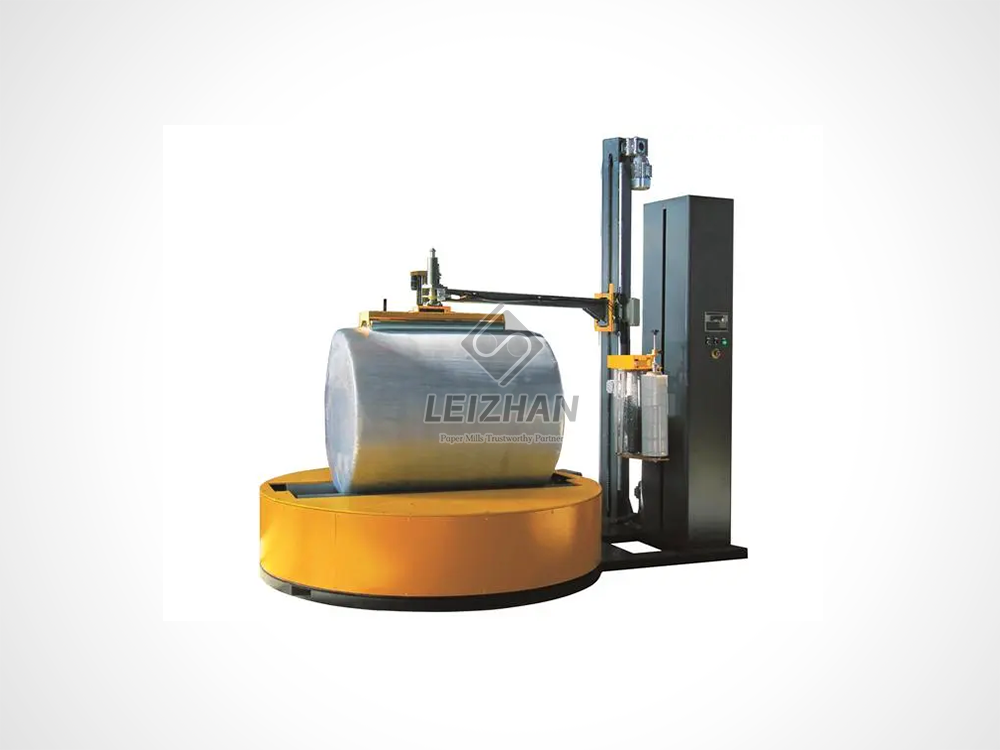
Stepping behind the safety line, the operator hits the Cycle Start button. Instantly, the PLC takes over. The machine runs its programmed recipe of bottom wraps and vertical carriage travel.
Completing the Wrap
The carriage descends and the turntable stops. The operator severs the film, smooths the tail against the boxes, and removes the finished load for staging.
Operator Training: Setting Your Team Up for Success
Implementing new tech requires solid instruction. Fortunately, Operator Training on these systems takes about one shift.
Understanding the HMI Panel
Operators learn to adjust tension and turntable speed. Modern panels use visual icons instead of confusing text menus. This destroys language barriers on the floor and makes navigation seamless.
Loading the Film Carriage
This is the most critical lesson. Staff must memorize the threading diagram. Passing the film through intricate pre-stretch rollers incorrectly ruins the stretch yield. Proper threading prevents pinch-point injuries and saves material.
Basic Troubleshooting
If a sharp box corner snaps the film, the operator must know how to pause the machine, reattach the plastic, and resume without starting over. Wiping down photo-eye sensors is another daily habit we teach to ensure accurate height detection.
Ergonomics and Workplace Protection
Moving to automation is a massive occupational health upgrade. Warehouses must prioritize ergonomics to protect their workforce and mitigate liability.
Killing the Dizzy Walk
Manual wrapping means walking backward in tight circles while bent over holding a heavy roll. We call this the dizzy walk. It destroys lower backs and causes vertigo. Deploying a machine eliminates this hazard completely.
Standard Protection Protocols
Modern industrial wrappers feature serious Safety engineering. Operators rely on hard-wired emergency stop buttons. Furthermore, anti-crush sensors sit under the film carriage. If it hits an obstacle on the way down, it reverses instantly to prevent crushing injuries.
Equipment Selection: Matching the Machine to the Operator
As an engineer, I see companies buy the wrong machine constantly. You must match the equipment specs to your daily volume and load type. Here is a direct comparison to guide your choice.
| Feature | Manual Hand Wrapping | Semi-Automatic Wrapper | Fully Automatic Line |
| Operator Involvement | 100 percent manual labor | Load pallet, attach film, press start | Zero intervention required |
| Physical Strain | Severe back and joint fatigue | Minimal | None |
| Throughput Capacity | 10 to 15 pallets per hour | 20 to 40 pallets per hour | Up to 100 pallets per hour |
| Film Cost | High waste and poor stretch | Optimized via pre-stretch motors | Highly optimized |
Do not guess what you need. Look at the hard numbers. If your facility processes irregular loads, a standard turntable wrapper with a 1500mm diameter and a 2000kg weight capacity is your baseline. Ensure the machine features a powered pre-stretch carriage capable of 250 percent to 300 percent stretch. This specific parameter is what slashes your consumable costs. The control system should run on a reliable PLC, allowing the operator to save specific wrap recipes for different product lines.
The ROI of Empowering Your Operators
This is a commercial play, not just a comfort upgrade. Procuring a semi-automatic machine generates a measurable return on investment.
Time is Money
A machine wraps a pallet in two minutes. Hand wrapping takes five. Over a hundred pallets, you recover hours of lost productivity. Time efficiency is your most immediate benefit.
Reallocating Labor
Free your staff from the dizzy walk. Move them to picking complex orders or loading outbound trucks faster. These tasks actually generate revenue and drive your business forward.
Consistent Quality
Operators get tired. Machines do not. An employee applies less tension at the end of a long shift. Operator-controlled wrappers guarantee mathematically consistent containment force every single time. This stops transit damage and costly freight chargebacks.
Conclusion
You do not need an expensive contractor to run a semi-automatic wrapper. Your forklift driver or shipping clerk can master it in an hour. By automating the brutal physical work while keeping human quality control, you boost floor morale and operational speed. Ready to stop securing loads by hand? Evaluate your current volume and upgrade your packaging line. For high-performance equipment tailored to your specific warehouse needs, explore the robust solutions at Leizhan Paper Tech to find the exact machine that fits your workflow and budget.
FAQ
Q1: Do I need a special license to operate a semi automatic pallet wrapping machine?
No special license is required to operate the wrapping machine itself. The control panels are designed for general staff. However, if the operator uses a forklift to load the pallet onto the turntable, they must possess a valid forklift certification according to local safety regulations.
Q2: Can one person operate the machine alone?
Yes, absolutely. The equipment is engineered for single-operator use. One person can easily stage the pallet, attach the film tail, press start, and remove the finished load without any extra floor assistance.
Q3: How long does operator training usually take?
Instruction is very brief. Most warehouse workers learn how to safely thread the stretch film, navigate the digital interface, and execute a complete wrap cycle confidently in under an hour.
Q4: Are semi-automatic wrappers safe for operators?
Yes, they are highly secure. They heavily mitigate the ergonomic risks associated with manual wrapping. Modern machines come with multiple fail-safes including emergency stops and anti-drop carriages.
Q5: What happens if the film breaks during the cycle?
If a tear occurs mid-wrap, the operator presses the pause button on the control panel. They manually reattach the film to the load, clear any tangled plastic, and press start to resume. Proper tension settings usually prevent this issue.
Q6: How much does a semi automatic pallet wrapper cost?
Prices vary based on specifications and features. A standard entry-level machine typically ranges from four thousand to eight thousand dollars. Advanced models with built-in scales or high-end pre-stretch carriages will cost more, but they offer faster ROI through massive film savings.
Q7: What is the maintenance schedule for a pallet wrapper?
Routine maintenance is simple and can often be done by the operator. It involves wiping down photo-eye sensors daily, greasing the turntable bearings every few months, and inspecting the pre-stretch rollers for built-up adhesive residue. Following a basic monthly checklist keeps downtime to an absolute minimum.


