Are labor shortages silently choking your warehouse throughput? Many logistics facilities struggle to maintain packaging efficiency when staffing levels fluctuate. This creates a severe bottleneck at the very end of the production line. To combat this, upgrading to fully automated machinery seems like the ultimate silver bullet.
But does this advanced equipment truly run without any human presence? Let us look at the mechanics behind these systems. We will dissect how they differ from semi-automatic alternatives and outline the critical parameters facility managers must weigh before investing in end-of-line automation.
Key Takeaways
- True Operator Independence: An automated system does not require an active worker to attach, cut, or secure the stretch film. The entire mechanical cycle is pre-programmed and executed autonomously.
- The Power of Integration: Maximum warehouse efficiency is achieved when the wrapping equipment is directly integrated into a continuous material flow. This allows pallets to transition seamlessly without manual forklift intervention.
- Strategic Oversight: Human workers transition from manual laborers to strategic supervisors. They rely heavily on digital dashboards to track machine performance and handle occasional technical faults.
- Unmatched Consistency: By systematically removing human error and physical fatigue, fully automated systems drastically increase packaging reliability and load containment.
- Smart Investment: The initial capital expenditure is notably higher than that of semi-automatic wrappers. However, the long-term operational savings in labor reallocation and film reduction make it a highly profitable asset.
Decoding the Fully Automated Stretch Wrapper
A Fully Automatic Pallet Wrapping Machine is an advanced piece of end-of-line packaging equipment. It is engineered to apply plastic film to loaded pallets without manual intervention during the actual wrapping cycle. Basic wrappers force a worker to bend down, tie the film to the wood base, and slice it off later. A fully automated apparatus utilizes mechanical clamps, hot wire cutters, and motorized wipe-down brushes. It secures the load entirely on its own.
These sophisticated machines are purpose-built for high-volume environments. Speed, load consistency, and workplace safety are non-negotiable here. Depending on load stability and throughput demands, they are configured as traditional turntables, rotary arms, or high-speed ring wrappers.
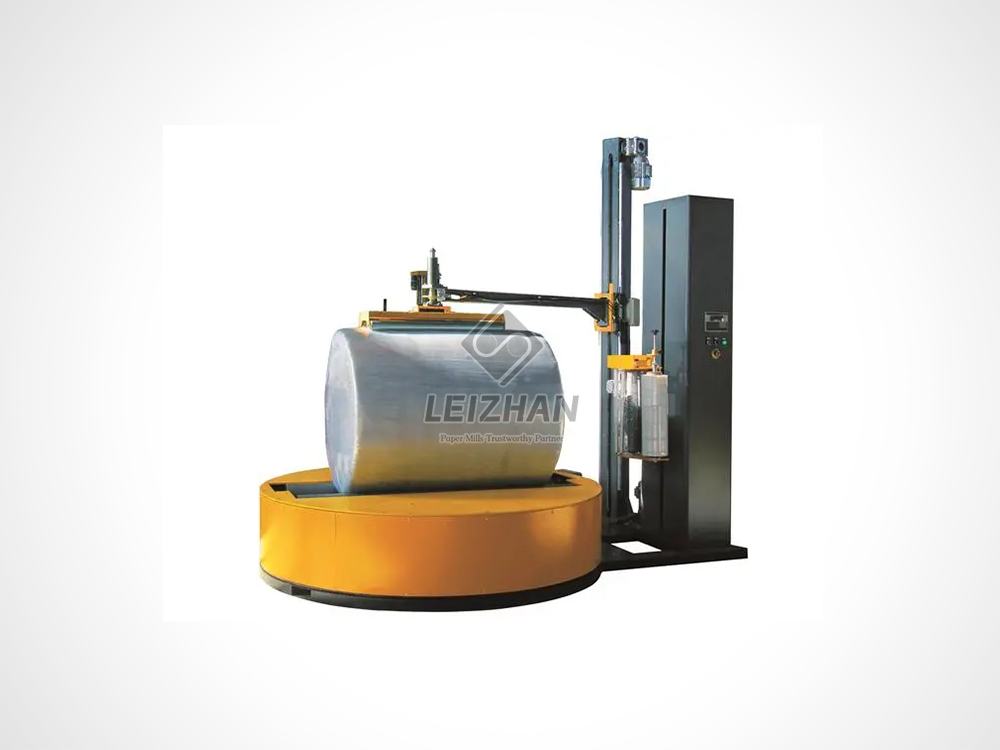
The Mechanics of Operator-Free Packaging
The short answer to whether these machines need an operator is no. They do not require a traditional worker stationed at the control panel. Once properly calibrated, the repetitive physical tasks are handled entirely by internal robotics and programmable logic controllers.
Specifically, when a loaded pallet arrives via an upstream conveyor, photoelectric sensors detect its presence. The system precisely positions it within the wrapping zone. An automated mechanical clamp grips the leading edge of the stretch film. As the cycle initiates, the machine dispenses film based on meticulously pre-programmed tension parameters. Once fully encapsulated, a heated wire cleanly severs the plastic. A motorized brush then seals the trailing tail to the load. Finally, the wrapped pallet is conveyed out of the zone.
Industry Trends: The Shift Toward Autonomous Logistics
Current industry analysis reveals a stark reality for modern logistics centers. Facilities are battling unprecedented labor turnover rates and rising hourly wages. Driven by the exponential boom in e-commerce fulfillment, supply chain managers are aggressively shifting toward Unmanned Operation. Automation is no longer viewed as a luxury. It is a baseline requirement to keep up with global shipping demands.
Market data indicates a massive pivot toward integrated packaging lines. Warehouses are moving away from isolated workstations. Instead, they favor continuous material flow systems. This transition is made possible by sophisticated PLCs and dynamic sensors. Companies can now pull manual labor away from the monotonous packaging zone. They reallocate their workforce to more complex tasks like quality assurance and inventory routing.
Semi-Automatic vs. Fully Automatic: A Technical Comparison
Choosing the right packaging equipment requires a clear understanding of operational disparities. Buyers must rigorously weigh their current throughput volume against long-term growth projections. Let us break down the core differences.
| Feature | Semi-Automatic Wrapper | Fully Automatic Wrapper |
| Labor Requirement | Dedicated operator required per cycle | Zero active operators needed |
| Film Attachment | Manual tying to the pallet base | Auto-clamp and cut mechanism |
| Throughput Capacity | 15 to 30 pallets per hour | 40 to 120+ pallets per hour |
| Material Flow | Forklift staging required | Seamless conveyor integration |
| Film Efficiency | Variable based on operator skill | High efficiency via motorized pre-stretch |
Speed and consistency are critical metrics. Semi-automatic wrappers are inherently bottlenecked by human speed and physical fatigue. Even with a highly efficient worker, a standard turntable maxes out quickly. Conversely, an automated system operates continuously. By eliminating manual start-and-stop delays, fully automatic equipment maximizes operational Uptime. The packaging zone never becomes the chokepoint that paralyzes upstream manufacturing.
Engineering the Right Setup: Selection Criteria
Investing in automated packaging equipment is a massive capital decision. Decision-makers must look far beyond basic specifications. You must ensure the equipment integrates seamlessly into your specific operational ecosystem. Based on field engineering standards, here are the practical parameters to evaluate.
The physical footprint of a fully automated system is significantly larger than a standalone unit. Stringent safety regulations mandate physical safety fencing and optical light curtains. Furthermore, the required Conveyor Line segments demand substantial linear floor space. Facility engineers must conduct a thorough layout assessment before installation.
Not all wrappers handle every product type. For standard boxed goods, a traditional automated turntable wrapper is highly effective. Look for industrial-grade specifications. For instance, robust models feature turntable speeds up to 15 rpm and can handle load capacities of 2000 kg. If your facility processes unstable loads like tall stacks of empty bottles, spinning the pallet will cause a collapse. In these scenarios, a rotary arm wrapper is mandatory. The pallet remains completely stationary on the conveyor while the film carriage rotates around it. Additionally, prioritize systems offering a pre-stretch ratio of 250% to 300%. This specific parameter dictates your long-term consumable savings.
The Role of Digital Diagnostics in Unmanned Systems
The integration of smart technology has fundamentally transformed warehouse infrastructure. The transition from manual labor to automation is heavily supported by advanced software capabilities.
Today's cutting-edge wrappers feature network-connected sensors. Remote Monitoring allows a single maintenance technician to oversee multiple wrapping cells from a centralized control room. Instead of physically patrolling the lines, technicians rely on real-time digital dashboards. Alerts notify staff only when intervention is strictly necessary. For example, the interface might flag a low film roll or an obstructed photo-eye sensor. This precise communication ensures human labor is deployed exactly when needed.
Real-World Challenges and Troubleshooting
Implementing complex mechatronic machines introduces specific operational challenges. In an unmanned environment, the sharp snap of a film break is a major disruption. Poor quality consumables or sharp pallet corners can cause the stretch film to tear mid-cycle. This brings the automated process to an immediate halt.
The primary defense against this issue is utilizing puncture-resistant machine-grade stretch film. Modern equipment is often outfitted with auto-film-recovery technology. If a minor tear occurs, the system automatically attempts to re-grip and re-apply the plastic. This preserves continuous production without requiring human intervention.
Transitioning your workforce also requires a shift in technical skill sets. Staff accustomed to driving forklifts must learn to navigate HMI touchscreens. Partnering with reliable equipment manufacturers ensures your team receives the necessary on-site training.
FAQ
Can an automated wrapper work without a conveyor system?
It is mechanically possible for an automated wrapper to function without a conveyor. However, doing so defeats the fundamental purpose of unmanned operation. A forklift driver would still need to manually transport the pallet into the wrapping zone and wait for the cycle to finish. Integrating a conveyor system creates a continuous packaging flow.
How often does a technician need to interact with the equipment?
In a properly calibrated system, human interaction is minimal. A technician typically only intervenes to replenish stretch film rolls or perform scheduled preventive maintenance. The frequency of film changes depends on production volume and the machine's pre-stretch settings.
What happens if the stretch film breaks during a cycle?
When a film break occurs, tension-monitoring sensors detect the sudden loss of resistance. The machine's logic controller instantly pauses the cycle. Premium models feature auto-recovery mechanisms that attempt to re-grip the broken tail. Standard models will send a digital alert to a technician's interface for manual reset.
Are rotary arm wrappers better than turntable models?
The superiority depends entirely on your product type. Rotary arm wrappers are essential for extremely heavy or highly unstable loads because the pallet remains stationary. Turntable models are highly efficient and cost-effective for standard, stable pallet loads. Both offer exceptional automation capabilities when matched with the correct application.
How does a powered pre-stretch carriage save money?
A powered pre-stretch carriage uses two motorized rollers running at different speeds to elongate the plastic film before it touches the load. Stretching the film by 250% to 300% drastically reduces the volume of plastic required per pallet. This mechanism significantly cuts annual consumable costs, accelerating your return on investment.
Conclusion and Next Steps
An automated stretch wrapper thrives autonomously when integrated with strategic material handling systems. Transitioning to operator-free production guarantees unmatched packaging consistency and protects critical shipping schedules.
If labor bottlenecks are throttling your throughput, it is time to upgrade your packaging line. Evaluate your floor layout, load specifications, and throughput goals. To explore industrial-grade stretch wrapping solutions tailored to your facility, visit Leizhan Paper Tech. Discover the right equipment to optimize your warehouse efficiency and future-proof your logistics operations.


