Warehouse managers and packaging engineers frequently encounter a frustrating end-of-line dilemma. Damaged products and bottlenecked shipping schedules severely cripple daily operations. The mechanical limitations of standard turntable wrappers often cause these issues. As production volumes scale, facilities face the logistical nightmare of securing challenging loads. Some stacks simply cannot survive a spinning turntable. Enter the Rotary Arm Stretch Wrapper. This heavy-duty, high-speed solution is engineered specifically for demanding packaging environments. It keeps the pallet completely stationary while a mechanical arm rotates around it to apply stretch film. This system eliminates centrifugal force entirely. Let us explore exactly when and why this specific machinery outperforms other alternatives to ensure a robust return on investment for your facility.
Key Takeaways
- Stationary Wrapping is Safer: Keeping the pallet completely still eliminates centrifugal force. This makes the machine the undisputed winner for securing extremely light products or unusually tall pallets.
- No Weight Limits: The pallet rests directly on the warehouse floor or a heavy-duty conveyor system. Therefore, the machine imposes no maximum weight limit.
- High-Speed Processing: Advanced automated models offer unmatched processing speeds for bulk production environments. Dual film carriers specifically boost this output.
- Flexible Footprint: These systems integrate seamlessly into existing conveyor lines or wall-mounted setups. This allows unobstructed floor cleaning in washdown environments.
- Strong ROI: A higher initial capital expenditure is offset by sustained savings in stretch film, reduced product damage, and lower labor costs.
Current Industry Trends Shaping End-of-Line Packaging
Recent market analyses reveal a significant shift in industrial packaging strategies. Logistics managers are rapidly moving away from semi-automatic equipment in favor of fully automated touchless systems. This transition is largely driven by severe warehouse labor shortages and the relentless pace of global electronic commerce. Modern facilities demand machinery that communicates directly with smart conveyor networks and automated guided vehicles. Furthermore, sustainability initiatives push plants to reduce plastic waste. Equipment featuring advanced pre-stretch technology meets these green mandates by maximizing film yield. In this evolving landscape, stationary wrapping technology has transitioned from a niche solution to a critical asset for high-volume fulfillment centers.
Understanding the Rotary Arm Architecture
The Mechanics of Stationary Wrapping
To fully grasp the operational advantages of this equipment, we must examine its core mechanics. Traditional wrapping systems require the product itself to move. In contrast, stationary stretch machinery revolves around the principle of static load containment. The pallet is placed onto the wrapping zone. This can be directly on the facility concrete floor or along an automated inline conveyor. The load remains entirely motionless throughout the entire cycle. An overhead mechanical gantry equipped with a sophisticated film carriage rotates around the static pallet. It dispenses and stretches the film according to pre-programmed tension settings. The product is wrapped from bottom to top seamlessly.
Rotary Arm vs. Turntable Dynamics
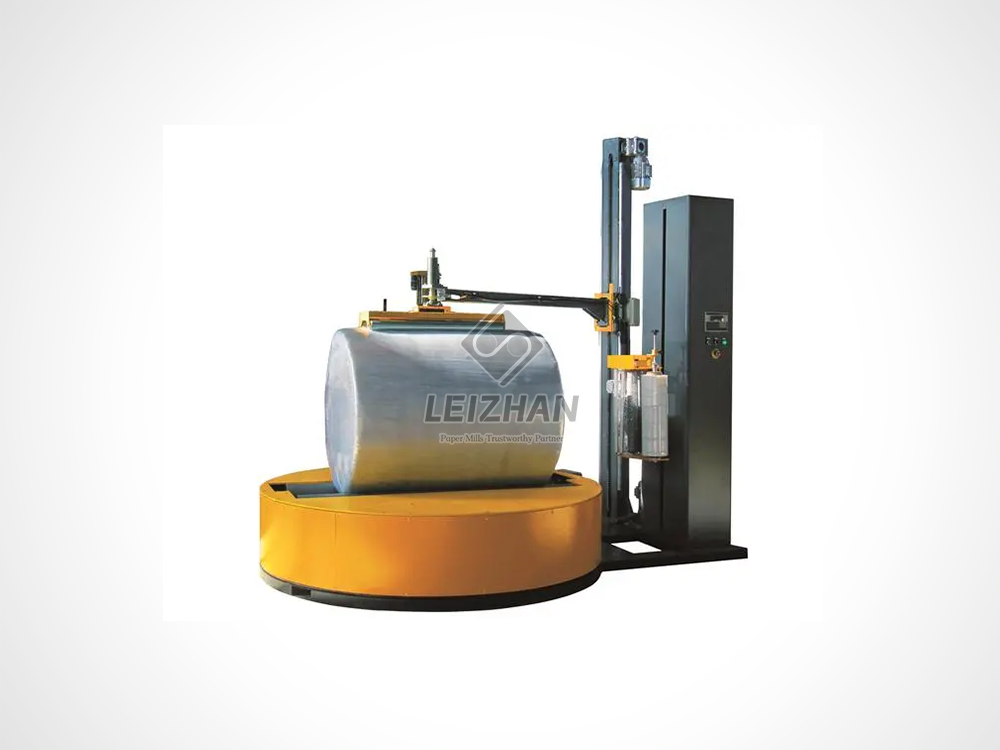
The fundamental distinction between these two primary wrapping technologies lies in motion dynamics. Turntable wrappers spin the heavy load to pull the plastic film from a stationary mast. Rotary arms spin the lightweight film carriage around a stationary load. Turntables are highly effective for standard, highly stable, and moderately weighted boxes. However, overhead wrapping systems are specifically engineered to handle the exceptions. They excel in extremes and rigorous demands of high-volume automation.
Winning Scenario 1: Securing Fragile Stacks
The Danger of Centrifugal Force
In warehouse logistics, centrifugal force acts as the primary enemy of load containment. A forklift operator might place a wobbly or oddly shaped pallet onto a turntable. Initiating a spin cycle at 12 to 15 revolutions per minute immediately applies outward radial forces upon the stack. Stable, heavy, uniform boxes handle this well. For a fragile configuration, this rotational force causes individual items to shift, slide, or completely topple. This often happens before the first layer of stretch film is even applied. The result is a chaotic mess of spilled goods and severe safety hazards for nearby personnel.
The Stationary Advantage
Specifically, the overhead arm mechanism entirely neutralizes the variable of centrifugal force. The pallet does not move an inch. Thus, the structural integrity of the stack is perfectly preserved from the initial wrap to the final film cut. Historical data from packaging facilities suggests that stationary wrapping reduces load-shifting incidents to near absolute zero. This advantage is critical when securing an unstable load. Examples include towering stacks of empty PET beverage bottles, feather-light tissue paper bulk packs, or top-heavy retail display pallets lacking a low center of gravity.
Winning Scenario 2: Managing Massive Weights
Bypassing Turntable Weight Capacities
Standard turntable wrappers are strictly constrained by the physical limitations of their mechanical sub-components. The entire weight of the pallet rests upon the rotating base of the machine. Load-bearing rollers support this base, driven by an internal motor. Over time, subjecting these specific components to excessive weight causes rapid wear and tear. Most standard turntables have a strict weight capacity capping out around 4,000 to 5,000 pounds. Exceeding these limits inevitably leads to premature bearing failure and costly operational downtime.
Floor-Level and Conveyor Wrapping Integration
By design, a rotary arm system operates suspended over the floor or integrated above a heavy-duty conveyor system. Consequently, the wrapping machine itself bears absolutely zero pallet weight. The load is supported entirely by the structural concrete slab of the facility or the reinforced steel of the conveyor system. This unique architectural difference makes it the definitive choice for industries where a heavy pallet is the standard daily output. Facilities handling raw construction materials like bricks, heavy metal automotive stampings, or bulk liquid totes rely heavily on this stationary design. It safely secures massive loads without destroying their packaging machinery.
Winning Scenario 3: Maximizing Output for Bulk Production
Meeting High-Volume Demands
As manufacturing operations scale, manual forklift interventions become a severe bottleneck. Fully automated rotary arm wrappers detect a pallet via photoelectric sensors. The machine wraps it, cuts the film, and sends it down the line without a single human touch. This dramatically reduces cycle times and keeps the shipping dock flowing.
The Power of Dual Film Carriers
Furthermore, facilities requiring absolute maximum production speeds benefit from advanced configurations. High-speed dual rotary arms are engineered with two separate film carriages mounted on the rotating apparatus. Instead of a single arm applying one layer of film per revolution, these machines apply two overlapping layers simultaneously. Dispensing twice the amount of film per rotation effectively cuts the total wrap cycle time in half. This technological enhancement boosts overall throughput to meet the rigorous shipping schedules of bulk beverage bottling plants and rapidly expanding fulfillment centers.
Winning Scenario 4: Spatial Efficiency and Washdown Compliance
Flexible Installation and Spatial Layouts
Industrial real estate is an incredibly expensive asset. Optimizing warehouse layouts remains a top priority for facility engineers. Traditional turntables demand a large, dedicated footprint. This includes extended maneuvering zones for forklift loading ramps. In contrast, rotary arm systems offer superior spatial flexibility. They can be straddle-mounted over existing automated lines or attached directly to structural support columns. By utilizing vertical air space rather than horizontal footprint, warehouse managers can drastically optimize floor space. This opens up previously blocked lanes for crucial forklift traffic and temporary staging.
The Washdown Advantage for Food and Beverage
In the food, beverage, and pharmaceutical sectors, strict hygiene regulations dictate facility design. These industries operate in washdown environments. They require regular, rigorous cleaning of all floor surfaces with high-pressure water and harsh chemical sanitizers. This prevents bacterial cross-contamination. Standard turntable wrappers are highly problematic here. Their low-to-the-ground motors and bearing tracks trap spilled liquids and debris. This makes them nearly impossible to sanitize thoroughly. Conversely, the rotary arm design places all electrical panels and drive mechanisms safely overhead. Maintenance crews can easily sweep, pressure wash, and sanitize the empty floor beneath the wrapper without risking water ingress to sensitive components.
Technology Comparison: Rotary Arm vs. Turntable Wrappers
To simplify the procurement decision, engineering teams often rely on direct capability comparisons. The following matrix highlights the operational differences between the two primary wrapping architectures.
| Feature | Rotary Arm Wrapper | Turntable Wrapper |
| Load Stability | Stationary load with zero centrifugal force. Ideal for fragile stacks. | Rotating load that is susceptible to shifting at high speeds. |
| Weight Capacity | Unlimited. Weight rests entirely on the floor or conveyor structure. | Strictly limited by turntable bearings, typically 4,000 to 5,000 lbs. |
| Production Speed | High to Ultra-High. Up to 100 plus loads per hour with dual arms. | Low to Medium. Typically 20 to 40 loads per hour. |
| Floor Cleaning | Unobstructed floor access. Perfect for washdown environments. | Motors and tracks block floor access. Hard to sanitize completely. |
Rotary Arm vs. Rotary Ring: Which High-Speed Wrapper Wins?
Understanding the Rotary Ring Wrapper
When evaluating high-speed automated packaging, procurement teams often compare rotary arms to rotary ring stretch wrappers. Both technologies keep the pallet completely stationary. However, their delivery mechanisms differ significantly. A rotary ring wrapper utilizes a large horizontal circular steel track that lowers over the pallet. The film carriage is mounted to this ring and races around the track at blistering speeds to apply the film.
Cost Versus Speed Decision Matrix
Rotary ring machines are undeniably the fastest stretch wrappers available on the market. They are capable of wrapping upwards of 120 to 150 pallets per hour. This extreme speed comes with a massive increase in mechanical complexity and initial capital cost. They also demand highly specialized maintenance protocols due to the intricate slip rings required to power the moving carriage. For the vast majority of mid-to-high volume industrial applications, a rotary arm strikes the optimal balance. It provides excellent high-speed automation and load containment without the prohibitive upfront costs associated with ring technology.
Calculating the Return on Investment
Film Savings and Pre-Stretch Technology
One of the most compelling financial justifications for upgrading to automated machinery is the dramatic reduction in consumable material costs. Modern overhead systems are equipped with powered pre-stretch film carriages. This technology utilizes a series of internally geared motorized rollers to stretch the plastic film before it ever touches the load. Advanced carriages routinely achieve pre-stretch levels of 250 percent to 300 percent. In practical terms, one foot of stretch film off the raw roll is elongated into three or four feet of usable material. This slashes film consumption by up to 50 percent compared to manual hand-wrapping. The result yields thousands of dollars in annual savings.
Labor Reduction and Damage Prevention
Building a solid business case requires a holistic view of warehouse operations. The formula for calculating return on investment encompasses three primary variables. First is labor reallocation. By integrating an inline system, forklift operators no longer sit idle waiting for a wrap cycle to finish. Second is damage prevention. Consistent machine-applied containment force ensures that pallets do not shift during transit. This protects the bottom line from costly reverse logistics and customer disputes. Finally, material efficiency through pre-stretch technology drives down daily expenses. In high-volume settings, the combination of these factors often allows the equipment to fully pay for itself within 12 to 18 months of installation.
Engineering Guide: Choosing the Right Machine for Your Line
Semi-Automatic Versus Fully Automatic Integration
Selecting the correct model requires an objective data-driven assessment of your projected production volume. A standalone semi-automatic rotary arm is ideal for facilities that process lower volumes but still handle highly unstable or exceptionally heavy loads. These models require an operator to drive the pallet into the zone, attach the film tail, press start, and manually cut the film afterward. Alternatively, a fully automatic inline system is mandatory for high-throughput environments. Integrated directly into the conveyor network, these machines feature automatic film attach, cut, and wipe-down mechanisms. They require absolutely zero operator intervention.
Key Technical Specifications to Evaluate
When consulting with equipment manufacturers, packaging engineers must evaluate specific technical parameters to ensure alignment with facility requirements. Use the following criteria as a baseline for your procurement specifications.
- Maximum Wrap Height: Ensure the gantry height accommodates your tallest projected pallet configurations. Standard industrial models typically support wrap heights up to 2400mm.
- Rotation Speed: Measured in revolutions per minute, this directly correlates to your pallets-per-hour capabilities. High-performance rotary arms often operate between 25 to 35 RPM.
- Pre-Stretch Ratio: Verify that the carriage offers a high pre-stretch percentage to maximize film economy. Look for motorized carriages delivering 250 percent to 300 percent stretch capacity.
- Control Systems: Programmable Logic Controllers allow operators to save custom wrap recipes. This enables applying more tension at the base for heavy items and less at the top for fragile goods.
Conclusion
A rotary arm stretch wrapper stands as the definitive equipment winner for demanding logistics environments. It effortlessly secures fragile, unstable loads and bypasses the weight limitations that plague traditional turntables. In addition, it delivers exceptional high-speed throughput without sacrificing valuable warehouse floor space or complicating sanitation protocols. Facility managers should audit their current wrap lines for signs of wear, frequent bottlenecks, or in-transit product damage. If your operations are experiencing these friction points, upgrading to a stationary overhead wrapping system is a strategic investment. It will safeguard your products and streamline your shipping schedules.
Ready to eliminate end-of-line bottlenecks and secure your heaviest loads? Evaluate your facility requirements and choose the right automated packaging solution for your production line. Discover high-performance equipment and technical specifications at Leizhan Paper Tech to find the machinery that perfectly matches your operational needs.
Frequently Asked Questions
Can a rotary arm stretch wrapper be integrated into my existing conveyor system?
Yes, fully automatic models are specifically designed for seamless integration. They can be installed directly over existing powered roller or chain pallet conveyors. This inline setup allows for continuous, touchless wrapping. It significantly reduces forklift traffic and manual handling in the packaging zone.
What is the maximum weight a rotary arm wrapper can handle?
The pallet sits entirely on the concrete floor or the structural steel of a conveyor system, not on the wrapping machine itself. Therefore, there is virtually no weight limit imposed by the wrapper. The maximum capacity depends entirely on the structural integrity of your facility floor or your conveyor weight rating.
Are rotary arm stretch wrappers more expensive than turntable wrappers?
Yes, the initial capital investment for an overhead system is generally higher due to the robust steel structure and advanced engineering required. However, the return on investment is often much faster for high-volume operations. The combined benefits of labor savings, higher processing speeds, reduced product damage, and significant film reduction quickly offset the initial cost.
How much floor space does a rotary arm wrapper require?
While the exact footprint depends on the specific model and necessary safety fencing, they are highly space-efficient. Because they can be wall-mounted or straddle existing conveyor lines, they often optimize warehouse layouts much better than standalone turntable stations. Turntables typically require large, dedicated forklift maneuvering zones and loading ramps.
How often does a rotary arm stretch wrapper require maintenance?
Maintenance frequency depends on production volume and operating environment. Generally, high-volume automated lines require a visual inspection weekly and preventative maintenance quarterly. Since the machine does not bear the weight of the pallet, wear and tear on drive components is significantly lower than turntable models. Regular lubrication of the ring gear and inspection of the film carriage rollers are the primary maintenance tasks.
What type of stretch film is best for a rotary arm wrapper?
Machine-grade cast or blown stretch film is required for optimal performance. Because these wrappers utilize powered pre-stretch carriages, the film must have a high yield strength to accommodate stretches up to 300 percent without tearing. Using standard hand-wrap film on these machines will result in constant web breaks and poor load containment.


