For warehouse and operations managers, the rising cost of labor and the constant pressure to optimize the end-of-line workflow represent significant daily challenges. Preparing the final pallet for shipment is frequently identified as a critical bottleneck in otherwise efficient supply chains. Relying on outdated manual methods bleeds money. Hidden payroll expenses, excessive material waste, and operational inefficiencies silently erode profit margins.
Upgrading to the right equipment is one of the most effective ways to achieve dramatic operational relief. This holds true whether you are transitioning to an intermediate machine or implementing a fully automated robotic system. Beyond merely reducing headcount requirements, these technological upgrades help mitigate workplace injuries. They lower consumable consumption and boost overall facility profitability.
This comprehensive guide will explore the hidden financial drains of manual processes. We will detail the various types of wrapping machinery available on the market and provide a clear framework to help you justify the return on investment for new packaging equipment.
Key Takeaways
- Manual Processing is a Hidden Profit Killer: Relying heavily on human labor for securing loads leads to inconsistent pallet containment, high stretch film waste, and expensive workplace injury claims.
- Intermediate Machines are the Sweet Spot: For a majority of mid-sized warehouse operations, semi-automated technology delivers the optimal balance of upfront affordability and rapid payback.
- Automation Reallocates Labor: Modern equipment empowers management to shift workers away from repetitive, physically demanding tasks toward higher-value roles.
- Material and Injury Savings Compound Returns: Automated machines utilize advanced pre-stretch technology to minimize film costs and drastically reduce ergonomic risks.
- End-of-Line Integration is Key: Selecting the appropriate machinery tailored to your specific volume and load characteristics is essential for maximizing operational efficiency.
Industry Trends: The Shift Toward End-of-Line Automation
Before diving into specific equipment, it is crucial to understand the broader market dynamics driving this shift. Recent supply chain analyses reveal that the warehousing sector is facing unprecedented labor shortages coupled with historic wage inflation. Logistics managers can no longer rely on throwing more bodies at a bottleneck.
Consequently, there is an aggressive industry-wide pivot toward automated end-of-line systems. This transition is not just about increasing processing speed. It is a fundamental survival strategy to maintain profit margins amid rising payroll demands. Facilities that fail to automate their packaging processes are finding themselves unable to compete with the throughput and lower overhead costs of modernized competitors.
The Hidden Costs of Manual Wrapping in Your Facility
To understand the true value of automated equipment, operations managers must first quantify the financial and operational drawbacks of securing pallets by hand. Manual processes often create a false sense of economy. While there is no upfront capital expenditure for machinery, the ongoing operational costs are substantial and compounding.
Time and Labor Inefficiency
Time is a measurable commodity in warehouse management. Industry benchmarks indicate that it takes an average warehouse worker between three and five minutes to wrap a standard pallet, assuming they are working at an optimal, uninterrupted pace. In contrast, automated machines can complete the exact same task in under a minute.
When a facility relies on Manual Wrapping, it inherently creates severe bottlenecks during peak shipping hours. Forklift drivers find themselves queuing at the dock doors, waiting for a single worker to finish securing a load. Over the course of a year, those extra minutes per pallet accumulate into thousands of lost labor hours that could have been utilized elsewhere.
The High Price of Workplace Injuries
Securing a load by hand is an ergonomic nightmare. Picture the physical toll on the dock floor. A worker must repeatedly bend over to tie the film to the base of the wooden skid, walk backward in tight circles, and stretch precariously above their head to secure the top tier of boxes. This physically strenuous motion frequently leads to musculoskeletal disorders, lower back injuries, and fatigue-related accidents.
Reducing these workplace injuries through mechanical assistance directly cuts costs associated with operational downtime. It eliminates expensive workers compensation claims and stabilizes employee turnover rates. A safer dock floor is intrinsically linked to a more profitable operation.
Inconsistent Wrapping and Material Waste
Human fatigue inevitably leads to inconsistent film tension. As a shift progresses into its final hours, workers naturally apply less force. This results in loosely wrapped loads that are highly susceptible to shifting, toppling, and catastrophic damage during transit. To compensate for this lack of tension, workers often over-wrap the pallet, applying far more layers of film than necessary.
Without the mechanical precision of a motorized carriage, the process relies entirely on human strength. This is an unreliable variable that wastes expensive stretch film and inflates consumable budgets month after month.
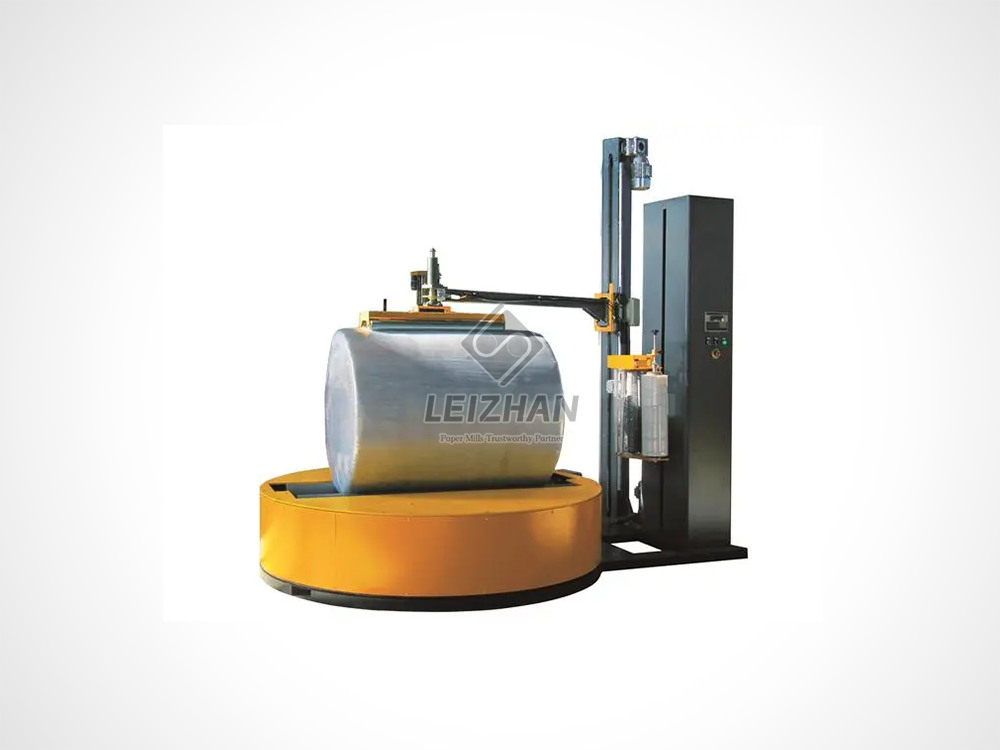
Semi-Automatic Wrappers: The Engineering Sweet Spot
For the majority of mid-sized distribution centers and manufacturing plants, jumping straight from manual labor to fully automated, zero-touch robotic systems is financially daunting and often unnecessary. The most practical and cost-effective transition lies in intermediate technology.
What is a Semi-Automatic Wrapper?
A Semi Automatic Wrapper is a robust piece of machinery that requires minimal human intervention to operate. In a typical scenario, a forklift or pallet jack driver places the loaded skid onto the machine platform. The operator then manually threads the tail of the stretch film through the carriage, attaches it to the base of the load, and presses a start button.
The machine then takes over the strenuous work. A programmable logic controller dictates the rotation of the load and moves the film carriage up and down according to the selected wrap cycle. Once the cycle finishes, the operator simply cuts the film, secures the tail, and drives the pallet onto the waiting truck.
Core Equipment Parameters to Look For
From an engineering standpoint, you want equipment built for industrial abuse. Top-tier machines, such as those engineered by LeiZhan Paper Tech, typically feature heavy-duty steel construction capable of handling load capacities between 1500kg and 2000kg. Turntable speeds should be adjustable, generally ranging from 0 to 12 revolutions per minute, allowing operators to dial in the perfect speed for unstable loads.
Types of Semi-Automatic Machines
Different operational environments require different machine configurations. Below is an objective breakdown of the primary types available:
- Turntable Wrappers: The pallet sits on a rotating platform while the film carriage moves vertically. These are cost-effective, feature a compact footprint, and are ideal for standard, stable loads like uniform cardboard boxes.
- Straddle Wrappers: The pallet remains stationary on the floor while a mechanical arm rotates around it. These are absolutely essential for extremely heavy, fragile, or highly unstable loads such as tall displays or empty PET bottles that might topple if spun on a turntable.
- Orbital Wrappers: The product is fed horizontally through a rotating ring. These are specially designed for elongated, oddly shaped items such as pipes, lumber, metal extrusions, or doors that cannot fit on standard pallets.
Fully Automatic Solutions for High-Volume Operations
When a facility volume exceeds the capacity of semi-automatic processes, enterprise-level automation becomes a mathematical necessity. Fully automatic systems are engineered for continuous, high-speed environments running multiple shifts.
True End-of-Line Automation
Fully automatic wrappers represent the absolute peak of packaging efficiency. These machines integrate directly into your existing Packaging Line. As a pallet travels down the conveyor from an automated palletizer, photoelectric sensors detect its arrival. The machine automatically clamps the film, wraps the load according to the specific dimensions detected, cuts the film, and heat-seals the tail against the load.
Specifically, this process requires zero manual intervention. There is no operator required to attach or cut the film, completely removing human labor from the immediate wrapping equation.
Eliminating Forklift Operator Downtime
In a standard semi-automatic setup, a forklift driver must dismount their vehicle, walk to the machine, attach the film, wait, cut the film, and remount. With a fully automatic system, this repetitive downtime is entirely eliminated. Forklift operators simply place the pallet onto the infeed conveyor and immediately reverse to retrieve the next load.
Keeping drivers strictly on their forklifts maximizes their productivity. It ensures that the flow of goods from the warehouse racks to the loading dock remains fluid and uninterrupted.
Core Comparison: Manual vs. Semi-Auto vs. Fully-Auto
To provide a clear engineering perspective, let us break down the performance metrics across the three primary methods of load containment.
| Feature | Manual Wrapping | Semi-Automatic | Fully Automatic |
| Throughput Speed | 10-15 pallets per hour | 25-40 pallets per hour | 40-100+ pallets per hour |
| Film Stretch Yield | 10% - 20% max | 200% - 300% (Powered) | 250% - 300%+ (Powered) |
| Labor Requirement | High (Continuous physical labor) | Low (Attach/cut film only) | Zero (Fully inline) |
| Best Suited For | Under 15 pallets per day | 15 to 100 pallets per day | 100+ pallets per day |
Machine Stretch Film vs. Hand Stretch Film: The Engineering Difference
Labor is only one half of the operational expense equation. Material consumption is the other critical factor. The mechanics behind film delivery heavily dictate long-term packaging costs.
The Power of Pre-Stretch Technology
Hand stretch film is manufactured to be stretched by human force, which typically maxes out at a 20% stretch yield. If a worker pulls any harder, the film snaps. Machine film is engineered with distinct, high-performance polymer blends designed specifically to be stretched mechanically.
The secret to massive material savings lies in the film carriage. High-quality wrappers utilize powered pre-stretch carriages. Inside this carriage, two motorized rollers turn at different speeds. The film is threaded between them, causing it to stretch significantly before it ever makes contact with the pallet.
Industrial-grade machines reliably achieve a 250% to 300% pre-stretch ratio. This means one meter of film off the roll is mechanically stretched to cover three to four meters of the pallet. This technology drastically reduces the amount of plastic used per load, cutting consumable purchasing costs by up to 65% immediately upon installation.
4 Ways to Justify the Cost of a New Machine
Securing internal budget approval for capital equipment requires a structured business case. Operations managers must present quantifiable, hard data to procurement and finance teams. Here is a practical framework to justify the investment.
Driving Direct Labor Saving
Direct labor reduction forms the bedrock of the financial argument. By calculating the hours saved daily and multiplying that by the facility hourly wage rates, managers can show immediate financial relief. Furthermore, achieving true Labor Saving during peak seasonal volumes eliminates the need for expensive overtime pay during end-of-month shipping rushes.
Drastic Material Savings
As detailed previously, the integration of power pre-stretch carriages reduces film consumption by over half. When presenting the business case, calculate the current annual spend on hand film and contrast it with the projected spend on machine film. This specific line-item reduction is so significant that it often pays for an intermediate machine within the first 12 to 18 months.
Damage Reduction in Transit
Improperly wrapped pallets inevitably lead to load shifting. When products arrive crushed, the business incurs freight chargebacks, replacement product costs, reverse logistics expenses, and a damaged brand reputation. Automated machines provide standardized, secure containment force. Tracking historical freight damage costs and projecting a conservative 50% reduction adds immense weight to the calculation.
Lowering Workers Compensation Claims
Safety possesses a highly tangible financial value. A single compensation claim for a lower back injury can cost a business tens of thousands of dollars in medical expenses and increased insurance premiums. Removing the physical hazard of manual wrapping mitigates this risk almost entirely.
Choosing the Right Equipment for Your Operations
Selecting the appropriate machinery requires an objective engineering assessment of your facility parameters. Purchasing an undersized machine leads to premature motor failure, while over-purchasing wastes valuable capital.
Assessing Your Daily Pallet Volume
Volume is the primary metric for machine selection. Operations processing fewer than 15 pallets per day can sometimes manage with entry-level, non-pre-stretch machines. Facilities processing between 15 and 100 pallets daily are in the prime zone for a robust semi-automatic model equipped with a 250% powered carriage. High-volume distribution centers processing over 100 pallets daily should strongly evaluate fully automatic inline systems.
Evaluating Load Types and Weights
The physical characteristics of your products dictate the required machine architecture. Standard, uniform boxes stacked securely on a standard wooden skid are perfectly suited for a turntable. However, if your facility processes extremely heavy loads exceeding 2000kg, you must verify the turntable weight capacity or pivot to a heavy-duty straddle wrapper to prevent structural damage to the equipment.
Space and Layout Considerations
Finally, facility managers must account for the physical footprint. Evaluate the existing flow of your shipping dock. Ensure there is adequate clearance for forklifts to maneuver, load, and unload the machine safely without creating new traffic jams. For tight spaces, low-profile turntables offer easier access with pallet jacks.
Conclusion
Clinging to outdated manual processes is an engineering failure in modern logistics. While avoiding a capital purchase might seem frugal in the short term, the hidden costs of wasted time, excessive material use, and workplace injuries drain profitability daily.
Investing in modern technological solutions is a strategic move that pays for itself rapidly. By standardizing load containment and utilizing advanced pre-stretch capabilities, businesses can drastically cut their consumable spending while simultaneously protecting their workforce from severe ergonomic hazards.
Whether your throughput demands a heavy-duty semi-automatic turntable or a fully automated inline system, the ultimate goal is to future-proof your warehouse operations. We highly recommend evaluating your current bottleneck costs and exploring the industrial-grade Pallet Wrapping Solutions offered by LeiZhan Paper Tech to find the exact engineering fit for your facility.
FAQ
At what volume does it make sense to switch from manual wrapping to a semi-automatic wrapper?
From an operational standpoint, if your facility is processing more than 10 to 15 pallets per day, the immediate time recovery and material savings provided by an automated machine will quickly justify the capital investment. At this volume, manual bottlenecks become highly visible and costly.
How much labor saving can I actually expect from these solutions?
An automated machine can reduce the active time a worker spends securing a single pallet by up to 70%. Over the course of a fiscal year, this equates to hundreds of recovered labor hours that management can actively redirect toward order picking, inventory management, and other revenue-generating tasks.
Will a new machine actually save me money on stretch film?
Yes, significantly. Machines equipped with power pre-stretch carriages can elongate the plastic film by 250% to 300% before it ever touches the load. This specific mechanical advantage cuts your overall stretch film usage and associated purchasing costs by more than half when compared to hand application.
Are these machines difficult to maintain on a daily basis?
No. Industrial wrappers are engineered for heavy-duty environments and ease of use. They generally require only basic, routine maintenance. Keeping the photo-eye sensors clean from dust, inspecting the carriage rollers, and occasionally lubricating the drive chains will keep the system running smoothly for years.
What is the standard pre-stretch ratio for pallet wrappers?
Standard entry-level machines might offer mechanical braking with minimal stretch. However, true industrial pre-stretch carriages utilize dual-motor systems to achieve a standard ratio of 200% to 300%. This means 1 meter of film is stretched to 3 or 4 meters, maximizing material yield.
How much space does a stretch wrapping machine require?
A standard semi-automatic turntable wrapper typically requires a footprint of roughly 1.5 by 2.5 meters. However, you must also account for the forklift turning radius and loading clearance. Always consult the manufacturer layout specifications to ensure safe traffic flow around the installation site.


