Rising packaging costs and the constant risk of product damage during transit present significant ongoing challenges for modern warehouse managers. Poorly secured loads often lead to shifted pallets, crushed boxes, and a massive waste of consumable materials. When products arrive damaged, businesses face immediate replacement costs and severe long-term damage to their brand reputation.
Recent industry trend analyses highlight a critical shift in packaging logistics. As global supply chain disruptions persist and raw resin material costs continue to fluctuate unpredictably, warehouse operators are aggressively prioritizing material optimization technologies. Facilities can no longer afford to waste plastic. In this context, modern automated equipment serves as the ultimate solution to these logistical hurdles. The secret lies in its most critical mechanical feature: the pre-stretch carriage.
Pre-stretching is not simply about pulling the plastic tight against a pallet. It is a highly engineered mechanical process that fundamentally alters the physical properties of the packaging film. Understanding why this mechanism exists unlocks massive cost savings, maximizes material usage, and ensures superior load security across all shipping operations. By isolating the tensioning process within the machine, facilities can secure loads more effectively while simultaneously reducing their environmental footprint.
Key Takeaways
- Cost Reduction: Pre-stretching film systematically slashes consumable plastic costs by up to 70% by maximizing usable material length.
- Enhanced Load Security: Stretched film acts like a heavy-duty rubber band. It significantly increases holding force and keeps pallets locked together during rough transit.
- Environmental Impact: Utilizing a high stretch ratio cuts down on total plastic waste. This contributes directly to greener and more sustainable warehouse operations.
- Machine ROI: Investing in high-quality equipment with powered pre-stretch pays for itself steadily through documented material savings and drastically reduced product damage.
What Exactly is Pre-Stretch in Pallet Wrapping?
To grasp the value of automated packaging equipment, one must first define the core process. Pre-stretch is the specific mechanical action of elongating the stretch film before it is ever applied to the pallet load. Instead of relying on the pallet itself to pull the film tight, the machine stretches the plastic internally through a motorized carriage.
Think of the classic rubber band analogy. When you stretch a rubber band and wrap it around an object, the elastic material naturally attempts to snap back to its original unstretched size. This innate desire to contract creates a tight and unyielding grip. Pre-stretched film performs the exact same function. By elongating the plastic prior to application, the film constantly tries to shrink back. This applies an inward squeezing force that holds individual boxes together as a single unified unit.
This mechanism stands in stark contrast to manual Pallet Wrapping. Imagine a warehouse worker walking backward in tight aisles, yanking a heavy roll of film around a towering stack of boxes. In manual applications, the human operator can only stretch the film by pulling it forcefully against the sharp corners of the load. This manual tensioning inevitably leads to severe worker fatigue and highly inconsistent wrapping tension. Humans typically achieve less than a 20% stretch rate, leaving the vast majority of the film's potential holding power completely unused.
The Mechanics: Engineering the Perfect Wrap
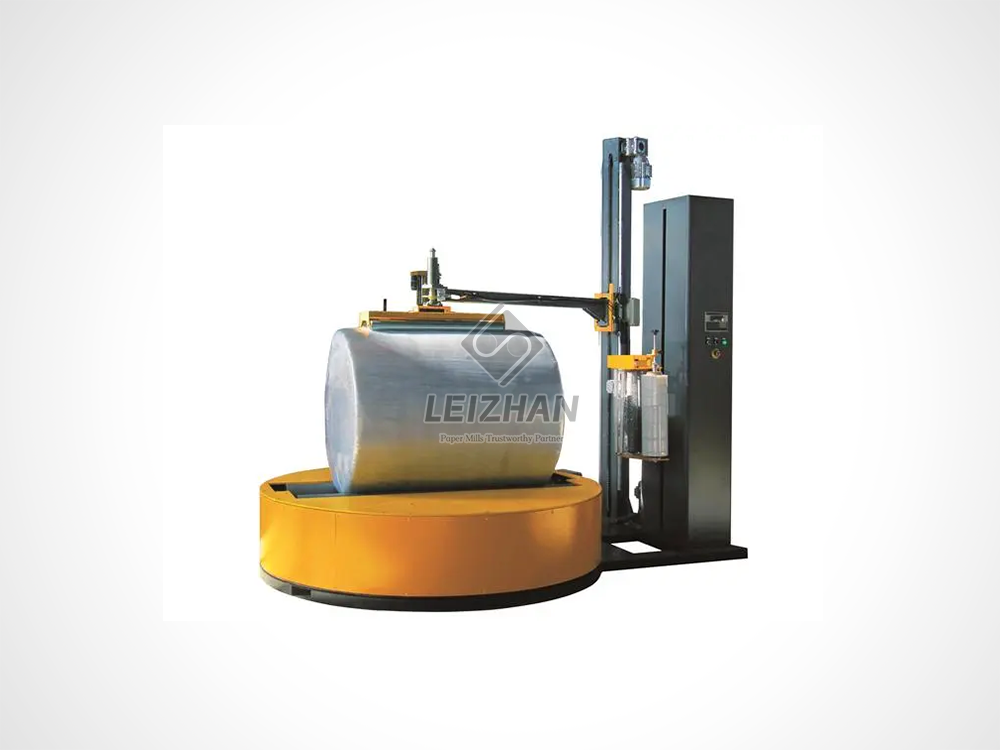
The technological core of modern automated wrapping is the powered pre-stretch carriage. This specialized component is entirely responsible for dispensing the film and altering its physical state before it makes contact with your fragile products. By isolating the stretching process from the load itself, the carriage ensures that the boxes on the pallet do not bear the brunt of the tensioning force.
The Speed Differential
The carriage utilizes a sophisticated two-roller system driven by independent AC motors. As the raw film leaves the roll, it is threaded through these motorized rubberized rollers. The physical elongation of the film occurs because the second roller is geared to turn significantly faster than the first roller.
For example, if the second roller rotates three times faster than the first, the film trapped between them is forced to stretch to three times its original length. This precise speed differential is what physically stretches the film inside the carriage. Consequently, the tension is completely isolated. Lightweight loads are never pulled off the turntable during the wrapping cycle.
The Molecular Memory Effect
From a structural standpoint, stretching the plastic does more than just make it longer. It fundamentally changes the physics of the material. Standard stretch film is manufactured with somewhat randomized polymer chains. When forced through the speed differential of the rollers, these chains are forced to align parallel to the direction of the stretch.
This molecular alignment increases the tensile strength of the film and activates its memory effect. Once the elongated film is wrapped around the pallet, those aligned molecules actively try to shrink back to their original state. This provides the uniform continuous holding force necessary for secure transit.
Top Reasons Why a Stretch Wrapper Pre-Stretches Film
Warehouses do not invest in powered pre-stretch technology simply to add shiny automation. They do it for measurable operational improvements that directly affect the bottom line.
Drastically Improving Film Yield
The most immediate benefit of pre-stretching is the exponential increase in Film Yield. If a machine operates at a 250% stretch setting, stretching a one-meter piece of film turns it into three and a half meters of usable packaging material. Maximizing this yield extends the life of every consumable purchase. This drastically reduces the volume of materials required to maintain daily operations.
Maximizing Load Containment
Keeping products secure is the ultimate objective of any shipping operation. Pre-stretched film provides a stronger and more consistent holding force than unstretched film. Because the film's molecules are already aligned and tensioned, the plastic resists further stretching when subjected to the shifting forces of a moving truck. This maintains the structural integrity of the pallet. Loads will not topple, ensuring products arrive exactly as they left the warehouse.
Significant Cost Savings
Beyond simple economics, the mathematics of pre-stretching translate directly to massive annual savings. Because the machine extracts more length from every roll, the operation requires significantly less film per pallet. Less film used per pallet equals fewer rolls purchased per year. For high-volume distribution centers, reducing consumable film usage by up to 70% frees up tens of thousands of dollars in the annual operating budget.
Preventing Load Crushing
A common issue in fast-paced logistics is the crushing of lightweight boxes during the wrapping process. Think about fragile items like empty PET bottles, tissue paper, or delicate baked goods. Because a powered pre-stretch carriage does the stretching inside the machine rather than pulling against the load, the film is applied to the pallet with controlled and gentle tension. The load is safely secured by the film's memory effect rather than aggressive raw application tension. Crushed corners are entirely prevented.
Understanding Pre-Stretch Ratio and Real-World Parameters
To properly evaluate packaging equipment and accurately forecast consumable budgets, procurement managers must understand the standard metrics used in the industry.
Defining the Pre-Stretch Ratio
The Pre-Stretch Ratio is an industry term that quantifies the exact percentage by which the film is elongated inside the carriage. Common industrial ratios range from 200% to 300%. For instance, a 250% ratio means the film is stretched by 250% of its original length. Therefore, one foot of raw film on the roll turns into three and a half feet of usable film applied to the load.
Engineering Specifications in Action
Taking high-performance equipment as a benchmark, modern machines are designed to handle demanding throughputs while maintaining exact stretch ratios. Intelligent turntable wrappers engineered by leading manufacturers like Leizhan Paper Tech frequently feature programmable logic controllers and precision tension control. These systems allow operators to dial in the exact stretch ratio required for specific load profiles. A machine equipped with a 250% powered pre-stretch carriage operating at 12 rpm can securely wrap up to 30 pallets per hour while cutting film consumption by more than half compared to manual wrapping.
Matching Film to the Machine
It is critical to note that operators cannot simply load cheap low-grade hand film onto a high-stretch machine. Standard film will snap immediately if subjected to a 250% stretch. The plastic must be specifically engineered to handle the intense mechanical elongation of your specific equipment. Using the wrong film results in constant tearing, frustrating machine downtime, and wasted labor.
Core Comparison: Pre-Stretch vs. Post-Stretch
Not all automated wrappers utilize the same technology. When auditing equipment, buyers must distinguish between older post-stretch systems and modern powered pre-stretch systems to avoid costly purchasing mistakes.
| Feature | Post-Stretch (Friction Brake) | Powered Pre-Stretch Carriage |
| Stretching Mechanism | Relies on load rotation pulling against a mechanical brake. | Dual motorized rollers stretch film inside the carriage. |
| Maximum Stretch Ratio | Typically 10% to 20%. | Consistently 200% to 300%. |
| Risk to Fragile Loads | High. Tension is applied directly to the boxes, risking crushing. | Low. Film is applied gently; memory effect secures the load. |
| Long-Term ROI | Poor. High ongoing film waste negates low initial machine cost. | Excellent. Material savings pay for the machine within 12 to 18 months. |
For any high-volume operation processing more than 20 pallets per day, a powered pre-stretch wrapper is the only logical choice. While the initial capital expenditure for a friction brake machine might be lower, the inflated ongoing consumable costs and the high risk of transit damage negate those savings within mere months.
How Pre-Stretching Solves Common Operational Headaches
Warehouse managers deal with daily logistical headaches that stem directly from improper wrapping techniques. Advanced carriage technology systematically eliminates these common pain points.
Eliminating Film Breakage
It seems completely counterintuitive, but pre-stretching film actually makes it stronger and much less likely to break. When film is mechanically stretched and the polymers align, the material becomes highly puncture-resistant. Unstretched film is easily snagged and torn by sharp wooden pallet corners. Conversely, pre-stretched film acts more like a tight drum skin. It deflects sharp edges and drastically reduces operator intervention caused by film snapping mid-cycle.
Preventing Load Shifting During Transit
Load shifting occurs when the holding force of the plastic degrades during transport. Unstretched film has too much give. It will stretch further when the truck hits a bump, allowing the boxes to slide and tilt. The continuous holding force of pre-stretched Load Containment absorbs the dynamic vibrations of truck transport far better. Because the film has already been stretched to its limit in the machine, it refuses to yield further during transit. The load remains locked firmly to the wooden base.
Selection Guide: Choosing the Right Equipment for Your Facility
Transitioning to automated packaging requires a clear empirical understanding of the financial metrics and technical specifications involved.
Assess Your Throughput
If your facility wraps under 15 pallets a day, a semi-automatic turntable with a standard 200% stretch carriage is usually sufficient. However, operations handling 40 to over 100 pallets daily require heavy-duty automated systems. Look for machines offering customizable wrap cycles, robust 250% to 300% stretch carriages, and automatic film cutting features to keep forklift drivers in their seats.
Calculate Your Return on Investment
To logically justify the purchase of new equipment, calculate your current film usage. Multiply the number of pallets wrapped per day by the cost of film used per pallet. Consider a facility wrapping 50 pallets a day. If manual wrapping costs one dollar and fifty cents per pallet in film, the annual cost is roughly eighteen thousand dollars. Upgrading to a 250% pre-stretch machine could drop that cost to sixty cents per pallet. This yields a direct annual savings of over eleven thousand dollars. In most industrial scenarios, the material savings alone cover the capital cost of the machine rapidly.
Ultimately, a modern wrapping machine pre-stretches film to save money, protect valuable products, and improve overall warehouse efficiency. The pre-stretch carriage is the undisputed engine of the machine. Investing in this technology is no longer a luxury but a strict necessity for profitable logistics and flawless pallet security. If you are struggling with high packaging costs or inconsistent load stability, it is time to audit your current wrapping process. Explore the advanced Stretch Wrapper solutions at Leizhan Paper Tech to find the exact engineering capabilities required for your specific load profiles and future-proof your shipping operations today.
FAQ
What is a good pre-stretch ratio for a stretch wrapper?
A standard industrial ratio is generally between 200% and 250%. However, high-performance machines paired with premium performance films can achieve up to 300% or more. This maximizes material efficiency and significantly lowers per-pallet packaging costs.
Does pre-stretching the film make it weaker?
No. Mechanically pre-stretching the film actually aligns the internal polymer molecules. This alignment process significantly increases its tensile strength and puncture resistance against sharp boxes and rough wooden pallet corners.
Can I use any stretch film on a pre-stretch wrapper?
No. You must use machine-grade or performance stretch film specifically designed to handle high pre-stretch ratios. Attempting to use standard hand film on a high-speed machine will result in constant tearing, wasted material, and extended machine downtime.
How does pre-stretch improve load containment?
It creates a powerful memory effect within the plastic. Once applied, the stretched film constantly tries to shrink back to its original unstretched size. This applies a tight, uniform, and continuous squeezing force around the entire pallet.
Is a powered pre-stretch wrapper worth the extra cost?
Yes. For any business wrapping more than 20 pallets a day, the drastic reduction in consumable film costs will typically pay for the machine upgrade within 12 to 18 months. This makes it a highly profitable long-term investment.
How often should a pre-stretch carriage be maintained?
Industrial pre-stretch carriages require routine maintenance every three to six months depending on cycle volume. Engineers recommend cleaning the rubberized rollers to remove sticky resin buildup and inspecting the AC motor drive belts to ensure the speed differential remains accurate.
Why does the stretch film tear inside the carriage rollers?
Film tearing inside the carriage is usually caused by three factors. The film gauge may be too thin for the machine's stretch ratio setting, the rubber rollers might be contaminated with dust and resin, or the film roll itself may have sustained edge damage from being dropped onto the warehouse floor.


