Introduction
Modern production lines operate at blistering speeds. Yet, they frequently hit a severe bottleneck at the very end of the facility: the packaging and shipping dock. When manufacturing scales up, manual wrapping simply fails to keep pace with the sheer volume of goods moving off the line. Facility managers struggle daily to match their upstream production speed with downstream packaging capabilities. This mismatch leads to delayed shipments, congested staging areas, and bloated labor costs.
The ultimate engineering solution for these end-of-line inefficiencies is the implementation of a proper stretch wrapping machine. However, the maximum capacity of these systems is never a single, fixed number. It depends heavily on the equipment's mechanical architecture, operator efficiency, load characteristics, and overarching system design.
This comprehensive technical guide breaks down exactly how fast different automated solutions can operate. By understanding how to calculate your required capacity and identifying the variables that dictate speed, you can specify the right equipment to protect your bottom line and maintain fluid supply chain logistics.
Key Takeaways
- Throughput varies by technology: A standard semi-automatic wrapper typically processes 15 to 30 pallets per hour, whereas fully automatic inline systems comfortably exceed 100 pallets per hour.
- Time is everything: True daily capacity is dictated by the total combined duration it takes to stage, wrap, and remove a single pallet from the active zone.
- Return on Investment is tied to scale: Choosing between semi-automatic and fully automatic machinery depends on your daily volume, localized labor rates, and peak target capacity.
- Variables matter: Load stability, film type, and specific machine architecture significantly impact how fast a system can safely operate without compromising load containment.
Industry Trends: The Shift Toward Automated Throughput
Recent market analyses reveal a massive operational shift across global warehousing. Driven by chronic labor shortages and the relentless speed demands of modern e-commerce, facilities are rapidly abandoning manual processes. Relying on human labor for repetitive, physically demanding packaging tasks is no longer viable.
Industry data indicates a surging demand for high-speed automated systems that guarantee volume consistency. Supply chain directors are prioritizing equipment that integrates seamlessly into existing conveyor lines. Consequently, engineers and buyers must align their throughput expectations with the mechanical realities of modern packaging technology. The focus has shifted from merely wrapping a pallet to optimizing the entire end-of-line material flow.
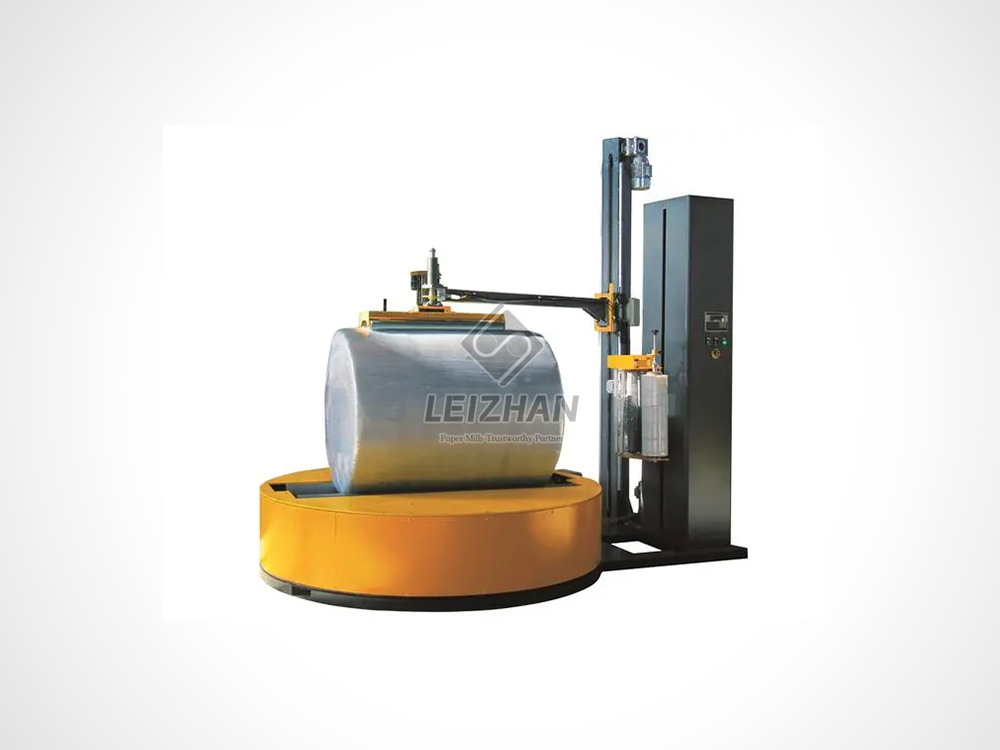
Understanding Throughput: Cycle Time and Total Output
In industrial packaging, throughput is not merely a measurement of turntable RPM or rotary arm velocity. Instead, throughput represents the total sustainable production a facility can achieve over a standard operating shift. It accounts for the entire workflow. Evaluating this metric requires looking at the holistic process rather than isolated mechanical speeds.
To accurately project your packaging capacity, you must break down the concept of cycle time. This foundational metric is calculated by adding three distinct operational phases together.
- Load Time: The seconds required for a forklift operator or automated conveyor to place the unwrapped pallet into the active wrapping zone.
- Wrap Time: The actual duration the machine takes to apply the stretch film according to the programmed recipe.
- Unload Time: The time needed to cut the film tail, remove the secured pallet, and clear the zone for the next load.
Reducing this comprehensive duration by even ten seconds per pallet exponentially increases overall daily throughput. This prevents dock bottlenecks during peak shipping hours. The industry-standard metric for measuring this success is Pallets Per Hour. When comparing different equipment models, this metric provides a standardized baseline to determine if a specific machine meets your facility's operational demands.
Throughput by Automation Level: A Technical Breakdown
Understanding the mechanical limits of different equipment tiers is critical for proper specification. Buyers must match machine capabilities with their actual production floor realities.
Manual Wrapping - The Baseline
Relying on human workers to walk backward in circles around a pallet is physically demanding and ergonomically hazardous. Due to fatigue, dizziness, and natural physical limitations, human operators typically max out at 5 to 10 pallets per hour. Furthermore, manual wrapping results in inconsistent load containment and massive film waste. It is entirely unsustainable for growing operations.
Semi-Automatic Systems
Semi-automatic machines require an operator to facilitate the process, but the machine handles the actual physical wrapping. Picture a forklift operator aligning a heavy pallet of fragile glassware onto the turntable. They dismount to tie the film tail to the wooden base, hit the start button, and wait for the cycle to finish before cutting the film. Because human intervention is required, the speed remains partially dependent on operator efficiency.
Industrial-grade semi-automatic wrappers often feature 1500mm to 2000mm turntables capable of supporting 2000kg loads. A standard machine in this tier typically yields an average of 15 to 30 pallets per hour. These setups offer an excellent balance of affordability and efficiency. They are ideal for small to medium-sized manufacturing plants processing 20 to 50 pallets per day.
Fully Automatic Inline Systems
Fully automatic machines remove the human element from the core wrapping process entirely. Pallets are fed into the machine via motorized conveyors. The machine automatically detects the load height, secures the film tail, wraps the pallet, cuts the film, and heat-seals the tail against the load without operator intervention.
By eliminating manual staging, these standard inline systems deliver an average of 40 to 100 pallets per hour. Advanced high-speed ring wrappers push this number even higher. This tier of equipment is mandatory for high-volume food and beverage distribution centers where continuous flow is critical.
Core Comparison Table
| System Type | Average Throughput | Operator Involvement | Best Application |
| Manual | 5 - 10 PPH | 100% Manual | Low volume, startup operations |
| Semi-Automatic | 15 - 30 PPH | Load staging, film attachment | Medium volume, standalone stations |
| Fully Automatic | 40 - 100+ PPH | None continuous inline flow | High volume, 24/7 logistics hubs |
Key Factors That Impact Your Machine's Speed
While manufacturers provide a maximum rated speed for their equipment, real-world execution rarely matches theoretical limits. Several physical and operational variables directly influence how fast your machine can complete a wrap cycle.
Specifically, the architectural design of the wrapper establishes the absolute ceiling for your throughput. Turntable models rotate the load itself. They run slower because high rotational speeds create centrifugal force, which easily throws unstable boxes off the pallet. In contrast, rotary arm models keep the pallet stationary on the floor while a mechanical arm spins around it. This allows for faster wrapping without risking load instability.
Load height and physical stability also dictate safe wrapping speeds. Taller loads naturally require more vertical travel from the film carriage. This extends the wrap time. If a load is exceptionally light, fragile, or irregularly shaped, the machine must be programmed to run at a lower RPM. Rushing an unstable load leads to product displacement before the film can properly secure it.
Furthermore, modern machines equipped with powered pre-stretch carriages pull the film through motorized rollers. They stretch the material up to 250% or 300% before it touches the load. This technology saves material and applies the film with consistent tension. Consistent tension drastically reduces the risk of film breaks. A single film break halts operations for several minutes, severely damaging your hourly throughput.
How to Calculate the Required Output for Your Facility
Purchasing packaging equipment without a clear understanding of your required capacity leads to costly bottlenecks or unnecessary capital expenditure. Plant managers must calculate their targets using empirical data rather than guesswork.
To determine your baseline, identify your total maximum daily pallets and divide by the actual hours of packaging operation per day. For instance, if you process 400 pallets over an 8-hour shift, your base requirement is 50 pallets per hour. However, you must add a 20% buffer to account for machine maintenance, film roll changes, and shift transitions. This brings your true target to 60 pallets per hour.
A common engineering pitfall is specifying a machine based solely on average hourly demand. Warehouses rarely operate at a perfectly steady pace. Shipping schedules create intense spikes in activity. Always calculate your requirements based on peak hourly volume to ensure trucks are not left idling at the dock. Industrial packaging equipment is a long-term capital investment. Factor in projected business growth over the next three to five years to prevent premature equipment obsolescence.
Upgrading Your Automation Level: When Is It Time?
Determining the exact moment to transition between equipment tiers requires a careful analysis of labor allocation and workflow efficiency. An upgrade should be treated as a strategic maneuver to eliminate constraints.
If your facility is still wrapping manually, the indicators for an upgrade are tied to labor costs and worker safety. Invest in a semi-automatic machine if you pay multiple workers exclusively to walk in circles around pallets. Notice inconsistent load containment causing product damage during transit? A backlog of unwrapped pallets forming at the shipping dock? It is time to deploy semi-automated technology.
Transitioning to a fully automatic system is justified when your semi-automatic processes become the primary bottleneck in your supply chain. If your current machine runs non-stop throughout the entire shift but still fails to keep pace with production, an upgrade in automation level is necessary. A glaring visual indicator is a queue of forklift drivers waiting in line to use the wrapping station. When forklift operators sit idle, you bleed valuable labor hours. Integration into a continuous conveyor line demands full automation to seamlessly handle the wrapping phase without breaking the physical flow of goods.
Real-World ROI: Maximizing Output and Minimizing Costs
Investing in high-throughput packaging machinery yields a measurable Return on Investment across three primary operational categories: labor, materials, and product integrity.
Eliminating the dead time associated with the wrapping process makes labor savings immediately apparent. Forklift drivers no longer need to repeatedly dismount their vehicles. Warehouse workers previously dedicated to manual wrapping can be reallocated to more profitable, value-added tasks like order picking or quality control.
In addition, material savings drastically reduce operating expenses. High-throughput machines utilize advanced powered pre-stretch technology. While manual wrappers stretch film by roughly 10% to 20%, automated machines stretch the same film by up to 300%. Facilities often observe up to a 50% reduction in stretch film consumption. This saves tens of thousands of dollars annually.
Faster throughput does not equate to lower quality. Automated machines apply film with exact, repeatable tension. This provides mathematically consistent load containment. Standardization prevents loads from shifting or collapsing during transit, drastically reducing costs associated with damaged goods and ruined brand reputation.
How to Optimize Your Current Packaging Workflow
If you already own equipment but struggle to meet shipping deadlines, purchasing a new machine is not always the immediate answer. Operational adjustments often significantly optimize your current workflow.
Start with regular, documented maintenance. Dust, debris, and film residue accumulate on sensors and rollers. This causes the machine to misread load heights or apply incorrect tension. Calibrating the photo-eye sensors ensures the film carriage does not waste time wrapping empty space above the load.
Next, audit your wrap recipes. Many facilities suffer from over-wrapping. They apply five or six top wraps when only two are mathematically required for safe transit. Work with a packaging engineer to determine the exact containment force needed for your specific product. Reduce unnecessary carriage revolutions.
Finally, evaluate the physical environment around the machine. Improve traffic flow to reduce the time it takes for forklifts to maneuver into the loading zone. Ensure you use the correct gauge and quality of stretch film. Cheap, low-quality film leads to frequent film tears. Every time the film breaks, the operator must stop the machine, reattach the film, and restart the cycle. This is the most preventable cause of poor daily output.
Conclusion
A high-performance stretch wrapper is a critical asset for boosting your daily packaging speed and maintaining supply chain fluidity. Throughput ranges from fifteen pallets an hour for basic semi-automatic models to well over one hundred pallets for fully automated inline systems. Your final capacity depends entirely on the specific technology you deploy and how well you manage operational variables.
By lowering cycle times, optimizing wrap recipes, and removing manual bottlenecks, you wrap pallets faster and more securely. Matching your equipment choice to your required output needs ensures smooth operations and a rapid return on investment. Evaluate your current end-of-line packaging process today. Identify your constraints, calculate your required capacity, and explore the robust, high-efficiency equipment available at Leizhan Paper Tech to find the exact automated solution that fits your production line perfectly.
FAQ
What is the maximum pallets per hour a stretch wrapping machine can handle?
High-speed fully automatic ring wrappers can handle upwards of 120 to 150 pallets per hour. The exact maximum depends heavily on the load size, the stability of the product, and the specific wrap settings required for safe transit.
How do I reduce the cycle time on my stretch wrapper?
You can reduce the cycle time by optimizing your wrap pattern to eliminate unnecessary top and bottom wraps. Upgrading to a machine with a faster rotation speed, performing routine sensor maintenance, and improving your forklift loading workflow will shave critical seconds off each load.
Is a fully automatic stretch wrapping machine worth the investment?
If your facility processes more than 40 to 50 pallets per hour, or if you operate on a 24/7 production schedule, yes. The long-term labor savings, reduced film waste, and massively increased throughput usually provide a rapid and justifiable return on investment.
Does machine type affect output?
Absolutely. The mechanical design is a primary limiting factor. Turntable models are generally slower, handling up to 35-40 pallets per hour, because the load must spin. Rotary arm models and orbital ring machines offer much higher throughput because the pallet remains stationary while the film carriage moves rapidly around it.
How does automation level impact my packaging line?
A higher automation level removes the unpredictable human element from the equation. By automating the loading, wrapping, and cutting phases, you ensure a consistent, uninterrupted flow of goods from the production line directly to the shipping dock. This vastly increases your overall daily capacity.
What is the standard turntable speed for a stretch wrapper?
Standard semi-automatic turntable wrappers typically operate between 10 to 15 RPM. High-performance industrial models can reach up to 20 RPM. However, running at maximum speed requires a highly stable, uniform load to prevent centrifugal force from displacing the product.
How does film thickness impact machine throughput?
Film thickness, or gauge, directly affects machine uptime. Using a film that is too thin for heavy, sharp-cornered loads leads to frequent film punctures and tears. Each tear stops the wrap cycle, forcing the operator to intervene. Matching the correct film gauge and utilizing powered pre-stretch carriages ensures continuous, uninterrupted throughput.


