Introduction
Modern manufacturing and logistics facilities face continuous pressure to optimize throughput and reduce operational bottlenecks. Often, the most significant delays occur right before products are shipped out on the loading dock. When facilities rely on manual or semi-automatic wrapping processes, it frequently slows down overall production. Human operators naturally experience fatigue. This physical exhaustion directly results in uneven film application, wasted materials, and compromised pallet stability during transit.
To resolve these logistical challenges, the Automatic Stretch Wrapping Machine with Conveyor has emerged as the ultimate solution for high-volume facilities. By removing the need for manual intervention, this equipment streamlines the transition from the production floor to the shipping dock. We will break down exactly how these advanced systems operate, detail the core mechanical components involved, and explain how integrating them drastically improves facility productivity and workplace safety.
Key Takeaways
- Seamless Automation: An automated wrapping system requires zero manual intervention. It moves pallets from production to shipping seamlessly and safely.
- Core Components: The entire setup relies on highly synchronized parts, including heavy-duty staging conveyors, spinning platforms, and advanced industrial controls.
- Increased Productivity: By maximizing conveyor speed and mechanical efficiency, facilities can eliminate downstream bottlenecks and dramatically increase daily throughput.
- High ROI: Upgrading from manual wrapping to a fully automated system saves thousands of labor hours annually and drastically reduces plastic film waste through powered pre-stretch technology.
What is an Automatic Stretch Wrapping Machine with Conveyor?
An automated packaging system of this caliber is engineered to receive loaded pallets, wrap them securely in stretch film, and discharge them without requiring a human operator. Unlike semi-automatic wrappers where a forklift driver must park, attach the film by hand, and manually cut it afterward, a fully integrated system handles the entire cycle independently within a mechanized workflow.
This machinery serves as the heartbeat of the modern packaging process. It connects directly to upstream production lines or automated palletizers. Consequently, as soon as a product is stacked, it is immediately secured for transport. The ideal users for this technology include high-volume distribution centers, food and beverage plants, and heavy manufacturing sectors.
Specifically, for heavy industries such as paper manufacturing, securing the final product is a vital operational phase. If a multi-ton roll of paper or a heavy industrial skid shifts during transport, it can result in severe product damage, financial loss, and critical safety hazards. Automated wrapping ensures that every single load is contained with precise, repeatable tension.
The Core Components of the System
Understanding how this machinery works requires examining its anatomy from an engineering perspective. The system is not a single standalone unit. Rather, it is a complex collection of synchronized mechanical and electrical parts working in unison to handle heavy loads, apply precise tension, and route products efficiently.
The Infeed Conveyor and Outfeed Conveyor
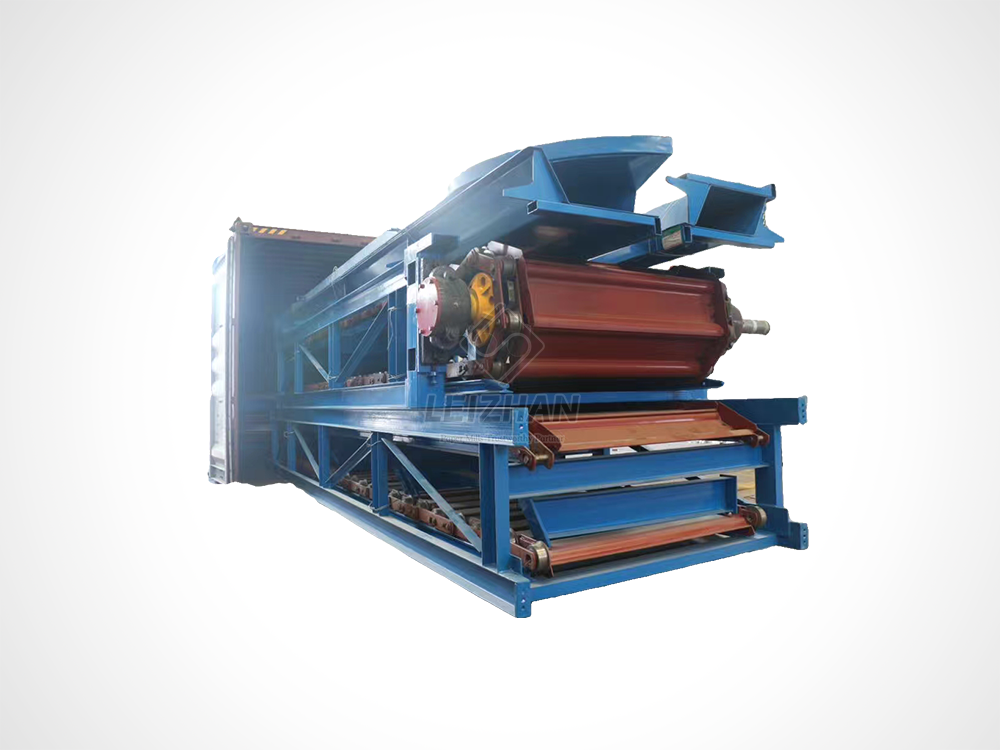
The Infeed Conveyor stages the incoming pallets and controls the flow of traffic into the active wrap zone. It acts as a critical staging buffer, ensuring that the wrapper is continuously supplied with product without causing collisions. Depending on the load profile, facilities utilize different conveyor types. For heavy industrial applications, such as paper mill stock preparation, heavy-duty chain conveyors are deployed. Robust chain conveyor systems feature plate widths ranging from 1200mm to 2600mm. They can handle conveying capacities up to 600 cubic meters per hour with motor powers reaching 55kW. This industrial-grade power ensures even the heaviest concentrated point loads are transferred smoothly into the wrapping zone. The outfeed conveyor serves the opposite purpose by transporting the wrapped pallet away for forklift pickup or automated storage.
The Wrapping Zone
The wrapping zone is where the actual film application occurs. In a Turntable configuration, the conveyor section in the center rests on a heavy-duty spinning platform. The pallet is driven onto the platform, stops, and rotates while a stationary mast moves the film carriage vertically. This method is highly effective for standard, stable loads. In contrast, for exceptionally heavy, very light, or highly unstable loads, a rotary arm system is preferred. Here, the pallet remains completely stationary on the conveyor while a mechanized arm holding the film carriage spins around it. Because the load does not experience centrifugal force, there is zero risk of product shifting during a high-speed wrap cycle.
The PLC and Industrial Controls
The PLC functions as the operational brain of the entire system. This industrial computer continuously receives and processes data from photoelectric sensors, limit switches, and motor encoders. Furthermore, it coordinates the variable frequency drives controlling the conveyor speed, the rotation of the platform, and the exact tension of the film carriage. By utilizing pre-programmed recipes, the controller guarantees that every pallet is wrapped according to its specific height and weight profile.
The Film Carriage and Automatic Film Cutter
The film carriage houses the stretch film roll and features powered pre-stretch technology. Inside the carriage, two motorized rollers running at different speeds elongate the plastic before it even touches the load. This material science principle maximizes film yield and drastically reduces consumable costs. Additionally, the system features an automatic film cutter and sealer. Once the wrap cycle finishes, mechanical clamps hold the plastic, a specialized blade severs it, and a heat pad or pneumatic brush secures the trailing edge to the pallet.
Step-by-Step: Engineering the Perfect Wrap Cycle
To fully grasp the efficiency of the setup, let us walk through a single operational cycle from an engineering standpoint. The automation relies on a precise sequence of events governed by the central controller.
The process begins with pallet induction. Photo-eye sensors detect a loaded pallet arriving on the staging line. The controller processes this signal, verifies the wrapping zone is clear, and commands the motors to move the pallet forward.
Next comes positioning and stabilization. Proximity sensors trigger the system to stop the pallet at a precise, predetermined center point. If the load is particularly tall or unstable, an automated top platen descends from above to apply downward pressure, holding the pallet firmly in place.
Once secured, the rotation initiates. The film carriage dispenses the pre-stretched film according to a specific programmed recipe. It applies multiple bottom wraps to lock the load to the wooden base, travels upward to secure the sides, applies top wraps, and travels back down to complete a tight web of containment.
After the final layer of plastic is applied, the cutting mechanism engages. It mechanically slices the material. Simultaneously, a wipe-down mechanism presses the loose tail against the side of the pallet, bonding it securely. Finally, the outfeed line activates to move the finished pallet down the line, ensuring a continuous packaging loop.
Industry Trends in Automated Stretch Wrapping
Looking at recent market shifts in automated packaging, there is a clear industry-wide transition toward deep data integration and sustainability. Modern supply chains increasingly demand real-time visibility and predictive maintenance. Consequently, the latest generation of wrapping equipment is equipped with advanced telemetry. These smart IoT systems monitor motor temperatures, film usage per pallet down to the gram, and sensor health. This allows maintenance engineers to address wear and tear before a catastrophic breakdown occurs, drastically reducing unplanned downtime.
Another significant trend is the push for eco-friendly operations. As global regulations on single-use plastics tighten, manufacturers are testing bio-based and highly recyclable stretch films. Machine learning algorithms are now being integrated to automatically adjust tension profiles on the fly. This ensures that even with thinner, sustainable films, the load containment remains uncompromised. This intersection of material science and smart automation represents the true future of transit packaging.
Manual vs. Automatic: Core Comparison
When evaluating capital equipment, operations managers must carefully analyze the Return on Investment. Transitioning from manual wrapping to a fully automated system yields measurable financial benefits across labor, materials, and product integrity.
| Feature | Manual Wrapping | Automated Wrapping System |
| Throughput per Hour | 10 to 15 pallets | 40 to 100+ pallets |
| Film Pre-Stretch | 10% to 20% | Up to 300% via Motorized Rollers |
| Labor Requirement | High Dedicated Operator Needed | Zero Fully Autonomous |
| Load Containment | Inconsistent and Prone to Shifting | Mathematically Precise |
| Material Waste | High | Extremely Low |
Actionable Selection Guide for Facility Managers
Rather than looking at abstract specifications, facility managers should base their equipment selection on concrete operational metrics.
First, evaluate your maximum load weight and stability. If you are handling standard, stable pallets under 2,000 kilograms, a turntable system is highly cost-effective. However, if you are processing ultra-heavy paper rolls, liquid totes, or top-heavy skids that risk tipping, a rotary arm wrapper is mandatory because the load remains completely stationary during the wrap cycle.
Second, calculate your required throughput. Facilities producing fewer than 30 loads per hour might survive with a semi-automatic wrapper. But if your production lines output 50 to 100 loads per hour, a fully automated conveyorized system with staging buffers is essential to prevent downstream bottlenecks.
Finally, consider the operating environment. Dusty or corrosive environments, such as pulp mills or chemical plants, require upgraded NEMA-rated electrical enclosures and heavy-duty chain conveyors rather than standard roller tracks. Matching the machine's build quality to your facility's harshness ensures long-term reliability.
Advantages of Upgrading Your Packaging Line
Implementing this level of automation provides distinct operational advantages at the End of Line.
Automated systems deliver unmatched throughput. They are designed for high-capacity environments and easily keep pace with the most demanding production schedules. Furthermore, automation enhances workplace safety. It removes workers from the immediate wrapping zone, keeps forklift drivers safely in their cabs, and eliminates the risk of repetitive motion strain.
Every single pallet is wrapped with the exact same containment force. This strict mathematical profile guarantees compliance with shipping standards, preventing load failure during sudden stops or sharp turns in transit. By utilizing straight-line or right-angle conveyor configurations, automated wrappers also streamline the physical footprint of the shipping department, eliminating chaotic staging areas.
Conclusion
An automated stretch wrapper with integrated conveyors is far more than just a packaging tool. It serves as a comprehensive, highly effective solution for modern supply chains. The system seamlessly integrates staging buffers, robust spinning platforms, and smart controllers to ensure unmatched operational efficiency. The long-term savings in both labor and film quickly justify the initial capital investment, while the reduction in damaged goods directly protects your brand reputation.
If your facility is experiencing end-of-line bottlenecks or inconsistent load containment, it is time to upgrade your packaging infrastructure. Evaluate your current production demands and explore professional industrial solutions. Visit Leizhan Paper Tech to find the right automated conveyor and stock preparation equipment tailored to your heavy-duty manufacturing needs, and keep your logistics moving flawlessly.
FAQ
Can an automatic stretch wrapping machine handle different pallet sizes?
Yes. Advanced photoelectric sensors and the central controller automatically detect the height and dimensions of the incoming load. The system adjusts the wrapping cycle on the fly, applying the correct amount of film without requiring manual reprogramming by an operator.
What is the difference between a turntable and a rotary arm wrapper?
A turntable spins the pallet itself, which is highly effective for standard, stable loads. A rotary arm keeps the pallet completely stationary on the conveyor while the film carriage spins around it. The rotary arm is ideal for extremely heavy, very light, or highly unstable loads that might tip over if spun.
How does the automatic film cutter work?
At the end of the predefined wrap cycle, a mechanical clamp grabs the stretch film. A specialized blade then cuts the material. Finally, a wipe-down mechanism utilizing a heated pad or a mechanical brush secures the loose tail to the pallet so it does not unravel during shipping and handling.
What is the maximum load weight an automatic wrapper can handle?
Standard turntable models typically handle between 1,500 and 2,500 kilograms. However, heavy-duty configurations utilizing reinforced chain conveyors and rotary arms can be engineered to process loads exceeding 4,000 kilograms. This makes them highly suitable for industrial metal, large paper rolls, and heavy building materials.
How much maintenance does the infeed conveyor require?
Routine maintenance is minimal but strictly essential for continuous operation. It typically involves checking drive chain tension, lubricating mechanical bearings, and ensuring that all photo-eye sensors are clean and free of dust so the system continually receives accurate operational data.
How do I integrate this machine into an existing production line?
Most automatic stretch wrappers are designed with modularity in mind. They feature programmable logic controllers that can communicate with existing warehouse management systems. By matching conveyor heights and speeds, they seamlessly retrofit to automated palletizers, labelers, and outfeed storage systems to create a unified packaging line.


