The growing demand for warehouse automation has fundamentally transformed modern high-volume packaging. Standardizing load containment saves businesses thousands of labor hours. It also drastically reduces stretch film waste. Many operators recognize the mechanical advantages of these systems. Few truly understand the invisible intelligence driving their flawless operation. How do these robust mechanical structures function autonomously without constant human intervention?
Recent industry trend analyses highlight a massive shift toward data-driven logistics. Global supply chains now demand zero-fault tolerance. Consequently, standard mechanical wrappers are rapidly being replaced by sensor-rich intelligent packaging lines. Advanced sensory technology acts as the physical eyes and nervous system of the equipment. These components gather critical environmental data in fractions of a second.
In this guide, we will explore the specific components dictating precise movements. You will learn how an Automatic Pallet Wrapping Machine communicates with its central processing unit. We will also cover troubleshooting common operational hiccups and critical factors for evaluating facility equipment.
Key Takeaways
- Precision and Safety: Specialized detection components ensure every load is wrapped securely without causing product damage. This applies regardless of irregular shapes or dark colors.
- The Brain of the Operation: The central logic controller processes all environmental data in real-time. It dictates RPM speed, film tension, and carriage movement.
- Troubleshooting is Sensor-Dependent: Many common operational errors can be resolved simply by cleaning or realigning optical lenses. A prime example is the film carriage failing to stop at the top of a load.
- Smart Purchasing: Understanding underlying electronic technology is a critical factor. It helps when choosing the right manufacturer for long-term reliability and return on investment.
The Role of Sensors in Automated Packaging Lines
An automated packaging system operates as a closed-loop environment. It relies entirely on continuous feedback to function. Without this intricate network, the equipment lacks spatial awareness. It cannot detect a pallet arriving on the conveyor. It cannot determine exact load dimensions or identify cycle completion.
Driving Efficiency and ROI
The primary financial advantage lies in precise material optimization. The system calculates exact inbound pallet dimensions. It then communicates with the carriage to dispense the precise amount of stretch film required. Maintaining optimal pre-stretch ratios eliminates human guesswork. Facilities significantly reduce their annual film expenditure. Transitioning from manual wrapping to sensor-guided systems standardizes load containment. This directly impacts the operational bottom line by reducing transit damage.
Ensuring Workplace Safety
Industrial environments inherently prioritize risk mitigation. Automated wrappers integrate a web of safety monitors to enforce strict physical protocols. Light curtains, proximity triggers, and emergency stop circuits constantly scan the operational radius. A human operator might inadvertently enter the wrapping zone. A forklift might load a pallet off-center. These safety nets instantly interrupt the power circuit. This immediate halt prevents catastrophic workplace accidents and costly equipment damage.
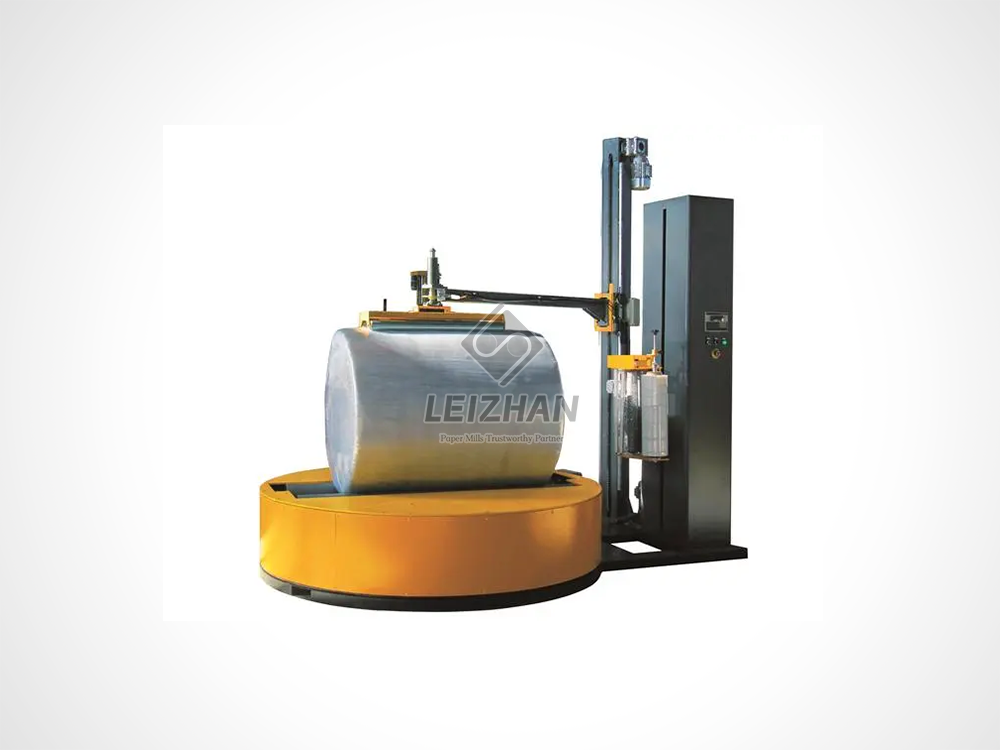
The Photo Eye: The Vision of Your Wrapping Equipment
Serving as the primary visual input, the Photo Eye is an indispensable photoelectric device. Its fundamental function involves detecting the presence, absence, and exact physical boundaries of the merchandise. This occurs as the load enters the wrapping zone and the film carriage ascends the steel mast.
Core Working Principles
A standard photoelectric unit emits a focused beam of light. This is typically infrared or visible red light directed toward the palletized goods. The emitted light hits the physical product and reflects back to a receiver housed within the same unit. Interruption or reflection of this beam sends an instantaneous electrical signal to the control board. This confirms an object occupies that specific space. This continuous feedback loop allows the moving carriage to track the exact pallet profile.
Overcoming Dark or Reflective Loads
Wrapping visually difficult products presents a frequently documented challenge on the warehouse floor. Picture a forklift depositing a pallet wrapped entirely in matte black plastic. Alternatively, imagine a load of highly reflective shrink-wrapped water bottles. Standard optical beams often struggle in these scenarios. Dark colors absorb emitted light. Glossy surfaces scatter light unpredictably. This causes the system to falsely register an empty space. Advanced automated lines resolve this by utilizing specialized dark-load optical sensors. Upgraded components rely on high-intensity background suppression technology. They ensure uninterrupted wrapping cycles regardless of optical properties.
Load Height Sensor: Precision Wrapping Every Time
Basic optical beams detect general presence. Conversely, the Load Height Sensor is specifically calibrated to communicate vertical parameters to the mechanical film carriage. The carriage begins its ascent up the mast accompanied by the hum of the drive motor. Simultaneously, this component continuously scans upward searching for the uppermost boundary of the stacked merchandise. Standard industrial machines seamlessly accommodate wrap heights up to 2000mm or even 2400mm based on these readings.
Preventing Film Waste and Load Damage
Accurate vertical detection remains absolutely critical for load stability. The scanner registers the top edge of the product and transmits a command to apply a pre-programmed over-wrap. This process applies film slightly above the physical top of the pallet. It locks the load securely to the wooden base and prevents shifting during turbulent transit. Identifying this peak accurately prevents the carriage from continuing upward into empty air. This eliminates wasted stretch film and reduces overall cycle time.
Handling Irregular Pallet Shapes
Industrial loads rarely form perfectly uniform cubes. Mixed pallets often feature uneven tops or protruding boxes. Fragile items might be stacked precariously at the highest point. The vertical scanner adapts to these irregular geometries. It identifies the highest consistent point of the load. This precision ensures uniquely shaped pallets are tightly secured. It avoids applying excessive downward film tension that could crush fragile top-loaded merchandise.
Turntable and Positioning Sensors: Ensuring Base Stability
Standalone machines rotate the product rather than moving a mechanical arm around it. Here, the Turntable serves as the foundational component. Heavy steel bases, often measuring 1650mm in diameter and supporting up to 2000kg, require smooth and synchronized rotation. Underlying positioning and speed monitors govern this movement entirely.
Home Position Alignment
Proximity switches locate discreetly beneath the rotating steel plate. These devices establish the exact home position. They ensure the rotating base begins and ends its cycle in the exact same orientation every single time. Precise alignment is non-negotiable for facilities utilizing pallet jacks. The wooden pallet must be perfectly squared with offloading equipment to maintain a seamless workflow.
Speed and Rotation Tracking
Rotation speed must perfectly match the film delivery speed of the ascending carriage to achieve optimal film tension. Magnetic encoders continuously monitor the Revolutions Per Minute of the rotating plate. Standard turntables operate smoothly at speeds between 0 and 12 rpm. Stretch film may snap under tension if the base rotates too quickly. Containment force becomes loose and unstable if it rotates too slowly. Tracking devices provide real-time speed data. Drive motors make micro-adjustments to prevent film breaks and guarantee consistent stretch ratios.
How the PLC Ties It All Together
Individual sensors function essentially as localized data collection devices. They cannot execute physical mechanical actions independently. The true operational core of an automated packaging system is the PLC Programmable Logic Controller. Functioning as the industrial brain, it continuously processes real-time inputs. It translates them into precise mechanical outputs.
Processing Sensor Data
Optical beams, height scanners, and rotational monitors continuously feed electrical signals back to the main control cabinet. The logic controller processes this incoming data in milliseconds against its hardcoded programming. The vertical scanner indicates it has cleared the top of the load. The controller receives that binary signal. It processes the logic and commands the carriage motor to halt its ascent. Without an industrial-grade controller, gathered environmental data would be entirely useless.
Custom Wrapping Recipes
Modern control systems connect seamlessly to an intuitive touchscreen panel. Operators program distinct wrapping recipes tailored to different product lines through this interface. A heavy dense load of bricks requires a vastly different wrap count and film tension than a fragile pallet of paper towels. The control unit stores specific parameters. It relies on the incoming data feed to execute custom commands flawlessly.
Semi-Automatic vs. Fully Automatic Pallet Wrapping Machines
Understanding the technological variance between semi-automatic and fully automatic models is essential for accurate capital allocation. The primary differentiator lies in the density of the sensor array and the depth of system integration.
| Feature / Specification | Semi-Automatic Wrapper | Fully Automatic Wrapper |
| Human Intervention | Requires operator to attach and cut film. | Zero intervention. Auto clamp and cut. |
| Sensor Density | Basic height and home position tracking. | Advanced inline conveyor logic, pneumatic clamp monitors. |
| Throughput Capacity | Low to medium volume, under 30 pallets/hour. | High volume, continuous production lines. |
| Safety Integration | Standard emergency stop buttons. | Full perimeter safety light curtains. |
Making the Right Choice for Your Production Line
Selecting appropriate machinery depends heavily on daily throughput volume and labor allocation strategy. A semi-automatic wrapper proves highly cost-effective for low-volume processing. Investing in a fully automated system becomes economically viable for continuous high-volume production. Advanced integration minimizes conveyor bottlenecks. It eliminates manual film attachment and ensures rapid return on investment through significant labor reduction.
Troubleshooting Common Sensor Mistakes on the Warehouse Floor
Operational downtime frequently stems from minor electronic faults rather than catastrophic mechanical failures. Implementing a basic diagnostic protocol saves facilities significant maintenance costs. It also prevents unnecessary service calls.
The Carriage Continuously Ascends
A widely reported issue involves the film carriage continuously ascending past the top of the load. It attempts to wrap empty air until hitting the upper mechanical limit switch. This specific malfunction points almost exclusively to a sensory error. The vertical scanner might be obstructed by industrial dust. Machine vibration can cause physical misalignment. The component fails to register a dark-colored load. The main controller assumes the load is infinitely tall because it never sees the top. Realigning the mounting bracket or adjusting the sensitivity dial typically resolves this issue instantly.
Routine Maintenance Protocols
Preventative maintenance extends equipment lifespan and ensures data accuracy. Operators must incorporate simple checks into weekly routines. Gently wiping down optical lenses with a dry microfiber cloth removes industrial dust. Inspecting visible cable connections running to the main cabinet prevents dropped signals. Clearing stray stretch film, debris, and wood chips from the base ensures proximity switches remain unobstructed.
Actionable Guide to Choosing Wrapping Equipment
Investing in automated packaging equipment requires evaluating underlying electronic technology rigorously. Long-term reliability is directly proportional to internal component quality. You must look beyond heavy steel masts and standard turntable specifications.
Evaluating Component Quality
Request a detailed bill of materials regarding electrical systems when consulting potential manufacturers. Reputable builders utilize globally recognized non-proprietary brands for logic controllers and optical components. Standardized high-quality components ensure operational longevity. Replacement parts can be sourced easily from local electrical suppliers. This avoids prolonged downtime associated with hard-to-find proprietary circuit boards.
Customization and Load Adaptation
The ideal equipment provider acts as a dedicated technical partner. Prioritize manufacturers offering robust engineering capabilities to customize sensory configurations. Your facility might handle unique product profiles requiring high pre-stretch ratios up to 250 percent. The manufacturer must demonstrate the ability to integrate ultrasonic technology or specific tension controls to accommodate your load containment requirements.
Conclusion
Heavy steel masts and rotating bases do the physical heavy lifting. The sophisticated network of sensors truly makes the machine automatic. Electronic components work in perfect harmony with the central logic controller. From initial pallet detection to precise calculation of film tension and load height, they ensure every load is secured flawlessly.
Evaluate your current packaging line bottlenecks and upgrade to a system built for zero-fault tolerance. For facilities looking to optimize their logistics, exploring professional solutions from a trusted manufacturer is crucial. Visit Leizhan Paper Tech at https://www.leizhanpapertech.com to discover high-performance wrapping equipment tailored to your specific operational demands.
FAQ
What is the function of a Photo Eye on a pallet wrapper?
The photoelectric device detects the physical presence and outer boundaries of the pallet load. Emitting a light beam and measuring its reflection signals the main controller to initiate the wrapping cycle. This ensures the machine applies stretch film accurately without wasting material on empty space.
Why does my automatic pallet wrapping machine not recognize black pallets?
Standard photoelectric components rely on light beam reflection to detect objects. Dark colors, particularly matte black plastics, absorb infrared or visible light rather than reflecting it back to the receiver. This absorption prevents the unit from sending a signal. Facilities handling dark loads must upgrade to specialized dark-load optical units or ultrasonic alternatives.
What does the PLC do in a stretch wrapping machine?
The Programmable Logic Controller acts as the industrial brain. It continuously receives input data from various environmental scanners regarding load height, rotation speed, and safety parameters. It processes this data in real-time to control mechanical outputs like drive motor speed and carriage movement.
How often should I clean the sensors on my pallet wrapper?
Operators should clean optical lenses at least once a week in standard dusty warehouse environments. Daily cleaning is optimal. Dust, debris, and stray pieces of stretch film easily obscure lenses. This leads to reading errors and mechanical malfunctions. A gentle wipe down with a dry microfiber cloth maintains operational accuracy.
Can a semi-automatic wrapper be upgraded to fully automatic?
It is rarely structurally or economically feasible to upgrade a semi-automatic machine to a fully automatic system. Fully automatic lines utilize a fundamentally different controller architecture. They manage complex tasks like inline conveyor integration and automatic film cutting. Retrofitting these capabilities generally exceeds the cost of purchasing a purpose-built automated machine.
How do pre-stretch sensors reduce film costs?
Pre-stretch sensors monitor the speed and tension of the film as it leaves the carriage rollers. By communicating with the drive motors, they ensure the film is stretched to its maximum yield limit, often up to 250 or 300 percent. This precise control maximizes the length of every film roll, drastically cutting annual consumable costs.
What causes the turntable to stop rotating mid-cycle?
Mid-cycle turntable halts are typically triggered by proximity sensors or safety circuits. Debris lodged under the rotating base can obstruct the home position switch. A safety light curtain may have been breached by a forklift or operator. Checking the control panel for error codes and clearing the base area usually resolves the interruption.


