Warehouse and packaging managers frequently invest significant capital into automation. You expect immediate leaps in efficiency and rock-solid load security. Yet, reality often delivers a harsh wake-up call on the warehouse floor. Picture a forklift swinging a newly wrapped pallet around a tight corner, only for the load to shift dangerously. Or imagine the daily frustration of a high-speed wrapper halting mid-cycle because the plastic keeps snapping. These operational nightmares rarely stem from a faulty machine. They usually point to a fundamental mismatch between hardware capabilities, the physical load profile, and the selected consumable.
Using the incorrect material specification can completely negate the financial advantages of your automated line. Ultimately, your equipment is only as effective as the plastic running through its carriage rollers. This comprehensive engineering guide will help you select the exact parameters for your specific operational needs. By matching your hardware to the right consumables, you ensure heavy-duty packaging remains secure while maximizing your long-term return on investment.
Key Takeaways
- Thickness Measurements: Material thickness is primarily evaluated in Gauge and Microns. Mastering the conversion between these two metrics is critical for purchasing the correct machine roll and ensuring accurate supplier comparisons.
- Load Weight Dictates Specifications: Light and uniform pallets may only require a 35 to 50 gauge product. Conversely, heavy-duty industrial packaging demands 90 to 120+ gauge materials to maintain optimal containment force.
- Material Extrusion Matters: Cast manufacturing offers excellent visual clarity and a quiet unwind process. Blown manufacturing provides superior puncture resistance, making it essential for sharp, irregular, or highly demanding loads.
- Machine Synergy: The motorized pre-stretch capabilities of your automated equipment heavily influence the specific type and thickness of plastic you must choose to maximize cost savings and eliminate waste.
Industry Trends: The Shift Toward Multi-Layer Nano-Extrusion
Before diving into specific measurements, it is crucial to understand where packaging technology is heading. The sector is currently undergoing a massive materials evolution. Driven by volatile resin costs and strict corporate sustainability mandates, warehouses are rapidly abandoning thick, single-layer plastics. The current engineering standard favors multi-layer nano-extruded films.
By co-extruding dozens of micro-layers of polymer, manufacturers create an incredibly robust web that resists puncture propagation. This means a modern 50-gauge nano-film can routinely outperform a legacy 80-gauge product. For packaging engineers, this trend dictates a critical pivot. Purchasing decisions must now focus on engineered yield strength and load containment force rather than relying on raw thickness alone.
Understanding Stretch Film Thickness: Gauge vs. Micron
To truly optimize your packaging line, you must first demystify the terminology used by global suppliers. Manufacturers utilize specific units of measurement that directly correlate to the structural strength, elasticity, and overall machinery performance of the consumable.
What is Film Gauge?
In the United States, Gauge serves as the standard unit to quantify thickness. In practical terms, higher numbers indicate a thicker, more durable material capable of withstanding aggressive tension and heavier pallets. To illustrate, an 80-gauge product is significantly more robust than a 50-gauge alternative. It provides the necessary containment force to keep unstable items locked firmly in place during transit.
What is a Micron?
The metric standard used globally is the micrometer, commonly referred to as a micron. One micron equals one-millionth of a meter. As supply chains become increasingly globalized, understanding the Micron Gauge is vital for sourcing materials internationally. Packaging managers must frequently translate these specifications between domestic machinery requirements and overseas suppliers to guarantee compatibility and avoid costly procurement errors.
Gauge to Micron Conversion Chart
When configuring the tension settings on your control panel or comparing international supplier quotes, cross-referencing these measurements is indispensable. Applying a 12.7-micron product with gear ratios calibrated for a 20.3-micron material will inevitably result in consistent snapping and frustrating downtime.
| US Gauge | Micron Gauge Metric | Common Application Profile |
| 35 - 50 Gauge | 9 - 12.7 Microns | Lightweight, uniform loads like empty bottles and tissue boxes. |
| 60 - 70 Gauge | 15.2 - 17.8 Microns | Standard mixed pallets and moderately heavy uniform loads. |
| 80 Gauge | 20.3 Microns | The industry standard; ideal for general warehouse logistics. |
| 90 - 100 Gauge | 22.9 - 25.4 Microns | Heavy loads, irregular shapes, and items with sharp edges. |
| 115 - 120+ Gauge | 29.2 - 30.5+ Microns | Extreme heavy-duty packaging like bricks, steel, and machinery. |
Cast Film vs. Blown Film: Which is Better for Your Machine?
Beyond basic thickness, the manufacturing extrusion process dictates the physical properties and behavioral characteristics of the plastic. The two primary methods yield distinct products. Each performs entirely differently when subjected to motorized elongation on the warehouse floor.
The Characteristics of Cast Film
This material is manufactured through a continuous extrusion process where thermoplastic resin is pushed through a flat die onto chilled rollers. This rapid cooling aligns the molecular structure to create specific operational advantages. The most notable benefit of Cast Film is its exceptional optical clarity. This allows warehouse barcode scanners and automated sorting systems to read labels effortlessly through multiple layers.
It unwinds almost silently, which dramatically improves the acoustic environment of a busy distribution center. Offering consistent double-sided cling and smooth stretchability, it stands out as the premier choice for uniform loads and high-volume automated environments where speed is paramount.
The Characteristics of Blown Film
The blown extrusion process involves inflating extruded plastic through a circular die into a bubble before gradually cooling it with ambient air. This multidirectional stretching creates a highly resilient, cross-linked polymer chain. Consequently, Blown Film boasts extreme puncture resistance and a high structural memory that aggressively grips heavy items.
The trade-off is a notoriously loud screeching noise during the unwind process and a hazy finish that can easily blind optical warehouse sensors. It remains strictly recommended for loads featuring sharp protruding edges, heavy-duty irregular pallets, or cold storage facilities where standard plastics might turn brittle.
Matching Film Thickness to Your Load Weight and Profile
Selecting the precise Film Thickness requires an objective, practical evaluation of both the weight and the physical geometry of the items you intend to secure. A mismatch here leads either to catastrophic load failure or bleeding capital through unnecessary consumable expenditure.
35 to 50 Gauge: Light Loads
Engineered for pallets weighing under 1,000 lbs, this ultra-thin category is ideal for uniformly stacked corrugated boxes, empty containers, and lightweight consumer goods. To utilize these thin profiles effectively, your facility must operate highly efficient pre-stretch carriages capable of handling delicate nano-extruded resins without inducing micro-tears. When applied correctly, they offer the lowest cost-per-load ratio in the industry.
60 to 70 Gauge: Medium and Standard Loads
Serving as the transitional sweet spot, this range accommodates medium-weight pallets generally falling between 1,000 and 1,800 lbs. It provides a reliable balance of elasticity and holding power. This makes it highly suitable for mixed pallets where box sizes might vary slightly but generally maintain a stable core shape. This gauge range is an absolute staple in food and beverage distribution centers.
80 Gauge: The Industry Standard
For decades, the 80-gauge specification has served as the undisputed baseline for general warehouse logistics. Optimized for loads ranging from 2,000 to 2,500 lbs, its widespread adoption stems from sheer versatility. It possesses enough puncture resistance to handle minor corner irregularities while maintaining sufficient elasticity to yield excellent stretch ratios on standard equipment.
90 to 120+ Gauge: Heavy-Duty Packaging
Once pallet weights exceed the 2,500 lbs threshold, standard materials become a severe liability. Heavy-duty packaging demands the 90 to 120+ gauge range to secure industrial goods like steel beams, automotive parts, and bulk raw materials. These dense loads exert massive outward kinetic pressure during transit. Maximum containment force is mandatory to prevent shifting.
How Stretch Wrap Machine Types Influence Film Choice
A widespread misconception is that any roll of machine-grade plastic will function seamlessly on any piece of automated equipment. Think about the mechanics. The physical design and tension mechanisms of your hardware dictate your consumable requirements.
Turntable Wrappers
Standard turntable models operate by rotating the palletized load while a carriage moves vertically. Because the rotational speed is relatively controlled, these machines are forgiving and can handle a broad spectrum of thicknesses. The primary focus here is simply ensuring the holding force is adequate for the centrifugal force exerted on the spinning load.
Rotary Arm and Orbital Wrappers
High-speed rotary arms keep the pallet completely stationary while a mechanical arm revolves around the load at breakneck velocities. This sudden, high-torque application applies intense, abrupt tension. Facilities utilizing these systems often favor premium, highly elastic materials that can absorb mechanical shock without tearing mid-cycle.
Specialized Industrial Applications: Paper Roll Wrapping
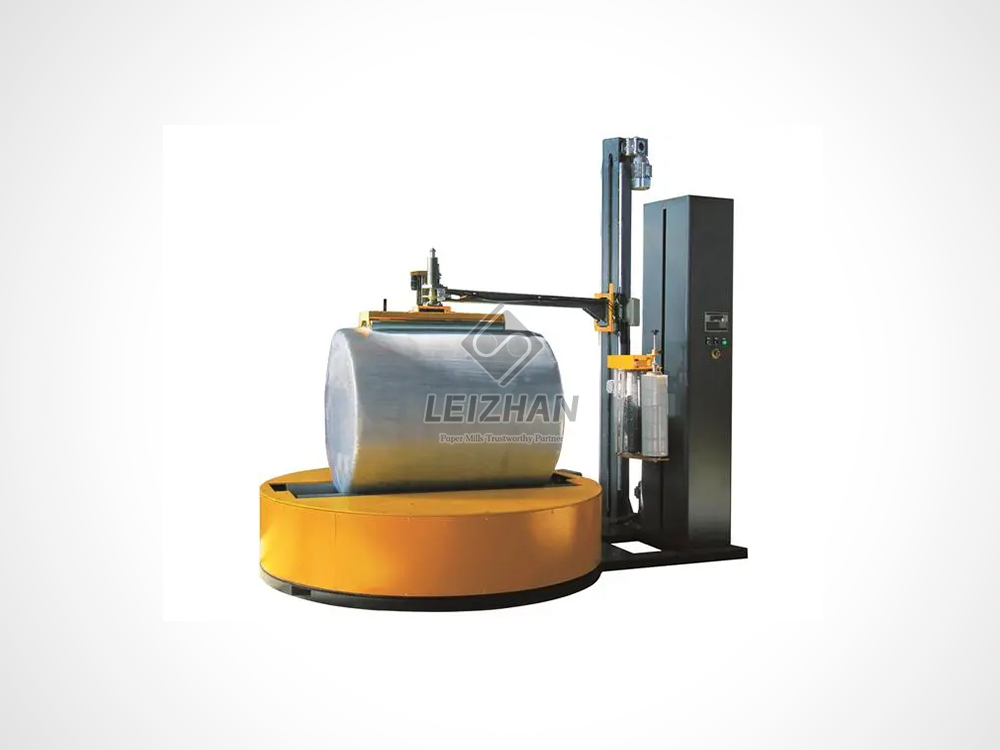
Standard palletizing guidelines simply do not apply to niche, highly demanding industrial sectors. Handling massive industrial paper rolls requires highly specialized equipment. These jumbo cylinders often exceed 1,500mm in diameter and weigh upwards of 2,000kg. Standard turntable wrappers simply cannot handle this radial stress.
Facilities dealing with these extreme parameters require a dedicated Stretch Wrap Machine engineered specifically for axial and radial wrapping. By integrating a heavy-duty wrapper featuring variable frequency drive control and a 250% powered pre-stretch carriage with a high-micron moisture-resistant film, paper mills can completely seal out environmental degradation and prevent edge crushing during long-haul transit.
Getting the Most Out of Your Machine Film
Purchasing the correct consumable is only half the equation. Applying it efficiently dictates your long-term return on investment and sustainability metrics. Optimizing usage is a continuous process that yields significant reductions in operational spending.
Proper Machine Calibration
Even the highest quality nano-film will underperform if the hardware is poorly calibrated. Regular maintenance is vital. Maintenance personnel must routinely check tension settings, clean the pre-stretch rollers to remove sticky resin buildup, and verify gear ratios. Ensuring the equipment stretches the material to its absolute optimal capacity without inducing micro-tears guarantees that you are maximizing the yield of every single roll. A machine stretching at 150% when it is capable of 250% is silently hemorrhaging thousands of dollars annually.
Top Mistakes to Avoid When Selecting Machine Stretch Film
Before finalizing a procurement contract, warehouse managers must be hyper-aware of common pitfalls that frequently derail automated packaging lines.
Mistake 1: Using hand stretch film on automated equipment. Hand film and machine film are fundamentally different products. Machine rolls are significantly heavier and chemically engineered to withstand the extreme, high-speed elongation forces of a motorized carriage. Attempting to run hand film through an automated line will result in immediate snapping and dangerously inadequate load containment.
Mistake 2: Assuming thicker is always better. Applying excessive containment force is a frequent and costly error. While a 120-gauge specification provides massive strength, applying it to a pallet of lightweight consumer goods will result in load crushing. The tension exerted by overly thick plastic can easily collapse corrugated boxes. Thickness must always be proportional to the load crush tolerance.
Mistake 3: Ignoring the physical load profile. Failing to assess whether a load is uniform, slightly irregular, or highly irregular with sharp edges leads to poor material selection. Wrapping an irregular load with a standard cast product guarantees puncture failures during transit. Using expensive blown formulations on perfectly uniform loads is a redundant waste of capital.
Conclusion
Equipment is only as reliable as the material running through its rollers. Stop guessing with your consumables. Audit your current load profiles, test different micron gauges, and align your material choices with your machinery's actual gear ratios. Opting for the cheapest roll on the market often proves to be the most expensive mistake if it results in catastrophic product damage or excessive waste. If you are upgrading your end-of-line packaging or need to secure massive industrial loads, explore the advanced automated solutions at Leizhan Paper Tech. Visit our official website to find the exact heavy-duty wrapping equipment tailored to your specific operational demands.
FAQ
Can I use hand stretch film on a stretch wrap machine?
Absolutely not. Machine film is manufactured on much larger cores and is specifically engineered with advanced resins to withstand the high-speed pre-stretch mechanisms of automated equipment. Hand film lacks this chemical elasticity and will snap or fail to stretch properly when subjected to motorized tension.
How do I know if my film thickness is correct for my load?
If your pallet load shifts or leans during transit, your material is likely too thin or lacks the necessary holding memory. Conversely, if your corrugated boxes are being crushed during the wrapping cycle, the plastic is too thick, or your carriage tension is set far too high. An 80-gauge product serves as the standard baseline for troubleshooting these containment issues.
How do I calculate stretch film cost per load?
The most accurate method is to cut and weigh the film from one completely wrapped pallet. Divide that weight by the total weight of the roll, then multiply by the cost of the roll. This gives you the true cost per load. It is the only metric that matters, as evaluating based purely on the cost-per-roll ignores the pre-stretch yield capabilities of your machine.
What causes stretch film to break during a machine cycle?
Consistent film breaks usually point to mechanical or profile issues rather than bad plastic. The most common culprits include sticky resin buildup on the pre-stretch rollers, incorrect secondary tension settings, sharp protruding load corners, or feeding a non-elastic blown product into a high-speed rotary arm wrapper configured for high stretch ratios.
Is Blown Film always thicker than Cast Film?
Not necessarily. Both materials can be manufactured across a wide variety of micron gauges. However, due to the bidirectional cooling process used during extrusion, a blown product is structurally tougher and exponentially more puncture-resistant at the exact same thickness when compared to its cast counterpart.
What does pre-stretch yield mean when buying film?
Pre-stretch yield refers to the maximum percentage your automated hardware can elongate the plastic before applying it to the pallet. For instance, a 250% yield means that one foot of material on the roll is stretched to become 3.5 feet of wrapped plastic on the load. Maximizing this yield is the most effective way to drastically reduce your overall consumable cost per load.


